Articles

FIFA and pop superstars should discount tickets to cut the climate costs of 'mega-events'

FIFA and pop superstars should discount tickets to cut the climate costs of ‘mega-events’

Cambridge experts say FIFA should reward fans with rebates for greener travel to events. The study found similar initiatives by Coldplay resulted in tour emissions almost halving The vast majority of carbon emissions caused by “mega-events” such as World Cups and global concert tours come from audience travel, according to University of Cambridge researchers. In…
Learning to cope with the unexpected: training AI to manage uncertainty

Learning to cope with the unexpected: training AI to manage uncertainty

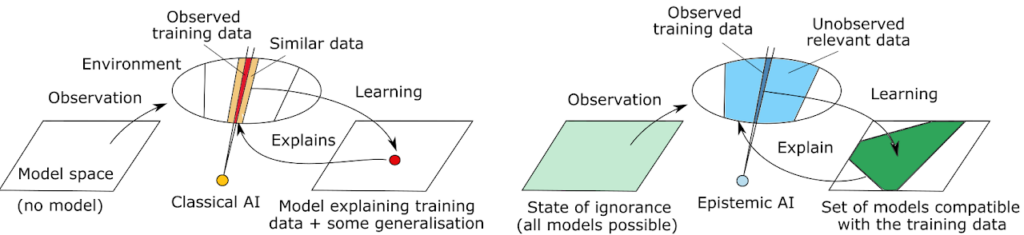
Knowing when you do not know causes human agents to act with caution. Epistemic AI uses mathematical frameworks to bring uncertainty awareness to machine learning It is well established that AI has applications in every aspect of human life. An economic driver already revolutionising our homes, schools and jobs, next-generation AI will need to improve…
How urban living can impact the health of early adolescents

How urban living can impact the health of early adolescents

Researchers study how various environmental exposures common to cities can lead to multimorbidity in early adolescents Growing up in a city comes with multiple advantages. But could it also be the cause of multimorbidity – the coexistence of two or more adverse health conditions? The EU-funded URBANE project aimed to find out. “Although commonly associated…
A lack of sex held back life’s diversity for millions of years

A lack of sex held back life’s diversity for millions of years

The way that Earth’s first animals reproduced held back life’s diversity for millions of years, until stress and competition led to the development of sexual reproduction, which in turn accelerated the pace of evolution Researchers from the University of Cambridge studied fossils from the oldest-known animals on Earth, dating from 574 million years ago, and…
Twelve points go to… data? Decoding 70 years of Eurovision

Twelve points go to… data? Decoding 70 years of Eurovision

A study covering nearly seven decades of Eurovision entries explores the unpredictability of the world’s largest and most-watched music competition It all started in 1956 as a bold experiment in TV broadcasting. As the Eurovision Song Contest(opens in new window) turns 70 this year, it has become a major extravaganza that brings together talented, eccentric…
¿Son las prohibiciones de las redes sociales la mejor solución?

Are social media bans the best solution?

Experts question whether banning youth from social media is the right approach In a landmark social media trial in March 2026, a jury in the United States found Meta and Google liable for intentionally nurturing addiction in a teen. After Australia banned social media for teens under 16 in December 2025, several countries have done…
Will world’s largest probe make us lose trust in research findings?

Will world’s largest probe make us lose trust in research findings?

A major study investigates the replicability and reliability of published science experiments A massive effort involving 865 researchers has revealed to what extent humans and machines are able to predict if research results can be replicated. This research project known as SCORE (Systematizing Confidence in Open Research and Evidence) amassed a huge database of information…
Robots, smart tech and experience: rethinking work for an ageing Europe

Robots, smart tech and experience: rethinking work for an ageing Europe

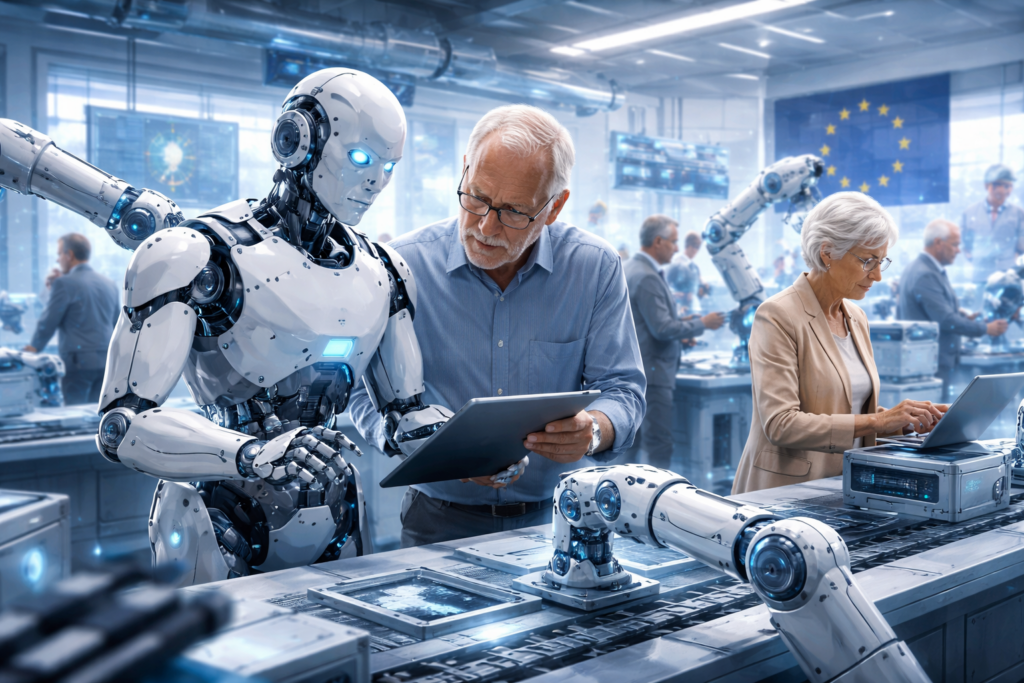
As Europe’s workforce ages and labour shortages grow, an EU-funded network shows how robotics and smart human-centric design can help experienced workers stay in work Europe’s workforce is ageing fast. The number of people(opens in new window) aged 55 and over in employment has jumped from 23.8 million in 2010 to nearly 40 million in…
Boosting societal resilience with trustworthy AI tools

Boosting societal resilience with trustworthy AI tools

Effective and efficient artificial intelligence tools have been developed to help combat the increasingly sophisticated threat from online disinformation In an era of artificial intelligence (AI) and deepfakes, verifying whether information is trustworthy or not can be a fraught and challenging task. Disinformation is also often multimodal and cross-platform, combining text, images, video and audio…
AI overly affirms users asking for personal advice

AI overly affirms users asking for personal advice

Not only are AIs far more agreeable than humans when advising on interpersonal matters, but users also prefer the sycophantic models When it comes to personal matters, AI systems might tell you what you want to hear, but perhaps not what you need to hear. In a new study published in Science, Stanford computer scientists…