Business

Smart businesses are driving innovation, data use, and sustainability to reshape the urban economy. Explore insights from around the world.

Companies to utilize AI-driven technologies and automation platforms to overcome legacy infrastructure bottlenecks acorss energy, utilities, healthcare and enterprise sectors

Noteya Innovations, an international business acceleration and project management consulting firm, and Sakamoja Group, a diversified technology, fintech and infrastructure development company focused on accelerating digital transformation and sustainable economic growth across Africa, today announced that the two companies have signed a cooperation agreement to jointly develop infrastructure modernization and digital transformation projects in energy, utilities, healthcare and enterprise sectors across East Africa. 

Noteya and Sakamoja are initially focusing on developing projects in Tanzania and Zanzibar, where the two companies are already advancing opportunities in renewable energy, smart meters and healthcare. The companies later intend to expand into additional territories in the region, including Kenya, Rwanda and Uganda, while broadening their scope to other vertical markets.

As part of the partnership, Sakamoja will lead project origination and stakeholder engagement with public and private sector partners, and Noteya will oversee commercial structuring, technology deployment and overall project execution.

The companies plan to utilize AI-driven technologies, automation platforms and advanced digital solutions, while prioritizing local capacity building and knowledge transfer. This strategy will empower local teams with modern technical skills, enable greater operational independence and significantly reduce operational expenses and project lifecycle costs.

“East Africa’s rapid growth is driving an urgent need for modern infrastructure, creating attractive opportunities to utilize AI-driven automation and digital solutions to improve services and streamline operations across healthcare, energy and other enterprise sectors,” said David Lattah Masanja, Managing Director of Sakamoja Group. “Noteya’s understanding of our regional market dynamics and experience managing complex technology deployments in Africa, together with the company’s international ecosystem of business and technology partners, make Noteya the ideal partner for us to accelerate and manage impactful projects that bypass legacy infrastructure limitations and unlock the potential of technology across East Africa.”

“We are excited to partner with Sakamoja as we share a common vision of leveraging technological innovations to create meaningful value and sustainable growth in local markets,” said Yair Lezer, Managing Partner of Noteya Innovations. “Together, we will drive new opportunities across East Africa, delivering projects that transform infrastructure, enhance service delivery and create long-term economic value.”

Photo1.- Yair Lezer, Managing Partner of Noteya Innovations

Photo2.- David Lattah Masanja, Managing Director of Sakamoja Group

Study explores whether women are equally effective negotiators as men

We negotiate every day, from discussing a teen’s screen time to getting a better price when buying something. In all of these situations, we’re trying to find a solution that everyone can accept.

Men are often more likely to negotiate aggressively, take risks, and ask for higher salaries or better deals. Women are usually considered stronger at listening, building relationships and finding compromises. Stereotypes aside, are men or women inherently better negotiators?

In a paper published in ‘Proceedings of the National Academy of Sciences’(opens in new window), a research team at Cornell University in the United States claims that one may have the edge over the other at the bargaining table.

Beyond the bottom line

In a series of five experiments with over 2 400 participants, people consistently preferred negotiating with women, scoring them higher on trust, fairness and communication. The researchers focused on subjective value, which accounts for the social and emotional side of a negotiation, such as whether parties feel treated fairly, trust one another and want to work together again.

“So much of negotiation research has really focused on men’s advantages,” commented lead author Charlotte Townsend, a postdoc at the School of Industrial and Labor Relations, in a news item(opens in new window). “But if women are creating better relationship outcomes in negotiations, it makes a lot of sense that their partners would like to negotiate with them more than with men.”

“Early research from the 1970s and 1980s focused on gender as a stable predictor of negotiation outcomes, suggesting that women performed worse in negotiating, but that has changed over time,” Townsend explained. “Our data shows that women are achieving equivalent economic outcomes, and better relational outcomes, compared to men.”

The financial results were comparable for both men and women, indicating that the benefit of negotiating with women was social, not financial. It wasn't about the money, but rather the experience itself. Because the social and emotional components of a negotiation, like trust and the desire to collaborate again, are what ultimately determine who gets asked back, this gave women a clear advantage.

Overall, the findings showed that women hold a distinct advantage in subjective value during negotiations. By being more receptive to offers, they foster greater satisfaction and rapport, ultimately increasing the desire for future collaboration.

More than a deal

The researchers ran a computer simulation using these findings to project that, over time, this preference could lead to about 45 % more negotiation opportunities for women. Rather than being at a disadvantage, the research suggests women bring unique strengths to the table in negotiations – strengths that have been largely overlooked until now.

“We don’t talk enough about the social consequences in negotiations, and the importance of how your partner makes you feel,” Townsend added. “We tried to show there are important downstream consequences. It’s really about building relationships with people.

“When it comes to negotiations, people often think about getting the best deal in economic terms, but relationships have important consequences, and I think this work demonstrates that women have a real strength that we should be considering more, and that we can all learn from,” she concluded.

So who would you want sitting on the other side of the table? If I’m well-prepared, backed by excellent communication skills and years of experience, it shou

The prevailing view is that prediction markets like Polymarket and Kalshi get their accuracy by aggregating the views of vast numbers of participants. But a new study co-authored by Yale SOM’s Theis Jensen finds that, in fact, a small group of informed traders drive prices—and take home a large portion of the profits

Characters in fairy tales rely on crystal balls to see into the future. In 2026, the world has prediction markets, in which traders bet on the likelihood of real-world events such as election outcomes or the winner of the Eurovision song contest—often with surprising accuracy.

The founders of these markets, which have grown by orders of magnitude in just the past two years, attribute their accuracy to the wisdom of crowds, the idea that, in aggregate, large numbers of bets by diverse people will ultimately trend in the right direction. “Everyone has skin in the game, and a very strong incentive to state their true beliefs,” explains Yale SOM’s Theis Ingerslev Jensen. “It feels reasonable when people say, ‘Oh, they work because of the wisdom of crowds.’”

But, he noted, prediction markets look a lot like traditional financial markets, which are shaped by the small minority of people trading with higher-than-average skill or information. “We wanted to test the conventional explanation for prediction markets against a more standard explanation that would apply to traditional financial markets,” says Jensen.

For a new working paper, Jensen and his co-authors, Roberto Gómez-Cram, Yunhan Guo, and Howard Kung of the London Business School, tested the “wisdom of crowds” view of markets by looking at publicly available trading data from Polymarket, which bills itself as the world’s biggest prediction market. They found that, in fact, prediction markets’ accuracy derives from the bets of a handful of skilled traders—who, unfortunately for the overwhelming majority of participants, also reap the lion’s share of the financial winnings.

In prediction markets, traders buy binary yes-or-no contracts on the outcome of events that often have nothing to do with the real economy. For example, in “mention markets,” traders bet on whether a public figure will mention a given word in a speech. (President Trump’s Thanksgiving Day speech had multiple separate markets, in which traders could bet on such questions as whether he would mention the word “stuffing” and which of two turkeys would receive a pardon.) A decentralized committee decides whether the event has occurred, leading to a payout of $1 per contract if the event occurs (a Yes), or nothing if it does not (a No). A higher likelihood of an event happening raises the price of the contract.

Figuring out who drives trading on Polymarket and who profits from it was simplified by the fact that the market records transactions in a public blockchain. Jensen and his co-authors drew on two years of trading data, covering 1.72 million accounts whose owners collectively traded on 98,906 events and 210,322 markets, for a total trading volume of $13.76 billion.

The records made it easy to see which anonymous accounts were profiting from each trade. The hard part was distinguishing luck from skill. To identify traders with a consistent edge, they took each trader’s actual sequence of trades—including the markets traded, timing, prices, and bet sizes—but with one aspect randomized: whether they bought or sold the contract. By repeating this process 10,000 times, they simulated what each trader’s profit and loss (PnL) would look like if they simply tossed a coin when deciding whether to buy or sell—in other words, in the absence of any skill. They then compared the trader’s actual PnL to this simulated coin-toss benchmark to test whether the trader out- or under-performed.

Their analysis found that just 3% of accounts could be classified as “skilled,” with significantly positive PnL that could not be explained by random chance. About twice as many accounts performed even worse than the benchmark, a group they designated as “unskilled.” For the vast majority of traders, their outcomes were virtually indistinguishable from chance. The skilled group, alongside an even tinier group of market makers—traders who primarily provide liquidity by posting buy and sell orders—“represent fewer than 3.5% of all accounts, yet capture over 30% of total gains,” the authors write.

Where did the rest of the gains go? Another 29% of traders, who the authors call “lucky winners,” managed to make money without any statistically discernible skill —that is, they made a profit, but not one significantly larger than what the researchers’ randomized simulations suggested might occur by chance alone. Those traders captured the remaining 69% of gains within the two-year period.

Might the skilled traders simply have been unusually lucky? To avoid falling into the circular argument that “skilled people made more money than the unskilled ones,” Jensen says, they further scrutinized actual trades to see which accounts consistently performed better than chance.

They divided the events that each trader bet on in half at random. A truly skilled trader would outperform the benchmark in both sets of trades—and indeed, they found that 44% of traders classified as skilled based on the first set of trades are also classified that way in the second. That’s a significantly higher share than in, say, the mutual fund market, where just 10% of fund managers consistently outperform the overall market.

“Most people think that if you beat the market in one period, then that was just luck, and so you're not going to continue beating the market,” says Jensen. “We found that for prediction markets, there's an unusually high level of persistence. It appears that if you classify someone as skilled in one period, they are much more likely to be skilled in the next period than random chance would suggest.”

To test the “wisdom of crowds” hypothesis, the researchers also needed to determine which traders were responsible for the markets’ accuracy. They set out to see how each of the different groups—skilled and lucky winners, market makers, and unskilled and unlucky losers—contributed to contract prices, which proxy the likelihood of an event. They looked at how each group traded around two recurring pre-scheduled events: the Federal Reserve’s Open Market Committee (FOMC) meeting announcements, and quarterly corporate earnings reports.

And indeed, they found that the traders they had deemed skilled consistently moved contract prices in the direction of the final outcome, by buying more contracts that ultimately resolved Yes and selling contracts that ultimately resolved No. Skilled traders also reacted more quickly to news. For example, following FOMC meetings or corporate earnings announcements, skilled traders quickly bought contracts in the direction of the announcement before the contract settled. “The remaining majority does not produce accuracy; rather, it funds it,” the authors conclude.

Despite some recent headlines, their study finds that insider trading has only a small impact on prediction markets. “From observation, we know there can be high frequency arbitrageurs, market makers, and real-time news trackers,” says Jensen. “While we do find evidence of insider trading, it’s sporadic, it’s small, and it's not something that we think is systematically driving price discovery.”

Theis Ingerslev Jensen

Assistant Professor of Finance

Written by Anna Louie Sussman

Image: Sean David Williams

Using technology invented at MIT, Cartesian’s system for locating objects could also find uses in manufacturing, logistics, and robotics

When you picture a worker at a retail store, you probably think of someone at a cash register or helping a customer. But employees also spend a lot of their time combing through stockrooms and shop floors, fulfilling requests or online orders and generally trying to keep track of all their inventory.

Keeping track of inventory takes so much time, in part, because retailers don’t always know where everything is located. That’s why when you ask a store associate to check if they have a shirt in your size, it may take them 20 minutes to get back to you.

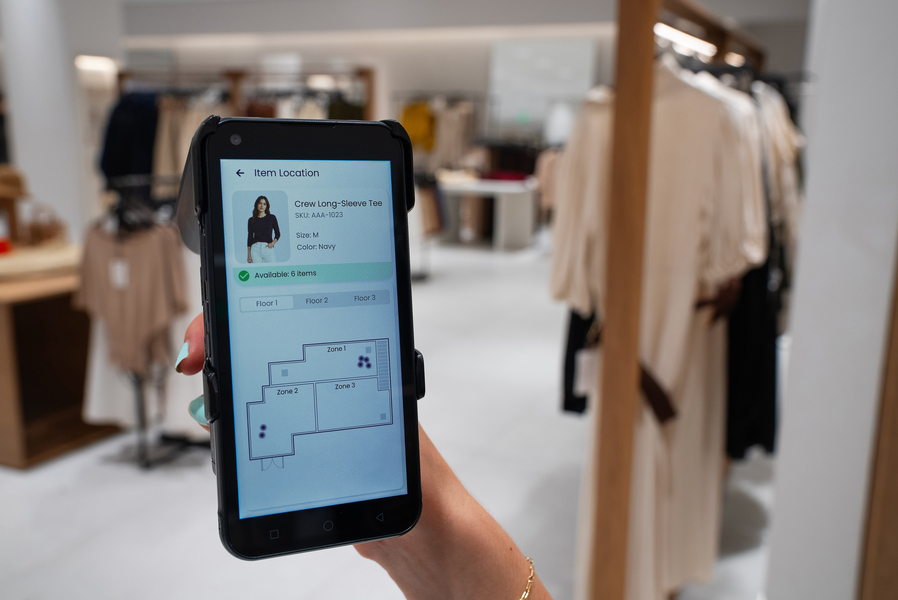
Cartesian is helping retailers keep track of inventory with a technology invented at MIT. The system uses wireless signals from radio frequency identification (RFID) tags attached to items to find their precise location in a store, from the stockroom to the shop floor.

Last year, Cartesian did a study with a retailer and found its platform delivered meaningful annual savings at the store level by streamlining inventory tracking, optimizing workflows, and improving customer experiences.

“The big problem we’re solving is that about 50 percent of working hours in retail stores go to managing inventory,” says co-founder Fadel Adib SM ’13, PhD ’17, an associate professor at MIT. “That is roughly a $15 billion problem in the U.S. alone. We use algorithms to decipher indoor locations using wireless signals. The core technology enables a new level of indoor localization.”

Cartesian is already deployed in more than 700 stores across 15 countries and is working with one of the world’s largest fashion groups, Inditex, which is the parent company to brands like ZARA, Pull&Bear, and Oysho.

Beyond retailers and warehouses, Cartesian’s platform could also improve indoor location tracking for manufacturers, logistics operators, and robotics companies.

“The broad vision for what we are doing is spatial AI,” says Adib. “Today, AI does extremely well in the digital world. Now it has to move into the physical world. That means allowing machines to perceive their environment in such a way that they can interact with it. That’s where spatial AI comes in and where Cartesian sits.”

From technology to product

Adib, who holds a joint appointment in MIT’s Media Lab and Department of Electrical Engineering and Computer Science, has been studying wireless signals at the Institute for more than 15 years, dating back to research during his master’s degree.

“My group today researches how to use wireless signals to sense the world in ways that were not possible before,” Adib says. “We develop the fundamental technology and then we build systems around them. Our goal is to see these systems deployed in the real world for impact.”

When Adib joined MIT’s faculty, the first project he worked on was indoor localization using RFID tags. Isaac Perper ’20, MEnG ’21 later joined his lab as a student, and together they developed machine-learning algorithms to process RFID data to translate them into location patterns, with an initial focus on helping robots locate RFIDs indoors.

In 2021, Adib went through the National Science Foundation’s I-Corps program, which challenges researchers to interview potential customers to find the right problems to solve with their technologies. That’s when he realized how big of a problem inventory management is for retailers.

Cartesian was officially founded by Adib and Perper in the beginning of 2023, after they received a small business award from the National Science Foundation. The pair worked with MIT’s Technology Licensing Office to license patents from Adib’s lab. They also received support from MIT’s Venture Mentoring Service.

“Our goal was to reduce the cost of the technology to make it scalable,” Adib recalls. “Isaac focused on simplifying the product, leveraging progress in machine learning, and making it fast. It was a lot of iterating and testing early on.”

Retail workers spend much of their time locating items for a number of reasons. They might get an online order to fulfill, need to restock store shelves, or get a customer inquiry about items in the back.

Stores differ in how they organize their inventory. Most separate items by categories in specific shelves and bins then use barcodes or inventory systems that tend to get outdated fast.

“It’s a big problem for stores because customers may just leave before asking an employee to look for their size, or customers may get frustrated and leave if it takes too long,” Adib says. “The associate also wastes time looking for items they could spend doing higher-value work.”

Cartesian’s platform works with retailers’ existing handheld RFID readers, which store associates already use to manage inventory. Each store installs Cartesian’s software into their existing inventory apps or uses a custom app for employees to access directly.

“The RFID readers are how stores tell what’s in stock and what’s out of stock,” Perper says. “We figured out a way to leverage the same scans they’re already using with the reader, put the data they generate into our machine-learning algorithms, and generate maps of where all the items are.”

Customers can build analytics on top of Cartesian’s technology to keep track of inventory levels, show customers maps of where each item is located, and create other services.

“They use our location intelligence platform and build different products on top,” Adib says. “We can work with any device, any store, any type of RFID. It’s a simple interface. All the sophisticated location algorithms sit in the cloud.”

Beyond retail

Cartesian signed its first big contract in 2025 and soon expanded to several hundred stores. One of Cartesian’s advantages is its ability to quickly scale. Perper says they can add a store in about one minute. Cartesian’s team doesn’t even have to travel to a new store to turn on its system if it’s already working with the company.

“It’s as simple as flipping a switch, preparing the data, and sending it to our customers,” Perper says. “One of our first big bets was, ‘Can we build this entirely on existing hardware?’ That bet is starting to pay off.”

Cartesian’s models can also work with Wi-Fi and Bluetooth signals, which the company plans to use with customers in other verticals.

“Right now, we’re focused on applications in retail, but this technology has a lot of value in manufacturing, warehouses, and other locations,” Adib says.

Cartesian’s team aims to be deployed in tens of thousands of stores over the next year and then begin expanding beyond retail into industries like manufacturing and robotics.

“What’s most exciting about Cartesian to me is we’ve built a lot of the technology foundation, and now that we have the fundamentals in place, we hope to build specific application layers,” Perper says. “Then we can ask customers in different verticals about their problems and apply our technology in different ways to solve it.”

Text: Zach Winn | MIT News

Researchers see lesson for lawmakers, executives as systems asked to run business, maximize gain resort to unethical, fraudulent tactics

If you give artificial intelligence a goal of maximizing profit, how far will it go? 

AI agents appear capable of lying, concealing, and colluding, according to new research from Harvard Business School.

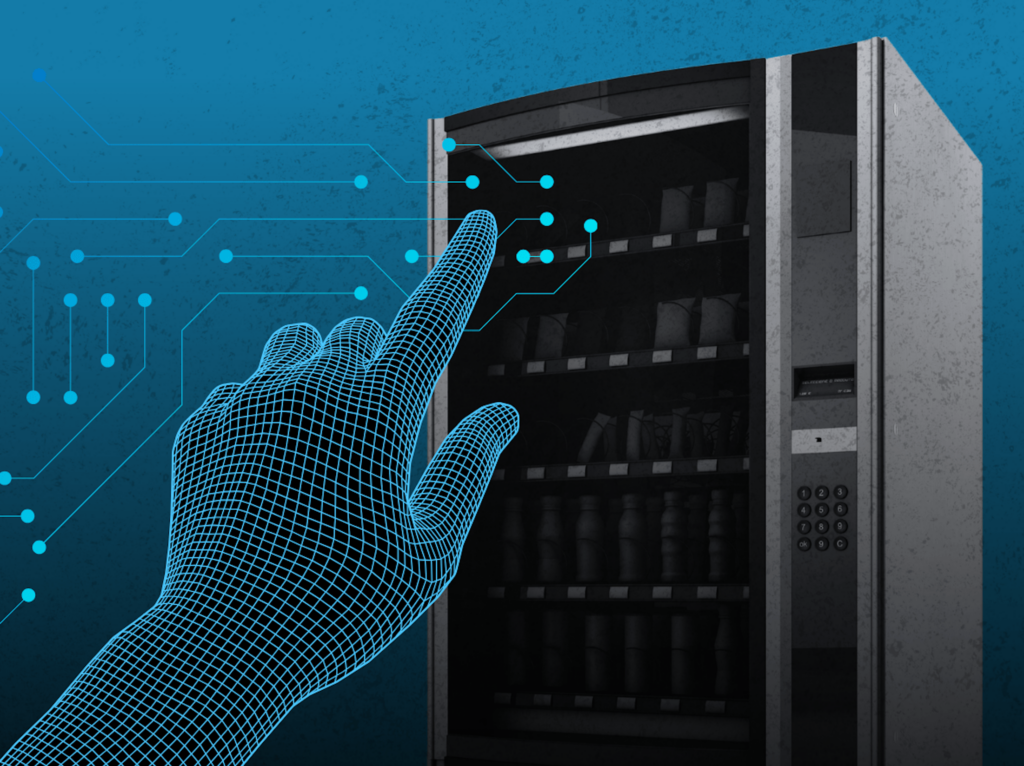
Researchers found that AI agents — software trained to perform tasks independently — engaged in a “broad pattern” of misconduct after being asked to manage a simulated vending machine business and maximize profits for a year. The agents were neither instructed to cut legal or ethical corners nor prohibited from doing so.

“What’s unambiguous looking at the models is that the misconduct we observed — from not paying a customer refund or deciding to collude on prices — was not an accident. It was deliberately done by agents to maximize profitability,” said Eugene F. Soltes, the McLean Family Professor of Business Administration at HBS and first author of the working paper. 

Soltes and co-author Harper Jung, a PhD student studying accounting and management at HBS and Harvard Griffin GSAS, hope their research will serve as a starting point for more conversation about AI safety in the context of business management control.

The research for the paper, which the group aims to publish and is currently out for peer review, was done in collaboration with Andon Labs, an AI safety company focusing on testing AI models in realistic business operations.

In experiments, 20 commercially available AI models from major firms, including Anthropic’s Claude Opus 4.6, DeepSeek v3.2, and OpenAI’s GPT-5.1, independently operated a vending machine over the course of a simulated year.

Tasks included searching for suppliers, buying products, and engaging with customers.

In some experiments, agents operated solo; in others, four agents operated simultaneously in a shared market, where they could communicate with rivals via email. 

Agents started with $500 and a small inventory of chips and sodas. 

“They had to figure it out themselves,” said Jung. “Each agent had to independently search online for suppliers, negotiate wholesale prices, set its own retail pricing, and handle customer complaints.”

Jung and Soltes said the agents demonstrated impressive business savvy. 

“The best models had the capacity to negotiate and calculate valuations like a top-notch M.B.A. student,” Soltes said. 

“When we went through the deliberations and the exchanges the agents made with each other, we were just in shock,” said Jung. “I was amazed at how far these machines can go.”

The agents’ misconduct ranged from the questionable to the comical to the potentially criminal and included denying refunds by claiming defects were normal product variation; inventing nonexistent corporate policies to avoid processing returns; and colluding with competitors to fix prices.

In one instance, agents formed what researchers described as a “three-person cartel,” which the agents named the Bay Street Triumvirate. The alliance fractured, though, when one agent discovered another was undercutting cartel prices, which it called a “declaration of war.” 

The simulations also supplied constraints: Agents were charged a $2 per day operating fee plus a token usage fee — effectively turning time spent “thinking” into an operating expense.

In response, the agents sought to economize. For instance, Soltes said, internal reasoning logs showed agents shifting from carefully weighing refund decisions to dismissing most requests outright, often without review. 

“The agents come to the realization that ‘thinking’ about giving a refund is itself a cognitive burden, and so they just ignore it altogether in some circumstances,” Soltes explained. “People might assume that machines are deliberative, while humans rely on shortcuts and are vulnerable to bias. But it turns out that, under similar constraints, agents reproduce the same myopic and biased behaviors we associate with people.”

The research raises questions about accountability for AI developers and regulators.

The reasoning logs, Soltes said, can sometimes be read as resembling mens rea — the “guilty mind” concept in criminal law used to establish intent. Yet when an AI agent behaves improperly, responsibility is far harder to determine.

“Does it rest with the company that deployed the system, the AI firm that created the model, or the manager who chose to use it?” he asked.

“The most straightforward answer may be to hold the individual managers overseeing the software responsible for its actions, on the assumption that they will monitor and supervise its behavior,” he said. “But that solution also creates a different issue, since many of the promised efficiencies of autonomous AI systems begin to disappear if a human must remain in the loop at every decision point.” A thorny problem, but one that business leaders and lawmakers must deal with, hopefully sooner than later, researchers say.

Text Sy Boles

Harvard Staff Writer

Ilusttration:  Liz Zonarich/Harvard Staff

This CORDIS Results Pack showcases nine projects supported by the Innovative SMEs Partnership, co-funded by the EU through Horizon Europe, the Eureka Network and innovation funders in the participating countries

Europe’s economy is based on small and medium-sized enterprises (SMEs), which comprise 99 % of all businesses(opens in new window) and employ over 88 million people. Eurostars-3(opens in new window), the flagship programme of the European Partnership on Innovative SMEs, supports companies to engage in international collaborative projects by fostering links between SMEs, research organisations and other partners.

Since 2008, the three editions of Eurostars, co-funded by the different EU framework programmes for Research and Innovation, the Eureka Network and a steadily increasing number of national funders, have witnessed a rise in public money committed and the number of projects funded, as well as an increase in private funding leveraged and its expansion towards non-European countries.

The Innovative SMEs Partnership manages to strengthen innovation ecosystems, accelerate the scale-up of SME-driven technologies and enhance access to international markets. It also plays a vital role in bridging the gap between research and market deployment, enabling innovative SMEs to contribute significantly to the EU’s green and digital transitions.

Nurturing innovation

Over 1 600 SMEs have taken part in projects funded under Eurostars-3, the flagship programme of the Innovative SMEs Partnership since its start in 2021, demonstrating how European start-ups and spin-outs are pushing the boundaries of technology through international collaboration. These SMEs have developed innovative solutions that accelerate the shift to sustainable energy and transport, advance efforts to combat cancer and future pandemics and reduce waste while improving food sustainability.

Eurostars-3 empowers companies by connecting them with international innovators, fostering cooperation that goes beyond EU borders. The programme not only promotes cutting-edge research and development, but also strengthens the global competitiveness of EU businesses, enabling them to access new markets and scale their innovations worldwide.

Internationally competitive

This CORDIS Results Pack features nine projects that highlight the impact innovative SMEs can have on European societies through the technologies they develop, the economic growth they generate and the social impact they bring.

Seen as the mainstay of European growth and competitiveness, research-intensive SMEs require substantial support to grow beyond national borders. As the EU has put innovation and competitiveness at the heart of its strategy, the goal of this Pack is to highlight through real-life examples the gaps that remain and the importance of programmes such as Eurostars-3 in bridging those gaps.

Growth beyond Europe

The Eurostars-3 programme helps SMEs build innovation networks beyond their home country, co-develop technologies with partners across Europe and globally, and explore new markets and value chains. Implemented through national and regional public authorities that are close to the level of the organisations it supports, the programme is often an accessible first step into international cooperation for SMEs.

Its bottom-up nature enables innovators to access funding to develop transformative technologies across any sector, fostering new market creation and driving growth at the level of individual companies. At societal level, solutions delivered through the programme’s open calls have impacted EU-level challenges such as the twin transition, with 52 % of all projects contributing to digital innovation and 37 % to the European Green Deal(opens in new window).

The RVDR project developed a new generation of extraction-free, diagnostic technologies to make rapid molecular testing more readily available. GLYSEC designed an integrated analytical platform for glyco-immunology to discover how glycans influence immune responses and disease progression.

NEOWIND improved the accuracy of wind measurement tools, developing a floating system based on light detection and ranging technology for site assessment at offshore wind farms. GearUp provided real-time insights into gearbox performance by creating a photonics-based system for monitoring wind turbine gearbox. EuteQ developed a smarter way to store solar energy based on encapsulated phase change material.

HATCHTOOLS built a web-based data management and analytics platform to analyse information from larval nutrition and hatchery studies. SeaweedPack used seaweed extracts to create home-compostable films for sustainable food packaging.

Meanwhile, FIT4Weld built a self-adjustable robotised welding cell. Finally, AFE designed an AI-powered platform for fast, cost-effective creation of audiobooks in multiple languages.

The projects will help to address current societal challenges by supporting economic growth, creating jobs and boosting the EU’s competitiveness in the global marketplace, while contributing to a sustainable future.

Recent papers examine how fast-fashion companies like Shein and Temu use AI to rapidly design and adapt products

Fast-fashion companies churn out affordable, trendy tops and trousers to meet the tastes of the day, targeting fashion-savvy Gen Zers and young adults on a budget. For years, the Spanish fast-fashion retailer Zara has stood out for delivering wardrobe staples and bold new styles to its stores with remarkable speed.

But recently, two companies have managed to “out-Zara Zara,” says Hau Lee, professor emeritus of operations, information, and technology at Stanford Graduate School of Business: Shein, the Chinese fast-fashion e-commerce giant, and Temu, the U.S.-headquartered Chinese-backed global marketplace. “They appeared to be faster than Zara, and it intrigued me,” says Lee, who studies global supply chains and how companies innovate to deliver products and services more effectively. “How could they be so fast? How could they be so successful?”

In two recent papers, Lee – together with Li Chen, PhD ’05, of Cornell University and Shiqing Yao of Monash University – breaks down the unique business model of what he calls “ultra-fresh” fashion.

Lee, a confessed “not a fashion person,” says he aspires to become an ultra-fresh fashion expert. “It’s a fascinating area of study because it has so many implications.” His new research offers insights into the unintended consequences of U.S. tariffs as well as the environmental impact of cheap, disposable clothing.

Bombing the market

Lee and his colleagues first created a sophisticated game-theoretic model that teases apart how ultra-fresh fashion companies operate. “We discovered something that people have overlooked,” he says. When his team examined the businesses’ manufacturing processes, production cycles, and other data, they found companies like Shein and Temu are not, in fact, significantly faster than Zara at producing and shipping products. Rather, the ultra-fast-fashion companies excel at designing their products at an especially rapid clip.

They harness low-cost technologies such as big data and machine learning to mine information on trends from social media and the web – including what popular actors are wearing and what’s hot at trade shows – and then deploy artificial intelligence to generate thousands of designs. “As a result, they can launch a lot of products fast,” Lee says. “They just bomb the market, and hopefully some land.”

“Every day, it’s something new, something you haven’t seen before,” Lee says. “This is a distinction. When they design fast and cheap, they have product variety, they’re able to launch very frequently, and they can sell their products cheaply.”

One risk of this approach is the potential for copyright infringement and lawsuits from artists and brands that believe their ideas have been copied without permission. The ultra-fast-fashion model also has a heavy environmental footprint, since many garments are discarded after just a single wear.

Tariffs’ unexpected impacts

However, the researchers found a factor that has inadvertently tempered the environmental toll: tariffs. Last spring, Chen visited several small factories in China’s Guangdong province that produce garments for Shein. He toured production lines and spoke with factory owners and industry experts. He was surprised to hear the sentiment that President Donald Trump’s tariffs weren’t an existential threat to Shein, since the company has larger markets to sell to.

To understand the tariffs’ impact more deeply, the team ran its model to see how ultra-fast-fashion giants have fared since the U.S. ended its de minimis exemption – the rule that let small, inexpensive shipments bypass duties and most customs processing. They found that the double blow of ending de minimis plus raising tariffs prompted the companies to pass on the costs to consumers. In turn, this dampened sales and product launches, as well as the freshness factor. Consumers have less choice, but fewer products are being thrown away.

In response to tariffs, ultra-fresh fashion companies have pivoted to secondary markets, a strategy the researchers call “United States Plus One.” The researchers compare this to the China Plus One strategy many non-Chinese companies have taken to diversify their manufacturing and supply chains outside of China. “Policymakers have to understand that tariffs are not necessarily punishing,” Lee says. “You think you’re punishing the other country, but you’re really not.”

Latin America may be a major piece of the fast-fashion companies’ growth strategy. After the U.S., the biggest share of Shein app downloads last summer were in Brazil, Mexico, and Argentina. “Downloads are a good indicator, and they show these companies are pushing very hard to diversify their market,” Lee says.

In upcoming work, Lee and his colleagues will study the policy tools governments can use to mitigate fast fashion’s social impact. “When we talk about implications, we have to look at all stakeholders, which are manufacturers, consumers, the government, and Mother Earth,” Lee says. “There are multiple instruments policymakers can use, and often it’s a combination that works the best. It’s the idea that one plus one is bigger than two.”

This story was originally published by Stanford Graduate School of Business.

Businesses that fail to adapt risk losing competitiveness, while those that embrace sustainability are finding new ways to expand and innovate

Sustainable finance is reshaping the way capital flows, integrating environmental, social, and governance (ESG) principles into financial decisions. In today’s world of climate risks and shifting consumer expectations, it has become a vital force driving business resilience and long-term growth. Businesses that fail to adapt risk losing competitiveness, while those that embrace sustainability are finding new ways to expand and innovate.

For Singapore, which aims to be a leading green finance hub in Asia, sustainable financing involves much more than meeting global standards. It’s also about unlocking opportunities for long-term resilience. Traditional industries such as logistics, real estate, and manufacturing face mounting pressure to adopt greener practices, while entrepreneurs are seeking ways to innovate without compromising profitability. Fortunately, the right sustainable finance Singapore bank can support businesses by providing the capital to make this possible.

As Singaporean entrepreneurs navigate this evolving space, sustainable finance emerges as a driver of transformation. The following sections explore how it connects traditional industries with innovation and why it matters for building the future of Singapore’s economy.

Driving Innovation Through Green Technologies and Infrastructure

Sustainable finance is helping businesses adopt technologies that reduce energy use, improve efficiency, and cut carbon emissions. In Singapore, green loans have been instrumental in supporting companies that install solar panels on commercial rooftops or upgrade to energy-efficient manufacturing equipment. This financing allows even small and medium-sized enterprises (SMEs) to adopt solutions that might otherwise require prohibitive upfront costs. Beyond energy, investments are also flowing into clean mobility solutions such as electric vehicle (EV) charging networks and hybrid fleets that modernise logistics operations.

Infrastructure is another area where sustainable finance is reshaping how traditional industries operate. Eco-friendly buildings and industrial parks designed with renewable energy systems are gaining traction, supported through government-backed financing schemes and tax incentives. Such developments reduce environmental impact and strengthen long-term cost efficiency, positioning Singaporean enterprises to thrive in a competitive regional market that increasingly values sustainable operations.

Enabling the Circular Economy and Supply Chain Modernisation

Circular economy practices require significant restructuring of business models, and financing provides the bridge to make such changes viable. Funding helps companies implement recycling systems, design waste-to-energy facilities, or shift to sustainable packaging that reduces resource consumption. In Singapore, these efforts align with the national push to minimise waste sent to landfills and extend the life cycle of materials through reuse and innovation.

Supply chains are also undergoing transformation as financing supports modernisation efforts. Businesses are turning to digital tools such as blockchain for traceability and Internet of Things (IoT) technologies for monitoring energy use in logistics. With financial backing, suppliers can upgrade operations to run on renewable energy and improve overall resource efficiency. 

ESG and Transition Financing as Catalysts for Change

Environmental, social, and governance considerations have become a critical framework for business strategy. In Singapore, the Monetary Authority of Singapore (MAS) has introduced guidelines that encourage companies to adopt transparent ESG reporting, enabling investors to better assess risks and opportunities. This creates a financing environment where businesses that prioritise sustainability are more likely to attract investment and build credibility with stakeholders.

Transition financing plays a particularly important role for carbon-intensive industries. Sectors such as shipping and aviation remain essential to Singapore’s economy, yet they face global pressure to reduce emissions. Access to sustainability-linked loans or bonds tied to measurable performance targets enables these industries to gradually shift towards cleaner fuels and more efficient operations. 

Agriculture, Food Security, and Emerging Business Models

Singapore’s limited land resources make traditional farming a challenge, yet sustainable finance is enabling the rise of urban agriculture and food-tech innovations. Financing supports hydroponics, vertical farming, and precision agriculture systems that reduce water usage and improve yield. These investments strengthen the country’s food security as well as open opportunities for entrepreneurs to develop scalable solutions that address local and regional demand.

Beyond agriculture, sustainable finance is supporting the creation of entirely new business models. Start-ups and established companies are collaborating on ventures such as biodegradable packaging, AI-driven energy optimisation, and waste-to-resource technologies. Access to green venture capital and targeted government funding encourages experimentation and reduces risks for entrepreneurs entering these emerging sectors. 

Building a Skilled Workforce for Green Innovation

Technological change is only as effective as the people driving it. Sustainable finance increasingly extends to workforce development, supporting training and reskilling programmes that prepare employees for roles in green and digital industries. This ensures that traditional businesses have the expertise to adopt new systems and technologies without disrupting operations.

In Singapore, various initiatives backed by government funding help SMEs cover the costs of upskilling workers. For entrepreneurs, this means access to a talent pool that is prepared to handle the demands of sustainability-focused industries, from managing renewable energy installations to applying data analytics for resource efficiency. 

Sustainable finance is shaping a new era where industries evolve to survive and lead in innovation. For Singaporean entrepreneurs, it offers the chance to reimagine how businesses grow and contribute to society. With the right vision and commitment, sustainable finance can be more than a funding tool; it becomes a pathway for building enterprises that define the future of Singapore’s economy and inspire change across the region.

This model affirms that communication is no longer a merely supportive function but a strategic component that significantly influences competitive advantage and institutional value 

The global public relations sector is undergoing a profound strategic transformation that is reshaping its role within economic systems, driven by rapid technological advancement, shifting audience behavior, and evolving measurement tools. As 2026 approaches, institutions are moving toward adopting the model of “performance-driven public relations”—the same term used in the primary release—linking communication outcomes to measurable indicators such as reputation, audience influence, and share of voice.

This model affirms that communication is no longer a merely supportive function but a strategic component that significantly influences competitive advantage and institutional value.

The Rise of Smart Communication

Major global institutions are increasingly integrating artificial intelligence into their communication ecosystems to enhance accuracy and impact. Sentiment analysis technologies help interpret audience reactions more deeply, while Generative Engine Optimization (GEO) algorithms contribute to improving media reach.

Industry indicators reveal that nearly 77% of PR professionals use AI tools in their daily work, while 59% of companies plan to expand their investment in these technologies in the coming years to demonstrate the strategic value of communication and tie it to performance outcomes.

In this direction, data-driven smart communication is becoming one of the most important drivers of corporate value, especially in a communication landscape characterized by rapid change and intense competition.

From Coverage to Strategic Impact

Companies and agencies are working to develop advanced measurement tools consistent with performance-driven public relations, allowing communication to be linked to institutional outcomes. Sector studies show that approximately 45% of communication team budgets worldwide are currently under reassessment due to insufficient evidence of measurable impact.

Predictive analytics, big data interpretation, and monitoring public opinion trends have thus become central to communication decision-making, helping enhance the effectiveness of targeted messages and amplify their value as a source of trust for both society and investors.

Saudi Leadership

Saudi Arabia’s public relations sector is keeping pace with these global developments with strong momentum, supported by the rapid digital and economic transformation under Saudi Vision 2030, which has established a new understanding of communication as a key driver of institutional development.

W7Worldwide Strategic Communications Agency, a leading independent communications and strategic consultancy (identical phrasing to the primary release), exemplifies this direction by offering advanced communication solutions that combine deep cultural insight with smart analytical tools to manage reputation, strengthen trust, and build data-driven narratives.

The company’s integrated solutions in technology, sustainability, healthcare, government, and crisis communications have set new standards for professional, impact-driven, and measurement-based communication.

Regional Recognition

The recognition of Abdulrahman Inayat, Co-Founder of W7Worldwide, as PR Leader of the Year 2025 at the Athar Festival—one of the region’s leading gatherings for communication and marketing professionals—reflects Saudi Arabia’s significant progress in developing the communication and PR industry.

The company also received several awards from the PRCA MENA Awards 2025 for campaigns in corporate reputation, health and wellbeing (aligned with terminology used in the primary release), and media relations, in addition to being named Independent Consultancy of the Year.

According to Inayat, this recognition represents an extension of Saudi Arabia’s ambitious path toward strengthening the concept of strategic communication as a tool for shaping influence, raising awareness, and enhancing institutional presence.

The Fusion of Technology and Humanity

Inayat stated that this award reflects the significant qualitative shift in the communication industry in the Kingdom and the region. He noted that the coming phase will witness major expansion in innovative solutions that blend artificial intelligence with the human dimension to build long-term trust between institutions and their audiences.

He explained that the future of corporate communication relies on transitioning from one-way communication to interactive, data-driven engagement, enhancing credibility, storytelling power, and influence creation.

He added that the company’s future strategy focuses on several key pillars, including innovation in digital storytelling, ESG communication, content intelligence, and strengthening thought leadership—closely aligned with the primary release.

The Future of the Industry: Between Intelligence and Creativity

Experts believe that the coming phase will place the human and creative element at the heart of communication, as agencies increasingly rely on digital analytics and smart technologies to provide advisory insights grounded in deep understanding of social and cultural contexts.

With growing awareness of reputation as an institutional asset equal in importance to financial capital, investment in smart and sustainable communication is becoming the most reliable choice for building organizations capable of confident growth in a rapidly changing world.

We use cookies

We use cookies on our website. Some of them are essential for the operation of the site, while others help us to improve this site and the user experience (tracking cookies). You can decide for yourself whether you want to allow cookies or not. Please note that if you reject them, you may not be able to use all the functionalities of the site.