Smart Health

Smart Health articles explore how innovative technologies and connected systems are transforming healthcare. Learn about trends and solutions improving patient care and medical efficiency.

Reaching vulnerable women with targeted screening and vaccination approaches can help to reduce cervical cancer deaths

Comprehensive screening programmes and early diagnoses are critical elements in the fight against cervical cancer, the fourth most common cancer affecting women worldwide. Screening programmes can be used for example to detect the human papillomavirus (HPV), the virus that causes cervical cancer.

“Many European countries have implemented HPV vaccination and screening programmes,” notes CBIG-SCREEN(opens in new window) project coordinator Marc Bardou from the University of Burgundy(opens in new window) in France. “While these countries have seen a decline in cervical cancer deaths, we appear to have reached a plateau.”

This, say experts like Bardou, is because certain vulnerable groups such as women in precarious socio-economic situations, or women living with HIV, are not being reached enough by these life-saving programmes – and these are groups that are most at risk.

The EU-funded CBIG-SCREEN project, coordinated by the National Institute of Health and Medical Research(opens in new window) (Inserm) in France, sought to address this challenge.

Examining impact of vaccination programmes

To achieve its aims, the project brought together healthcare professionals, behavioural economists, social scientists and communication experts to develop more tailored and effective interventions. The project team wanted to better understand how at-risk groups could be encouraged to participate in screening programmes

“The idea was to develop communication programmes that not only reach everyone but are adapted to reach those that are hardest to reach,” explains Bardou. “We also wanted to convince policymakers of the importance and potential benefits of such approaches.”

Academic research was combined with fieldwork. The project examined the organisation and impact of screening programmes from across Europe, but focused in particular on three European countries from different regions: Estonia, Portugal and Romania.

Better targeting vulnerable groups

“Several important findings came out of this work,” says Bardou. “For example, out of the 22 European countries that responded to our survey, only six demonstrated a proper understanding that certain groups of women are vulnerable to a higher risk of developing cervical cancer.”

Furthermore, the project team found that even countries which claimed to have screening programmes tailored to vulnerable women actually did not have any.

The project also identified several key factors preventing many women from being screened. These included a fear of being diagnosed, as well as embarrassment and shame related to contracting HPV. These were significant drivers of non-attendance and were reported across all European countries.

In Portugal, one of the target countries, text messaging was trialled as a means of engaging, educating and encouraging vulnerable, economically disadvantaged women to participate in screening programmes. This was found to be unsuccessful. In Romania however, free HPV self-sampling was successfully taken up. However, the project found that many samples were not properly collected.

“This showed that we need to be effective in communicating how to properly administer tests,” adds Bardou. “There was huge interest in self-sampling, but women need to be guided.”

Combined screening and vaccination

These findings will now be built upon in a follow-up EU project entitled HPV-FASTER-Implement. In the project, the team is looking to offer HPV screening and vaccination at the same time to vulnerable women aged between 25 and 45. Bardou and his team believe that by reducing the number of interactions required, underserved populations can be better protected.

“We also learned from CBIG-SCREEN the importance of bringing policymakers on board,” says Bardou. “We also want to increase health literacy about cervical cancer prevention, not only among women but also among health professionals. We need everyone on board.”

BUILD promotes person-centred, integrated care across Europe with input from older adults requiring care, caregivers and other stakeholders

How do we prevent inequalities in long-term care, especially given Europe’s ageing population? Launched in 2024, the EU-funded BUILD project set out to map care systems across Europe and study how social inequalities affect access and outcomes.

Now in its final year, BUILD is shifting its focus from research and evidence gathering to the active development of solutions aligning care systems with the realities faced by older adults with complex health needs, their caregivers and the professionals supporting them. To do this, it is combining stakeholder engagement, policy analysis and co-creation processes that can point the way to more person-centred, integrated care (PC-IC) throughout the EU.

Exploring scenarios, informing policy

A central pillar of this new phase is the organisation of innovative scenario workshops. These serve as a platform for older care receivers and informal caregivers to share their perspectives on the role of technology in PC-IC. The workshops use fictive yet realistic stories grounded in existing technologies as thought experiments. Participants critique these scenarios, identifying what works and what does not, in this way clarifying their own preferences. This process empowers them to co-create a shared vision for care systems that meet their needs today, rather than waiting for a distant tomorrow.

BUILD is also developing evidence-based policy and governance recommendations. These insights will soon be refined through co-design workshops involving stakeholders in five countries and consultations with the project’s Association Board, whose members include policymakers, academics, long-term care experts, gerontologists, older people with complex care needs and older people’s associations.

Ultimately, the goal is to produce a comprehensive co-design framework and toolbox. Targeted primarily at policymakers and stakeholders operating at the meso level, these resources will provide practical guidance on using participatory methodologies to co-create PC-IC solutions. The framework incorporates a social-return-on-investment approach, establishing a baseline structure for participatory processes with relevant stakeholders. The toolbox – which supports care system improvements beyond the project’s lifetime – will be made available to the public once finalised.

The consortium is currently synthesising these diverse data strands into a unified BUILD baseline strategy. A critical milestone is scheduled for June 2026, when partners will convene in Vienna to finalise the architecture of the common BUILD framework. This gathering will set the stage for the project’s final conference in early 2027, a major event designed to bring together policymakers, researchers and care professionals to discuss the future of integrated long-term care in Europe.

Focus on accessibility

Underpinning all these efforts is the project’s commitment to inclusion, which extends to its digital presence. Recognising that long-term care must respond to the unique needs of every individual regardless of ability, BUILD has integrated a specialised Accessibility Menu(opens in new window) into its website. Located in an orange circle at the bottom-left of the screen (or accessible via the CTRL+U keyboard shortcut), this tool allows visitors to tailor their browsing experience to their specific visual, cognitive or motor requirements. By ensuring their knowledge is accessible to all, the BUILD (Building ecosystems of person-centered integrated care through co-creation) project demonstrates that the path to better care begins with treating every person with equal dignity.

FLASH highlights the path to dynamic resilience in European healthcare financing

The EU-funded FLASH(opens in new window) project is exploring solutions to tackle the rigidity of healthcare financing models and their inability to adequately handle sudden, large-scale disruptions. A stark reminder is the COVID-19 pandemic. While European nations responded by injecting emergency funds and reallocating resources, these measures highlighted the need for flexibility. To help improve the preparedness, efficiency and equity of EU health systems, FLASH analyses three critical dimensions of flexibility.

Sudden shocks, care and health needs

One dimension focuses on the flexibility to absorb sudden shocks. The pandemic revealed that even well-performing health systems struggled with surges in demand, often resulting in postponed care for non-COVID-19 conditions. FLASH developed a resilience measure to assess how quickly hospital systems return to pre-crisis activity levels. Their analysis identifies three pillars of resilience: a robust workforce with effective interdisciplinary coordination; digital integration, including electronic health records and real-time monitoring; and the ability to learn from experience. The researchers conclude that hospital resilience cannot be achieved through isolated interventions but requires an integrated approach strengthening human, technological and organisational capacities simultaneously.

Another examines flexibility regarding where care is received. Ideally, patients should access high-quality care regardless of EU residence, yet barriers to cross-border mobility persist. FLASH investigates legal and economic obstacles, demonstrating that economic barriers can often be overcome with existing legislative frameworks. By proposing methods to harmonise cross-country payment systems and tariffs, the project suggests that facilitating patient mobility can actually increase social welfare, particularly in terms of border mobility and facilities’ capacity management.

A third addresses flexibility with respect to health needs, specifically tackling inequities in funding allocation. While co-payments reduce financial burdens on public payers, they often lead to unmet needs among disadvantaged populations. FLASH extends this analysis to the inter-regional level, investigating whether increased health needs in specific regions are matched by increased financial resources. The findings reveal significant heterogeneity across the EU. While Belgium and Spain see funding increase in line with needs, this association is weak in Czechia and Italy. By cataloguing resource allocation rules in nine countries, the project provides policymakers with a reference to reform existing rules governing the allocation of funding from the central to the local level.

The case of Catalonia

However, the push for flexibility and digitalisation carries its own risks, as highlighted in a recent FLASH (Flexible Approaches to Support Health through financing) study(opens in new window) in Catalonia. It evaluated the adoption and long-term use of the Catalan National Health System’s digital platform ‘MyHealth’, covering over 9.4 million individuals and 727 million health interactions between 2015 and 2023. The results showed that despite rapid expansion accelerated by the pandemic, access to digital health services remains deeply unequal. Engagement was significantly higher among women, Spanish nationals and higher-income individuals, while older adults, migrants and rural residents remained consistently underrepresented.

The conclusion reached is that digitalisation alone does not guarantee greater equity in healthcare access. As they strive for greater flexibility, EU health systems need to simultaneously address structural barriers such as digital literacy, linguistic and cultural accessibility, and infrastructure in disadvantaged areas. Ultimately, a truly flexible healthcare system is one that adapts not only to financial and logistical shocks, but also to the diverse needs of its entire population.

By building a network of procurement of innovation stakeholders, the EU-funded Procure4Health project is helping European healthcare systems move from reactive buying to a more demand-driven approach

Across Europe, healthcare faces the challenge of doing more with limited resources. “Procurement usually focuses on buying finished products,” says project coordinator Carlos Larrañeta Gómez-Caminero, from the Andalucian Public Foundation for Progress and Health(opens in new window) (website in Spanish) in Spain. “We wanted to approach it the other way round. Defining our challenges and then going out to the market to find solutions.”

Flipping the model

Procure4Health(opens in new window) set out to change how European public health systems adopt innovation. Instead of adapting to solutions already on the market, the project encouraged public health buyers to identify their needs first and then invite developers to respond.

Procure4Health brought together 33 partners from 15 countries, covering health and social care procurers and supporting organisations at local, regional and European level, all testing new ways of bringing innovation into healthcare.

One of the project’s main tasks was to help buyers pin down their procurement needs. Partners worked in groups on topics such as digital health, sustainability, precision medicine and integrated care, alongside work on value and impact. Together, they defined the challenges common to all countries, decided which ones to prioritise and tested them with suppliers through open market consultations, following the EAFIP(opens in new window) methodology.

The project also funded 29 cascade training opportunities helping spread experience across Europe and supported twinning partnerships designed to share knowledge and build capacity, alongside a detailed action plan(opens in new window) produced for health organisations new to the approach. Additionally, insights and takeaways from the project were published and brought together in a book(opens in new window).

A concrete result

One of Procure4Health’s key outcomes is THERESA PCP, a follow-on EU project which brings together hospitals and research organisations from Belgium, Estonia, the Netherlands, Poland and Spain to develop on-site systems for treating hospital wastewater and removing some of healthcare’s most hazardous pollutants.

Currently, there is no single process that handles antibiotics, cytostatic drugs and antibiotic-resistant bacteria altogether. “An open market consultation showed that solutions existed for individual pollutants, but not for all of them together,” notes Larrañeta. A pre-commercial procurement approach allowed health systems to develop and test a more complete solution. “Seeing this shared challenge developed during the project turn into a funded PCP was a real achievement,” he adds.

Cross-border cooperation

The project also changed how health buyers collaborate across Europe. In Belgium and France, central purchasing bodies involved in the project formed a new partnership, allowing them to work together more effectively on innovative solutions. For smaller or more fragmented health systems, this kind of joint approach can make procurement of innovation easier and more economically viable.

Procure4Health also highlighted the importance of value-based procurement, especially for healthcare providers trying to judge whether a new solution is worth adopting in practice. This remained one of the project’s key follow-on areas, as partners continue to work on procurement criteria that go beyond price alone.

The road ahead

Although the project ended in May 2025, work hasn’t stopped for Procure4Health. Partners continue to focus on procurement criteria related to sustainability and value, while developing follow-on proposals. The project also published a policy paper(opens in new window) that makes recommendations and proposes practical measures to strengthen understanding, build capacity and scale up innovation procurement in healthcare across Europe.

But for Larrañeta, this is about more than procurement. “Almost 25 % of clinicians’ weekly activity is devoted to administrative tasks,” he notes. Reducing that burden could free up more time for clinicians to focus on patients.

Cambridge scientists have grown miniature circuits in the lab that mimic how the brain and spinal cord connect up, which underlies our movements. They used this model to show how damage to these connections previously considered ‘irreversible’ could, in fact, be reversible

As we develop and grow from embryo to fetus to infant, our nerve cells (neurons) form connections, allowing information to be transmitted between the brain and the spinal cord. A key component of each neuron is the axon – the nerve fibre ‘cable’ that transmits information to other neurons to activate muscle contractions. 

At some point, we lose the ability to grow axons in the central nervous system, or this ability is at least greatly impaired or slowed down. This means that damage to the brain and spinal cord becomes permanent, leading to devastating disabilities, such as the inability to grasp or walk. This is often the case for traumatic spinal cord injury and can be a feature of many neurological diseases, including motor neurone disease or multiple sclerosis. 

In 2021, Dr András Lakatos and colleagues at the University of Cambridge developed ‘mini brains’ using human patient-derived stem cells – special cells that have the potential to develop into most human cell types – which they guided to grow into pea-sized brain ‘organoids’. These organoids were 3D models that resemble parts of the human cerebral cortex. The team used these to demonstrate molecular problems in motor neurone disease and potential ways to prevent them.

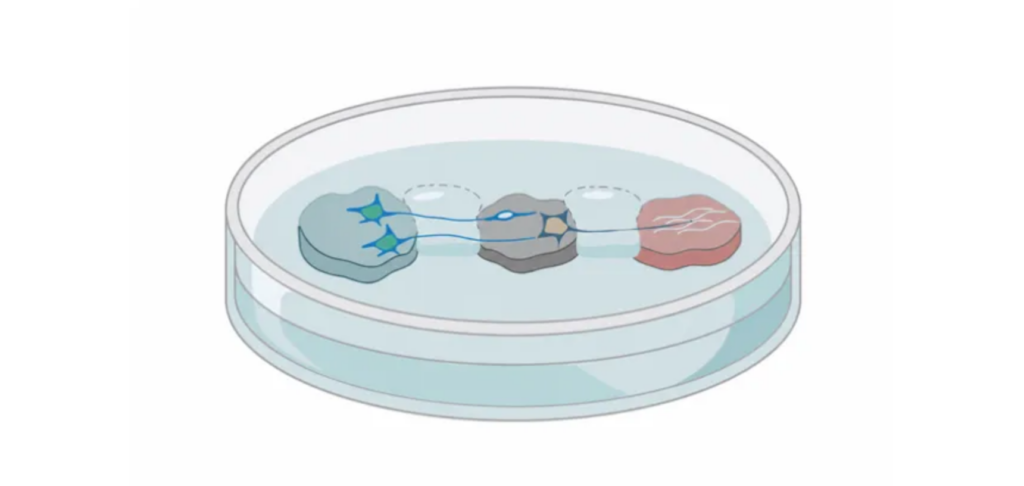
Now, in research published in Cell Reports, Dr Lakatos’s team has taken its research a step further, building a mini version of the connected human brain and spinal cord system in the lab by recreating these tissues using organoids.

In the human body, the brain and spinal cord tissues are distinct but connected by axons, so the researchers kept the brain and spinal cord organoids apart. They saw that nerve fibres from the brain tissue grew across the gap to connect to the spinal cord, forming a working circuit that could even cause tiny muscle clusters to contract.

By growing this human system in the dish for more than a year, they found that up until around day 150 – which corresponds to the mid-trimester of pregnancy – the axons were able to regrow after damage, but after this time, their growth was greatly impaired.

George Gibbons from the Department of Clinical Neurosciences at the University of Cambridge, the study’s first author, said: “Neurons taken from less mature organoids regrew long fibres after injury, but those from more mature organoids showed a sharp drop in their ability to regrow. In other words, poor regeneration is built into human neurons as they mature in the central nervous system.”

By analysing the gene expression – a sign of how active the genes are – in neurons that connect the brain and the spinal cord, they were able to identify a network of genes that acts as a ‘switch’ restricting the axon growth ability while the neurons mature to form connections (synapses). Amazingly, blocking key regulators of this network switched back on the ability of axons to grow.

The team then scanned a database of drug compounds to search for those that act on the genes in this network and identified as a candidate lynestrenol, a hormone drug licensed for managing certain menstrual disorders and as a contraceptive. When they tried this drug on damaged neurons, they found that it significantly boosted axon regrowth.

While scar tissue and inflammation may also restrict axon repair, exploring and tackling neuron-specific causes – the subject of this study – is very important. This is supported by evidence that axons of less mature neurons can grow through non-permissive environments that characterise injury sites.

Senior author Dr András Lakatos, who led the project at the Department of Clinical Neurosciences, said: “When the brain and spinal cord are damaged, the nerve fibres that carry movement signals from the brain to the spinal cord rarely grow back. That’s why paralysis is usually permanent. But we didn’t know exactly when the ability of axons to regenerate becomes limited. Our model provides a good indication that this block happens during development, and it can still be reversed after this point.

“Lynestrenol itself may not be the answer to spinal cord repair, but it shows us that, in principle, it should be possible to directly target human neurons and regenerate their axons. Although we still need to show that this strategy will also help to re-establish appropriate connections between the brain and spinal cord cells, this gives us hope that one day we may be able to treat conditions previously thought untreatable.”

Organoid models are an important way of understanding human biology. While animal models – for example, mice and rats – are useful for studying our biology as they share some similarities with humans, their differences ultimately limit what we can learn. Organoids grown from human stem cells can more closely mimic human biology.  

Dr Lakatos added: “Much of what we know about nerve regeneration comes from rodents, whose neurons behave differently from human neurons. Our sophisticated organoid models help bridge the knowledge gap from animal models to what we see in patients. They are also an important contribution to efforts to reduce the use of animals in research.”

Organoids, often referred to as ‘mini organs’, are being used increasingly to model human biology and disease. At the University of Cambridge alone, researchers use them to repair damaged liversunderstand Crohn’s disease in children, and model the early stages of pregnancy, among many other applications.

The research was funded by the UK Research and Innovation Medical Research Council and Spinal Research. Dr Lakatos has a long association with Spinal Research, from being a funded PhD student to now sitting on the charity's Grant Advisory Board Committee. 

Spinal Research Chief Executive Louisa McGinn said: “Today, we are entering a new era of hope and possibility for the 15million people worldwide living with a spinal cord injury.

“The next five years present an unprecedented opportunity to change what’s possible for people living with spinal cord injuries. Breakthrough therapies are nearing clinical reality and frontier technologies are creating bold new pathways toward repair and recovery.

"Spinal Research is committed to funding the most promising research and the best researchers around the world. The incredible work that Andras and his Group are doing at Cambridge shines a powerful light on what that can achieve and we’re delighted to support it.”

The NextGen project integrates genomics and clinical data into AI systems to revolutionise the prevention, diagnosis and treatment of cardiovascular diseases

The EU-funded NextGen(opens in new window) project is transforming cardiology by merging genomic sequences with clinical data into a secure ‘digital fabric’. This breakthrough enables AI models to deliver truly personalised therapies for heart disease patients across Europe.

Cardiovascular disease remains the leading cause of death globally, yet current treatments still rely on a one-size-fits-all approach. Launched in 2024, NextGen is working to change this. By integrating multiple data types from different sources into advanced AI systems, it seeks to transform the way in which heart conditions are prevented, diagnosed and treated.

The path to interoperability

The core challenge NextGen addresses is data fragmentation. Critical patient information currently exists in silos: genomic sequences in one database, cardiac imaging in another and clinical history in yet another. What is more, there are strict privacy laws and incompatible data formats to contend with, which further hinder the creation of comprehensive patient profiles. The NextGen consortium is developing a set of tools to remove these barriers, creating an interoperable environment where diverse data types can coexist securely, and enabling clinicians to make more informed, patient-specific decisions.

At the heart of this initiative is the creation of a digital fabric. By combining genomic data with cardiac imaging and clinical records in a single interoperable system, the project provides the secure, high-quality foundation needed to train robust cardiovascular AI models. Steffen Petersen, a professor at NextGen project partner Queen Mary University of London, explains in a press release(opens in new window) posted on the European Society of Cardiology website: “Clinicians rely on a wide range of clinical information to diagnose disease, predict risk, guide treatment and monitor outcomes. However, health data science has not yet fully captured the power of multimodal data such as symptoms, signs, electrocardiograms, blood tests, and imaging. Bringing these data together is crucial for advancing data-enabled innovation in healthcare, and NEXTGEN represents a major step forward.”

NextGen tools will ensure that health data remains meaningful and usable across different hospital systems and countries without losing its original clinical context. A strong emphasis is also placed on data privacy and governance, meaning that researchers will be able to share and use relevant cardiovascular datasets without transferring or exposing sensitive patient information. This secure interoperability is particularly important as European healthcare systems become increasingly interconnected.

Patient-centric and ethical by design

Consortium members are focused on establishing standards for data reusability and privacy, ensuring that patient trust remains paramount as digital health capabilities expand. It is therefore embedding the appropriate ethical constraints directly into the system, creating built-in safeguards that ensure data is used responsibly and which give patients greater control over their information.

The project has several real-world pilot programmes underway, involving five collaborating clinical sites working together within a dedicated network. The pilots will demonstrate the effectiveness of the NextGen (NEXT GENERATION TOOLS FOR GENOME-CENTRIC MULTIMODAL DATA INTEGRATION IN PERSONALISED CARDIOVASCULAR MEDICINE) tools, and their potential as a solution for the effective delivery of personalised medicine across Europe.

Once considered impossible, restoring movement after paralysis is becoming a reality thanks to EU-funded researchers who have developed a device that reconnects the brain to the body

Spinal cord injury (SCI) remains one of the most devastating neurological conditions, severing communication between the brain and the body and leaving millions worldwide with permanent paralysis.

Despite decades of research, restoring movement after spinal cord injury has remained one of neuroscience’s most intractable problems.

An EU-funded initiative supported by the European Innovation Council offers a new route: a fully implantable brain–spine interface that reconnects mind and body, offering fresh hope against paralysis.

“Treating patients with paralysis remains one of the greatest challenges of humanity,” said Professor Grégoire Courtine, the neuroscientist at the École Polytechnique Fédérale de Lausanne, Switzerland, who led the breakthrough research.

He said researchers have tried for decades – and failed – to regrow neurons and fibres with biological approaches.

“We have completely changed the approach. Instead of trying to repair the actual injury, we are focusing on what is intact below the injury, but disconnected from the brain,” added Courtine, who has pioneered new ways to restore movement after paralysis using spinal stimulation and neurotechnology.

A digital bridge across the injury

The EU-funded ReverseParalysis project, built around research led by Courtine, has developed a new generation of brain–spine interfaces designed to restore both lower- and upper-limb function in people living with SCI.

Rather than relying on damaged nerve pathways, the system creates a “digital bridge” that links brain and spinal signals directly. By combining advances in neuroscience, bioengineering and AI from teams in the Netherlands, Switzerland and France, the technology bypasses the site of injury, allowing nerve communication to resume.

After SCI, movement signals from the brain can no longer reach the muscles. In this approach, a small implant reads signals from the brain’s motor cortex, translates them into commands, and relays them to a spinal implant positioned below the injury.

This delivers precise electrical stimulation to the nerves controlling muscles, so that thinking “walk” triggers the legs to move.

Until recently, most technologies focused on helping people adapt to paralysis – wheelchairs, walkers or exoskeletons – rather than restoring movement itself.

From breakthrough to first steps

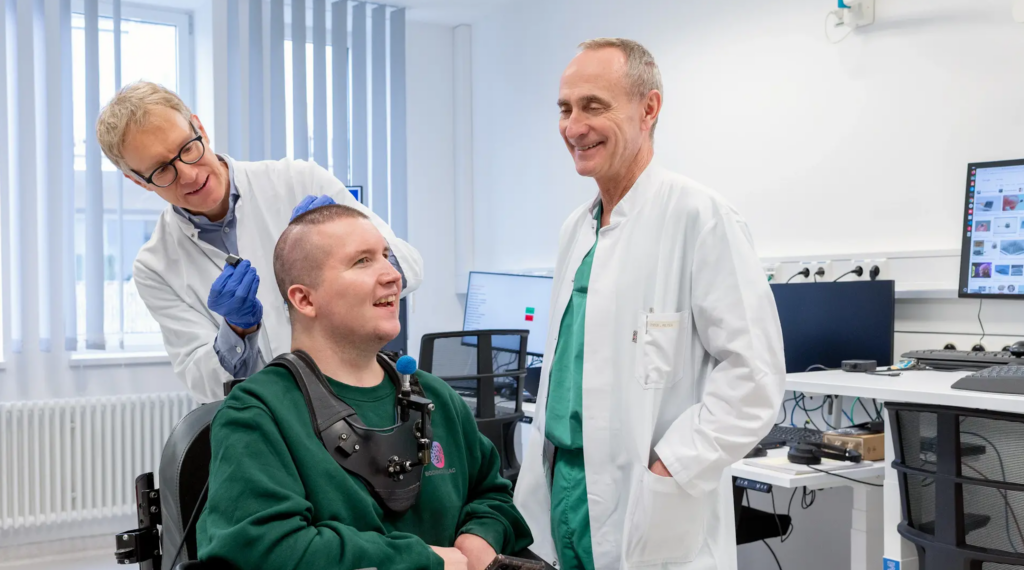
Under the care of neurosurgeon Dr Jocelyne Bloch at Lausanne University Hospital, the first patient to receive the prototype implant was David Mzee, a sports education student paralysed in a gymnastics accident.

In the run-up to surgery, he was competing at the Wheelchair Rugby World Cup. Courtine attended one of his matches with his newborn daughter.

“David looked her straight in the eye and said, ‘I will walk before you’,” said Courtine. “Eight months later, on a beautiful day at Lake Geneva, he did exactly that. He made the first steps ever in the history of paralysis patients. It was a very, very special moment.”

Not only did Mzee learn to stand and walk with support, he also went on to qualify as a sports teacher and now works at a vocational school.

“I’m still dependent on a wheelchair, but with a spinal cord injury at the neck level, every small improvement makes a big difference. Each bit of regained function really counts,” Mzee said.

Building on this breakthrough, the three-year ReverseParalysis project, completed in 2025, achieved results once considered out of reach: two people with complete spinal cord injuries regained the ability to stand and walk, while two others recovered movement in their arms and hands, allowing them to perform everyday tasks again.

Dr Vincent Delattre, co-founder of ONWARD Medical, a neurotechnology company based in Eindhoven, the Netherlands, which coordinated the ReverseParalysis project, is now working to turn these laboratory results into a product for clinical use.

“One of our participants was able to eat something by himself for the first time in years,” he said. “He picked up a sausage and took a bite. When you see the smile on that person’s face, that is enough to drive everything we do.”

Relearning movement

For people living with SCI, even small gains in mobility can transform daily life, reducing dependence on carers and restoring a sense of autonomy.

Yet SCI is highly complex: injuries vary in location and severity, making it difficult to decode brain signals accurately and translate them into smooth, natural movement. Each success also revealed how much there is still to understand about relearning lost skills.

To tackle this, the ReverseParalysis team integrated machine learning algorithms that adapt to each individual user. These systems continuously refine how brain signals are interpreted, improving performance over time. Advances in electrode design have also enabled precise targeting of neural pathways within the spinal cord.

“It is not a cure; it is a first step in a recovery process,” said Delattre. “With intensive training, patients can improve and may even regain some function without stimulation.”

Expanding the horizon

The team is now applying its expertise to other challenges linked to paralysis. One focus is stabilising blood pressure, a common but often overlooked complication of SCI that can cause dizziness and fatigue, and reduce quality of life.

Using targeted spinal stimulation, the researchers aim to help patients sit upright for longer, take part in therapy and carry out daily activities more safely.

The technology may also benefit stroke survivors. While a stroke does not damage the spinal cord, it disrupts the brain’s ability to control movement. The goal is to strengthen and stabilise the remaining signals to restore function.

The next challenge for ONWARD Medical is to turn specialised laboratory systems into practical, self-contained devices that can be widely used in clinical settings. This step – making the technology accessible to more patients – may still be 5 to 10 years away.

As Delattre puts it, the boundaries of recovery after SCI are shifting. “We are pushing beyond the limits of what was previously thought possible.”

This article was originally published in Horizon the EU Research and Innovation Magazine.

Text: Allison Jones

Photo: Researchers have built implants linking brain signals to movement in paralysis patients. © Jimmy_Ravier_EPFL

With chronic kidney disease affecting over 100 million Europeans and costing around EUR 140 billion annually, EU-TRAIN helps address the urgent need for more accurate diagnostics

For patients with end-stage kidney disease, an organ transplant can be their best hope for recovery. Yet despite medical advances such as immunosuppressive drugs, around 10 % of kidney transplants are rejected within the first year, says Maud Racapé from the French National Institute of Health and Medical Research(opens in new window).

“With so many factors involved, predicting rejection is challenging,” says Racapé, coordinator of the EU-TRAIN(opens in new window) project. “Our EU-TRACER tool uses relevant clinical, immune system, genetic and biomarker data to quantify individual risks.”

Accessible through a secure web-based interface, EU-TRACER helps clinicians assess patients in real time for early signs of rejection, alongside high or low risk of complications, to avoid unnecessary invasive procedures.

“Incorporating non-invasive biomarkers and gene expression data into care parameters could improve prediction accuracy by around 30 %,” adds Racapé.

Multidimensional data for risk stratification

EU-TRAIN combined an existing database of over 5 000 kidney transplant recipients with new data gleaned from two patient studies.

In the first, machine-learning techniques and advanced statistical modelling analysed thousands of data points from 554 patients to ascertain if both new and previously identified biomarkers could help predict transplant rejection.

“Many of the biomarkers tested, informed by previously published results(opens in new window), did not significantly improve rejection predictions compared to standard monitoring, highlighting the importance of real-world testing,” notes Racapé. “The exception was CD4, a protein that activates other immune cells, alongside so-called ‘circulating anti-HLA DSA’, blood antibodies that attack transplanted organ proteins.”

Leveraging AI-enabled precision medicine

These results informed the second study testing the AI-enabled EU-TRACER tool to evaluate if biomarker-guided monitoring safely reduced the number of biopsies performed within the first year of transplantation.

The tool’s algorithm, informed by select clinical, biological and immunological parameters relevant to rejection prediction – including a new promising non-invasive biomarker called donor-derived cell-free DNA (dd-cfDNA) – was applied to 342 new kidney transplant patients.

“Instead of doctors having to review separate patient charts, the algorithm aggregates the most predictive parameters,” explains Racapé.

Compared with a control group with standard compatibility monitoring, 64 % of biopsies were cancelled in the EU-TRACER group. There were similar rates of rejection, renal function, donor organ loss and death between both groups. “These results show that the EU-TRACER tool can be safely used to avoid invasive protocol biopsies,” notes Racapé.

The transition from research to clinical use

With chronic kidney disease affecting over 100 million Europeans and exerting annual health costs of EUR 140 billion(opens in new window), EU-TRAIN helps address the urgent need for more accurate diagnostics and effective treatments.

More broadly, the project contributes to European initiatives to advance personalised medicine(opens in new window) for improved healthcare outcomes.

The team is now extending the EU-TRACER Impact Study to assess if the tool can also avoid biopsies for suspected organ rejection. Meanwhile EU-TRACER will be further validated in larger more diverse patient populations, with new biomarkers fed into its predictive models.

“Our vision is to expand the platform to other organ transplants – already under way in heart transplantation – to help establish data-driven precision medicine as standard in transplant care,” concludes Racapé.

Stanford researchers interviewed 21 global health leaders to identify specific strategies men can use to support women’s career advancement

Amanda Marr Chung, DrPH, executive director of the Stanford Center for Innovation in Global Health (CIGH), has been committed to advancing women’s leadership in her work in global health over the past two decades. For her, gender equity is not abstract, but an everyday reality – both in her research and at home.

Recently, Marr Chung recalled having to juggle a flood of group texts, amidst a closely approaching manuscript deadline, with five other mothers all coordinating a carpooling schedule for their high school sons’ water polo practice. Ironically, the manuscript Marr Chung was preparing was on women’s leadership in global health. Particularly, she had researched women’s underrepresentation in leadership roles while facing barriers like disproportionate caregiving responsibilities – just like the five mothers and herself coordinating carpooling.

“This is just one example of the invisible, unpaid, and undervalued work that women do as caregivers, also known as the second shift,” said Marr Chung.

The manuscript, co-authored by Marr Chung, along with Ola Alani, MS, CIGH research coordinator, and Michele Barry, MD, senior associate dean and director of CIGH, with funding from CIGH-founded nonprofit WomenLift Health, is now published in PLOS Global Public Health. In it, Marr Chung, Alani, and Barry shine light on the specific barriers women face in advancing to leadership roles in global health and underscore the importance of male allyship, in an effort to establish more equitable global health research.

In this context, male allyship is defined as the “purposeful collaboration by males who inherently have more privilege and power with the goal of achieving gender equity through the promotion of women’s voices and accomplishments,” said Marr Chung.

For Barry, who founded WomenLift Health to help women step into leadership positions, “it became crystal clear that male allyship was a crucial factor,” she said. “I believe most men want to be mentors and allies of women colleagues, but at times lack the tools. It was my hope that this study, which was funded by WomenLift, helps give them some of those tools.”

Recommendations for effective male allyship

The publication seeks to address a longstanding challenge in global health: Inequitable representation of women in leadership positions. This study advocates for increased male allyship, identifying actions and best practices that can support women’s elevation into leadership roles in the field of global health. Researchers conducted qualitative interviews with 21 global health leaders (11 females, 10 males) across the U.S. and Canada to learn about barriers to women’s advancement to leadership, along with effective approaches to overcoming these barriers.

From these interviews, researchers identified several recommendations for male allies spanning the individual, institutional, and societal levels. Some key recommendations are listed below.

  1. Individual level

Complete a self-assessment (to mitigate counterproductive behaviors and biases)

Engage in effective mentorship practices

Advocate publicly

And serve as a positive caregiving role model

  1. Institutional level

Emphasize the importance of cultivating an enabling environment that facilitates open dialogue and collaboration rather than competition

Establish goals and metrics and make them publicly available

And integrate required allyship training for all faculty as well as into periodic evaluations and promotion criteria

  1. Societal level

Promote early education and shared caregiving to shift cultural norms on gender roles

The authors acknowledged a limitation of this study in only interviewing global health leaders based at academic institutions in the U.S. and Canada, with gaps in representation across ethnicities, gender identities, and institution types. As a next step, they plan to gather feedback from mid-career African physicians and expand research to additional geographic contexts through a global survey.

Why women’s leadership matters

Currently, women make up close to 70% of the global health workforce but only hold 25% leadership positions. When women hold leadership positions, more equitable, inclusive, collaborative workplaces tend to follow. In particular, women leaders have supported climate mitigation and other global health challenges; prioritized the needs of girls, women, and vulnerable or overlooked populations; and increased women participants in research studies.

I believe most men want to be mentors and allies of women colleagues, but at times lack the tools. It was my hope that this study … helps give them some of those tools.

Dr. Michele Barry

Director, Center for Innovation in Global Health

Women CEOs have increased from 29% to 35% since 2018, women are still far from having equal leadership representation in global health and other sectors. This highlights the persistent need to address structural barriers that continue to shape leadership advancement, the publication’s authors write.

“It’s incumbent upon us as a society to really challenge and discuss gender roles and stereotypes and biases as well as caregiving, power, and privilege, not just in the classrooms but around the family dinner table,” said Marr Chung, describing her appreciation for her own male allies, including her husband and two sons. This is especially urgent with the rise of the manosphere, toxic masculinity, and the increasing potential of AI to harm women and girls, she added.

Marr Chung continued: “This mentality of a rising tide lifts all boats will result in better research, better relationships, and a healthier planet and people.”

Writer: Catherine Wu

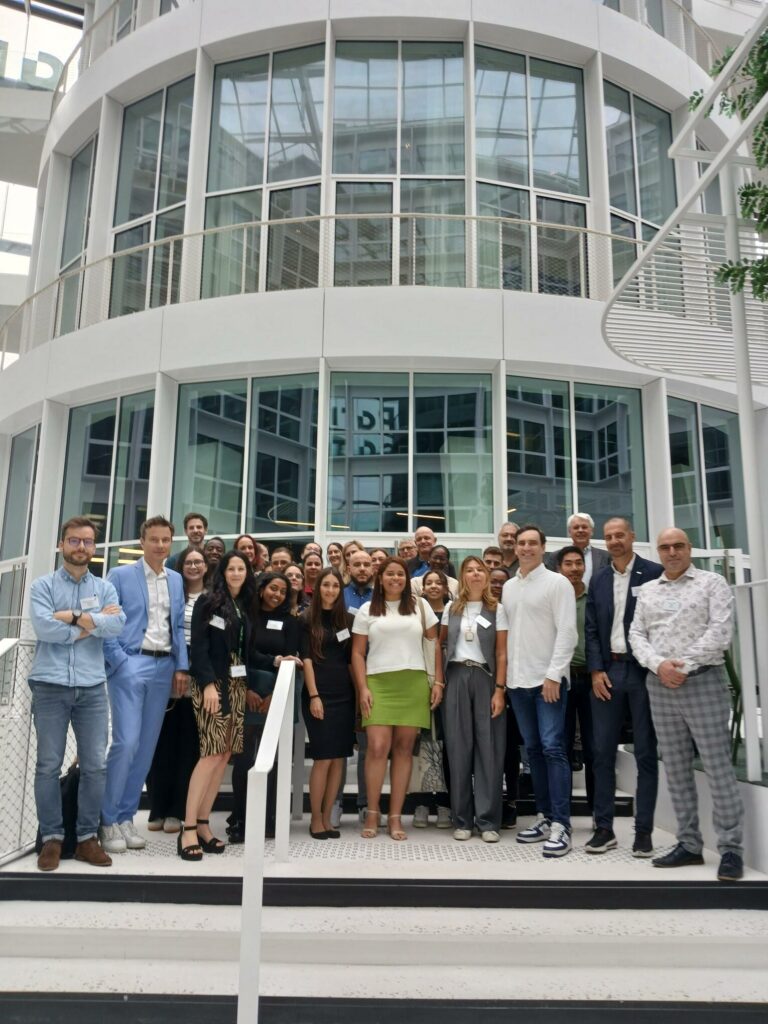
Image: Attendees of the 2024 WomenLift Global Health Conference held in Tanzania gather for a mentorship breakfast. The conference was hosted by the nonprofit WomenLift Health, which was founded and incubated at the Stanford Center for Innovation in Global Health. | WomenLift Health

For more information

This story was originally published by Stanford Center for Innovation in Global Health.

Featured

Most Read

We use cookies

We use cookies on our website. Some of them are essential for the operation of the site, while others help us to improve this site and the user experience (tracking cookies). You can decide for yourself whether you want to allow cookies or not. Please note that if you reject them, you may not be able to use all the functionalities of the site.