Cities

Explore policies, governance, and urban projects driving city development.

Hidden hearing loss affects millions, but has no diagnosis or treatment options. EU-funded researchers have developed tools that could change both

Imagine struggling to follow conversations in a noisy restaurant or keep up in a busy office, yet being told by a doctor that your hearing is fine. That is the frustrating reality for people living with cochlear synaptopathy, or hidden hearing loss.

Around 34 million adults in the EU live with a disabling hearing loss, according to the Hearing Health Forum EU. But the true scale of the problem is likely much larger, because conventional hearing tests cannot detect cochlear synaptopathy at all.

There is no clinical diagnosis for the condition and no approved treatment, leaving many people with real hearing difficulties and no help available.

This hidden hearing loss can be debilitating, explained Professor Ingeborg Dhooge, who heads the Ear, Nose and Throat department at Ghent University hospital in Belgium. Dhooge was a clinical consultant on a research initiative called EarDiTech, which investigated the condition between 2022 and 2026.

The project was funded by the European Innovation Council, which helps researchers and innovators convert bold scientific ideas into real-world products.

“Everywhere you go, there is always noise,” Dhooge said. “When you go shopping, there is noise, music playing. At work, people are often placed in open plan offices. This creates a lot of background noise, which interferes with the productivity of those patients.”

Current options are limited: training people to lip read and focus more on speech sounds. But the EarDiTech researchers developed a test that can detect hidden hearing loss, and have been working on new software for hearing aids.

How hearing goes wrong

In the inner ear, sound is detected by tiny hair cells that convert vibrations into neural signals, which travel to the brain via synaptic connections between the hair cells and the auditory nerve.

Until recently, it was thought that age-related hearing loss starts with damaged hair cells.

“We now know that the first damage to the auditory structures is not the hair cells, but it’s actually these synapses that connect the hair cells to the brain,” explained Professor Sarah Verhulst, who leads the Hearing Technology lab at Ghent University.

The distinction matters, stressed Verhulst. As coordinator of the EarDiTech research, she understood the stakes: you only need one synapse per hair cell to detect a sound, but you need many working together to decode speech in a noisy environment.

The standard clinical tool for assessing hearing is the audiogram, in which patients are played tones at different pitches and volumes through headphones and asked to signal if they can hear them.

It measures hair cell performance, but says nothing about how many working synapses a patient has. Therefore, it cannot capture the difficulties those with cochlear synaptopathy face in the real world.

Counting synapses

The EarDiTech test combines electrodes placed on the forehead and earlobes with a specially designed audio stimulus, developed through years of research into modelling the auditory system.

“We built these computer models of the hair cells and the synapses,” Verhulst said. “Basically, we can simulate the auditory nerve responses or the synapses’ response in the whole cochlear model. Using this computational method, we can then see which audio stimulus is best able to fire off all these synapses at the same time.”

The test is designed to produce the strongest possible synaptic response. When someone with healthy synapses hears the stimulus, the electrodes detect a large spike in neural activity. In those with synapse loss, the response is smaller.

“By comparing the size of a patient’s response to the normal hearing response, we can estimate the degree of cochlear synaptopathy,” Verhulst said.

The researchers have shrunk the technology into a compact, portable device. Clinical trials at Ghent University have shown it can identify cochlear synaptopathy across different age groups.

The test is simple and requires no surgical procedure, so it can fit easily into everyday clinical practice, giving audiologists and ear, nose and throat specialists a tool they currently do not have.

The next step is obtaining CE marking, to certify that the device meets EU requirements for medical diagnostic equipment. Verhulst said that once they have investment to fund this, she expects it to take around 18 months to 2 years. “I think when it’s on the market, ear, nose and throat doctors and hospitals will use it,” she added.

A smarter hearing aid

Detecting hidden hearing loss is only half the challenge. The other part is finding a solution.

Standard hearing aids mainly amplify sound, which does not really help people who struggle to pick out speech from background noise.

“To some extent, hearing aids can help, but it’s difficult because with them everything becomes louder, but not necessarily clearer,” said Dhooge. “This means that patients can still struggle to pick out different sounds in noisy environments.”

To address this, the team used machine learning to train a software algorithm on two computational models: one simulating normal hearing, the other simulating the faulty sound processing of someone with cochlear synaptopathy.

The goal was an algorithm that could modify incoming sound in a way that best stimulated the synapses a patient still has. That would improve their ability to follow speech in noisy environments.

Clinical trials have shown measurable benefits in patients with cochlear synaptopathy. The team have also shown that the algorithm can run on low battery power and on processing chips commonly used in hearing aids.

In theory, this means the algorithm could run on the next generation of hearing aids, or even consumer earbuds. Verhulst envisages a future in which people will be able to tell their phone that they want to hear better and it will activate the hidden hearing loss software on the earbuds.

For now, the EarDiTech team is actively seeking hardware manufacturers, such as hearing aid makers and chipset companies, who can help them further develop their software and turn it into products patients can actually buy.

The algorithm uses each patient’s CochSyn test results to adjust sound to their specific degree of damage – something no current hearing aid can do.

Beyond the clinic

Hidden hearing loss has only been properly identified in the last decade, and there is still limited understanding of how many people are affected or how it develops with age.

“Now we have a tool that we can use in the clinic to gain a better idea of how big the problem is and how impaired people are,” Dhooge said. “We can conduct long-term studies following up patients and see how it evolves.”

That evidence base, researchers hope, will be what persuades health systems to act.

Text: By Michael Allen

This article was originally published in  the EU Research and Innovation Magazine.

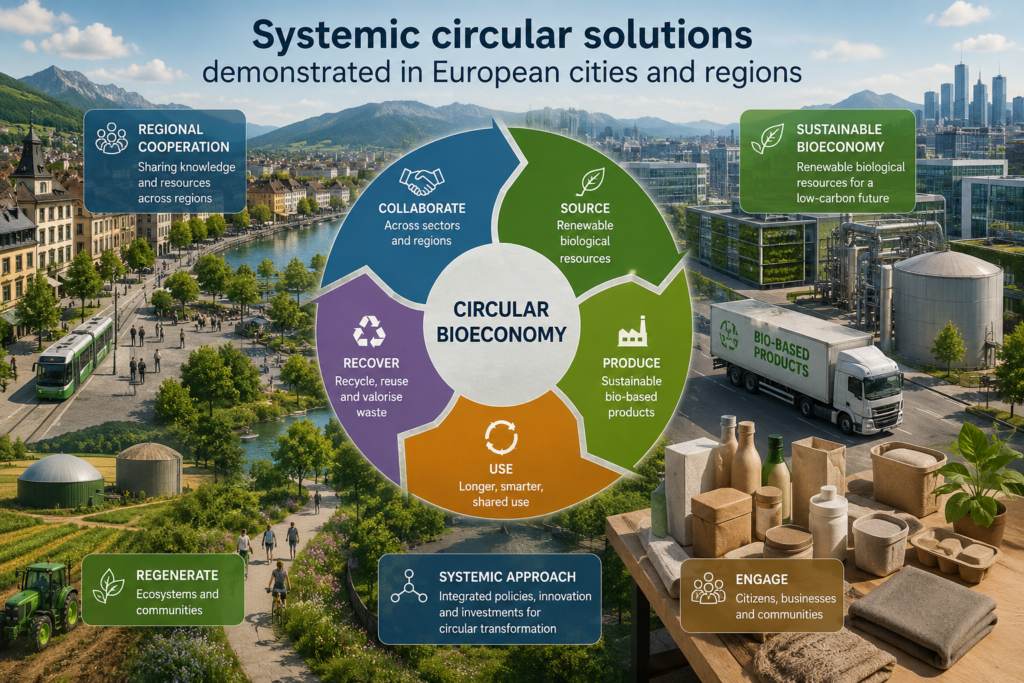
Europe’s cities and regions manage many of the systems where resources are consumed, wasted and reused – from waste, water and food systems to mobility, housing and local industry. By working with businesses, researchers and citizens, they can turn local waste streams into valuable resources, reduce environmental pressures and create more resilient, innovative and liveable communities. This CORDIS Results Pack highlights six EU-funded projects that developed and demonstrated successful, transferable circular solutions in European cities and regions

Because cities concentrate people, infrastructure, consumption and economic activity, they also concentrate opportunities for circular innovation. The choices made by local and regional authorities can therefore have an outsized impact on Europe’s transition towards a more resource-efficient economy. Cities consume over 75 % of natural resources, generate more than half of global waste and are responsible for around 70 % of global CO2 emissions.

Yet, these same territories also produce large volumes of food waste, wastewater, construction waste and industrial by-products that hold immense potential to serve as local secondary resources. Local and regional authorities are uniquely positioned to unlock this potential, as they manage the very systems central to a circular transition, including waste, water, mobility, housing, food systems and public procurement.

A commitment to real-world solutions

Through the EU’s flagship Circular Cities and Regions Initiative – CCRI(opens in new window), cities and regions across Europe are connecting with peers, testing new approaches and accelerating the deployment of circular solutions adapted to local realities. This CORDIS Results Pack showcases systemic, on-the-ground circular economy solutions deployed in European cities and regions under the CCRI from six Horizon 2020 and Horizon Europe projects.

These initiatives are already transforming local value chains, reducing resource use, creating economic opportunities and improving quality of life for citizens. They show how systemic circular solutions enable communities to achieve ambitious sustainability goals while igniting job creation, skills development and social innovation.

From local action to European impact

Beyond environmental gains, circular solutions can deliver tangible benefits for citizens and local economies. By turning waste into resources, cities and regions can reduce pressure on natural resources, strengthen local supply chains, create new business opportunities and generate skilled jobs. Circular approaches can also help improve resource security, lower waste management costs and make communities more resilient to future economic and environmental shocks.

These local initiatives directly contribute to the objectives of the EU’s Circular Economy Action Plan(opens in new window), a core pillar of the European Green Deal(opens in new window). By extending the life of products and materials, promoting reuse and recycling, and creating new value from waste streams, cities and regions are helping translate European ambitions into practical solutions that improve everyday life.

Scaling solutions across Europe

The projects featured in this Results Pack demonstrate that circular economy solutions are no longer theoretical concepts but practical approaches already delivering results in diverse European territories. From turning wastewater into fertilisers and extending the life of electric vehicle batteries to creating new value chains from biowaste, these initiatives show how local action can drive systemic change.

Through collaboration between public authorities, businesses, researchers and citizens, cities and regions are proving that circular solutions can be adapted to different territorial contexts and replicated elsewhere. Their experiences offer valuable lessons for other communities looking to accelerate their own transition towards a more resilient, competitive and sustainable future.

Circular bioresources and biowaste valorisation allow cities and regions to transform food waste, agricultural residues and municipal waste into bio-based chemicals, fertilisers and materials. The HOOP project turned the organic fraction of municipal solid waste and urban wastewater sludge into high added-value products beyond compost and biogas.

Meanwhile, Agro2Circular upcycled fruit and vegetable waste into valuable natural ingredients for cosmetics, functional foods and nutraceuticals. TREASoURcE used organic waste from agriculture and food production to create biogas and recycled fertilisers.

In addition, circular value chains can reduce waste and emissions across multiple sectors. FRONTSH1P transformed industrial biowaste into compostable plastics, biostimulants and biolubricants. P2GreeN converted urban sanitary waste into safe bio-based fertilisers for agricultural production.

Finally, local and regional authorities can play a key role in mobilising local stakeholders around shared circular ambitions. ROBIN helped regions build the cooperation frameworks and stakeholder ecosystems needed to accelerate circular bioeconomy action on the ground.

An EU-backed study explores different long-term adaptation pathways for Venice under rising seas.

Venice has coexisted with the sea for 1 500 years, but accelerating sea level rise and land subsidence now threaten its very existence. A new study(opens in new window) supported by the EU-funded P2R(opens in new window) and CoCliCo(opens in new window) projects analyses different long-term adaptations for Venice and its lagoon. Published in ‘Scientific Reports’, the findings are stark: no strategy can preserve the city as it is now indefinitely. Instead, adaptation requires accepting fundamental transformation.

The limits of current defences

Venice’s current defences, the MOSE barriers, consist of 78 huge steel gates attached to the seafloor to prevent excessively high tides from entering the lagoon. These mobile barriers cost EUR 6 billion and became operational in 2020. While effective against occasional high waters, they are now being used more and more frequently. Between 2020 and 2025, the barriers closed 108 times; but in just the first two months of 2026, they have already been activated 30 times.

As sea levels rise, the MOSE system risks becoming a semi-permanent seal rather than an occasional shield. Frequent closures would severely disrupt shipping and tourism, alter lagoon ecology, and necessitate massive new infrastructure for sewage treatment and water pumping. Even with supplementary measures such as injecting sea water into the rocks deep underground to reverse subsidence, MOSE’s effectiveness diminishes beyond approximately 1 metre of sea level rise.

Alternatives and trade-offs

The study evaluates progressively radical alternatives. Building a ring of dykes around Venice itself could physically separate the city from the lagoon, potentially becoming necessary by 2100. Estimated costs range between EUR 500 million and EUR 4.5 billion. A more extreme option involves enclosing the entire lagoon within a ‘super levee’ system supported by continuous pumping, capable of withstanding up to 10 metres of sea level rise. However, this approach, costing over EUR 30 billion, would severely compromise the lagoon’s living ecosystem. Beyond 5 metres of sea level rise, projected after 2300, relocation of much of the city and population to safer ground may become the only viable option, with costs reaching up to EUR 100 billion.

However, as study co-authors Robert James Nicholls, Marjolijn Haasnoot and Piero Lionello comment in an article(opens in new window) published in ‘The Conversation’, costs are not the only concern. “How do you even put a price on the cultural value of Venice?” they ask. “Especially as none of these measures will be able to sustain the Venice we see today in the long-term. Adaptation can manage change up to a certain point – beyond that, we are no longer preserving the present. Rather, we are designing a fundamentally different future.”

Critically, the research shows there is no optimal strategy. Each pathway involves trade-offs between residents’ well-being and safety, economic prosperity, the future of the lagoon’s ecosystems, heritage preservation, and the region’s traditions and culture.

Unlike many vulnerable coastal areas that continue attracting development, Venice is engaging in essential long-term planning. However, implementing major interventions such as the ones outlined above can take decades. The implications of the study supported by P2R (Pathways2Resilience: Co-developing pathways towards Climate resilient regions in Europe) and CoCliCo (COASTAL CLIMATE CORE SERVICES) extend beyond Venice. All low-lying coastal regions must recognise the inevitability of long-term sea level rise and begin preparing now.

The study emphasizes that tourism is evolving toward more connected, flexible and lifestyle-driven experiences

The global tourism industry is entering a new phase defined by technological innovation, service personalization and shifting traveler preferences. This is highlighted in the Travel Trends 2026 report, produced by Amadeus in collaboration with consulting firm Globetrender, which identifies six major trends expected to significantly influence how people plan, book and experience travel in the coming years.

The study emphasizes that tourism is evolving toward more connected, flexible and lifestyle-driven experiences. This transformation is fueled by rapid technological advances and by travelers seeking journeys that better reflect their personal interests, priorities and expectations. Today’s travelers increasingly value convenience, tailored itineraries and experiences that combine culture, entertainment and well-being.

One of the most notable developments identified in the report is the “Pawprint Economy,” a trend reflecting the growing role of pets in travel decisions. More travelers are choosing to include their pets in their vacations, encouraging the travel sector to expand services designed specifically for animal companions. Hotels are introducing more sophisticated pet-friendly amenities, while transportation providers and destinations are developing solutions that make traveling with pets easier and more comfortable. As a result, tourism offerings are gradually adapting to a reality where pets are no longer an afterthought but an integral part of many travelers’ plans.

Another key trend is “Travel Mixology,” which describes the blending of artificial intelligence with human expertise in travel planning. AI-powered tools can analyze large volumes of traveler data to generate recommendations tailored to individual preferences, past behaviors and interests. However, the report notes that human insight remains essential. Travel advisors and professionals bring creativity, cultural understanding and contextual knowledge that complement algorithm-based suggestions. The future of trip planning, therefore, is expected to rely on a hybrid approach where technology enhances — rather than replaces — human expertise.

The aviation sector will also play a crucial role in shaping travel patterns through the trend known as “Point-to-Point Precision.” Advances in aircraft technology, particularly the expansion of long-range narrow-body aircraft, are enabling airlines to operate more direct routes between cities that previously required connecting flights. This shift can significantly reduce travel times and open new international links for secondary and emerging destinations. As a result, travelers may gain access to a wider range of places without the inconvenience of traditional hub-and-spoke routes.

In the hospitality sector, the report highlights the emergence of “Pick ‘n’ Stays,” a trend centered on the hyper-personalization of accommodation experiences. Hotels are increasingly offering guests the ability to customize multiple aspects of their stay. From selecting room features and amenities to adjusting services based on individual lifestyle needs, travelers can shape their hotel experience according to their preferences. In this model, the hotel room evolves from a standardized space into a flexible environment designed specifically for each guest.

The influence of entertainment and media on travel choices is also gaining momentum through the trend called “Pop-Culture Pilgrimages.” Movies, television series, video games and global entertainment phenomena are increasingly inspiring travelers to visit destinations associated with their favorite stories or celebrities. Fans seek to experience real-world locations connected to fictional universes or cultural icons, creating new tourism opportunities for destinations that appear in widely consumed media content. This growing link between popular culture and tourism is reshaping how certain places gain global visibility.

Finally, the report identifies the rise of “Innovation Tourism,” a concept linked to travelers interested in exploring destinations associated with technological progress and scientific advancement. Cities known for innovation, research centers, futuristic museums and interactive science attractions are becoming appealing travel experiences in their own right. Visitors are increasingly curious about emerging technologies, sustainable urban development and experimental projects that offer a glimpse into the future.

Taken together, these six trends illustrate a broader transformation within the global tourism landscape. Modern travelers are not simply looking to move from one place to another; they are seeking experiences that reflect their lifestyles, interests and values, supported by technology that simplifies every stage of the journey.

For the tourism industry — including airlines, hotels, travel agencies and destinations — adapting to these evolving expectations will be essential. Companies that successfully integrate innovation, personalization and meaningful experiences will be better positioned to attract a new generation of travelers who are more informed, connected and selective than ever before.

According to the Amadeus report, the future of travel will be shaped by the intersection of technology, culture and human behavior. This convergence is expected to redefine not only how people travel, but also how they discover and engage with the world.

This is the CIRCULINK industrial research project, which aims to develop an intelligent AI‑powered platform to facilitate the efficient use of data and circulareconomy models in the fields of mobility, water, and energy

Las Rozas de Madrid (Madrid Region-Spain) has just joined a new technology research and innovation project. As part of a national consortium, the city will serve as a testing ground to validate the technology developed within the CIRCULINK Project. This initiative involves the development of a digital platform for the intelligent management of resources in urban and industrial environments using Artificial Intelligence.

With CIRCULINK, Las Rozas now has a total of 16 national and international R&D&I projects in which it participates with Las Rozas Innova. The Public Innovation and Technological Development Company of Las Rozas City Council has a dedicated department focused on innovation projects, enabling the city to take advantage of funding opportunities, technological development, and connections with other cities and organisations seeking innovative solutions to shared challenges.

The CIRCULINK project is funded by the Ministry of Industry and Tourism of the Spanish Government through the Support Programme for Innovative Business Clusters (AEI) under the “Climate‑neutral and Smart Cities” challenge,, The project will run for one year. Coordinated by the Smart City Cluster, the project includes participation from the solar‑energy cluster (SOLARTYS), the Automotive and Mobility Cluster of Galicia (CEAGA), Catalan Water Partnership, Foqum, GESOLAB, Go Zero Waste, AVENTEC, and EndeF Engineering.

The city as an urban living lab

In this new R&D&i project, Las Rozas is the only city participating as a testing environment, becoming the urban living lab where the platform’s use cases will be validated. In addition, Las Rozas Innova will collaborate in functional design and identification and definition of applicable scenarios in the field of mobility, with a focus on urban logistics.

Among the use cases proposed by Las Rozas to the consortium, one of the most notable is the exploration of reverse‑logistics models using municipal infrastructure such as public car parks. Through simulation, the city will analyse whether these spaces could serve as strategic points for managing returns and parcel pick‑ups, thus optimising logistics flows and promoting circular economy practices.

Las Rozas' participationin CIRCULINK is carried out through Las Rozas Innova, the Municipal Innovation Company of the City Council, and it is part of the strategy to attract and promote innovation projects in the municipality. This strategy has enabled the city to establish itself as an urban laboratory for innovation and research in Europe, gaining access to cutting‑edge technologies applied to cities.

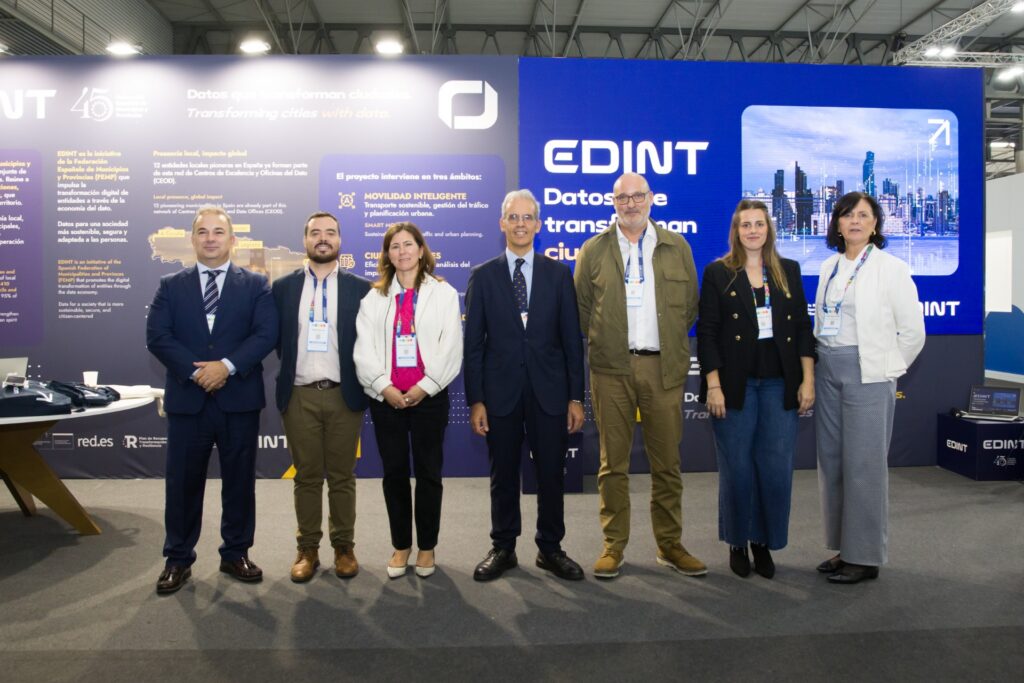
EDINT's success is based on collaboration between local governments, businesses, knowledge centres and different Spanish territories

Data has become the 'new oil': a fundamental resource that facilitates decision-making, enables process optimisation and increased productivity, and drives the transformation of the economy and society. However, the vast quantity of available information, sources and formats makes it difficult to manage and exploit its full value. To address this issue, the Spanish Federation of Municipalities and Provinces (FEMP) is promoting the EDINT project: 'Data Spaces for Smart Urban Infrastructures'. This national urban data space enables local entities to securely share, govern and utilise the data generated by smart city infrastructures. It promotes public innovation, public-private collaboration, and the development of the data economy at a local level.

EDINT has received €12.9 million in funding from the Recovery, Transformation and Resilience Plan, in collaboration with the Ministry for Digital Transformation and Public Administration, via Red.es. Under FEMP leadership, data becomes the fundamental raw material for public innovation, acquiring its maximum meaning at the local level and placing Spanish cities at the forefront of technology.

A collaborative urban data ecosystem

EDINT's success is based on collaboration between local governments, businesses, knowledge centres and different Spanish territories. The project provides a reliable environment for data exchange, the development of new digital services and evidence-based decision-making for local and supra-municipal governments, public bodies, technology and urban services companies, innovative SMEs, universities and research centres.

The project involves twelve local entities: the city councils of A Coruña, Alcoi, Fuenlabrada, Jerez de la Frontera, Logroño, Madrid, Málaga, Mataró, Santander and Valencia, as well as the provincial councils of Badajoz and Jaén. Each entity has a Centre of Excellence and Data Office (CEOD): a physical space with the necessary human and technical resources to help improve public services, promote innovation and encourage local employment within the data economy through shared management and analysis of urban data.

In this context, EDINT has identified three priority areas for action: urban mobility, the smart management of public services and local economic activity. In collaboration with the 12 CEODs and 36 private companies that have joined the project (three companies per CEOD), a catalogue of real-world applications will be created to control vehicle access in sensitive urban areas, optimise the management of urban resources and establish a Smart Urban Economic Observatory. This Observatory will integrate employment, mobility, entrepreneurship and trade data from public, private and open sources.

The network fosters the enhancement of cities’ digital capabilities, the ethical use of technology, and the creation of opportunities for global collaboration that accelerate digital innovation

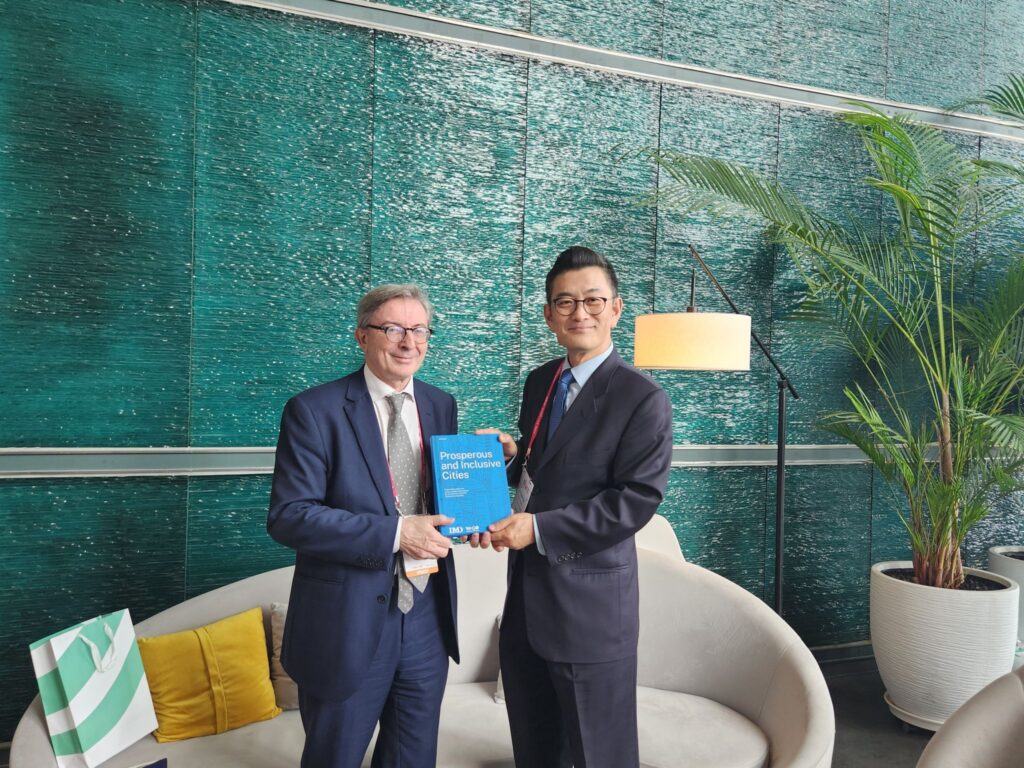
Madrid Digital Capital takes a further step in its commitment to connect spaces for cooperation and collaboration by joining the international network WeGO | World Smart Sustainable Cities Organization, one of the leading global alliances dedicated to promoting smart and sustainable cities. 

WeGO brings together more than 160 local governments along with a wide range of technological and academic organizations to promote smart urban development, international cooperation, and the exchange of best practices and innovative technological solutions.

The network promotes the improvement of cities’ digital capabilities, the ethical use of technology and the creation of opportunities for global collaboration to accelerate digital innovation on Data, AI, IoT, 5G, Cybersecurity and CityResilience, DigitalTwin and the development of the principles of usercentricities and of HumanAdaptiveCities with a vision of Human at the core. 

With this membership, Madrid joins an international community of cities leading digital transformation, strengthening its global position, expanding access to specialized knowledge, and reinforcing strategic alliances with key regions such as Asia-Pacific. 

This membership also boosts the international projection of Madrid’s technological ecosystem and encourages participation in projects, workshops, and training programs that enrich the Madrid Digital Capital strategy. 

Joining hashtag#WeGO (https://we-gov.org/) is an opportunity to continue learning, sharing, and building together. Because the future of cities is defined by cooperation, collaboration, and connection. 

Madrid moves forward with determination in deploying a technological model that enables the development of the city’s collective intelligence, which is shared within the international context. 

Promoting alliances, sharing knowledge, and opening new pathways for international cooperation is a way to build a more cognitive and competitive city—one that is closer to the needs of people and the environment. 

Because collaboration is the key to respond to the challenges of the city.

Launch proven resilience solutions in 90 days — no cost, minimal staff time.

Leading Cities is inviting municipalities worldwide to apply for one of five fully funded, no-cost innovation projects designed to help cities rapidly turn data into action without the delays, costs, or risks of traditional procurement.

Delivered in partnership with the Clinton Global Initiative, the AcceliGOV program enables cities to launch proven climate and infrastructure solutions in approximately 90 days, replacing what typically takes 18–24 months through a traditional RFP process.

Each selected city receives:

  • A fully supported pilot valued at $50,000–$100,000
  • Implementation support and training
  • Minimal staff time required

Only five cities (one per project) will be selected, with applications closing June 14, 2026, and deployments beginning in Q3 2026.

From intention to implementation

Cities today collect more data than ever before, yet many struggle to translate that information into decisions that strengthen resilience, improve public services, and protect residents.

AcceliGOV removes the barriers that often stall innovation by handling sourcing, vetting, onboarding, and deployment support in advance, allowing municipalities to focus on outcomes rather than process.

“Cities don’t need another feasibility study. They need solutions that work in the real world,” said Michael Lake, President & CEO of Leading Cities. “We help municipalities test proven technologies quickly and confidently. What usually takes two years can now happen in about three months—at no cost and with minimal effort from staff.”

To date, Leading Cities has 32 projects underway or completed, selected from a global pool of more than 5,000 vetted startups, as part of a commitment to deploy 100 resilience projects in 100 communities by 2030.

Five ready-to-deploy solutions

Each project addresses an existing municipal challenge and is prepared for rapid public-sector deployment:

RCOAST

Pinpoints shoreline erosion and evaluates which protective measures are working, helping coastal communities direct funding where it delivers the greatest impact.

True Flood Risk

Helps emergency managers identify which buildings are most likely to flood, enabling faster response planning and smarter resilience investments before disasters strike.

AquaSave

Detects leaks and inefficiencies in water systems in real time, reducing water and energy waste while generating reliable sustainability metrics and operational savings.

Whats Doing

Surfaces accessibility barriers faced by residents with disabilities, guiding improvements that make public spaces and services more inclusive.

Dosy Bikes

Expands safe mobility options for women across the Middle East and North Africa, while creating green workforce opportunities and reducing transportation-related emissions.

Most projects launch within 90 days and deliver results within three to six months. However, these deployments can evolve and expand as the utility of the solution becomes clear to the community. 

In Dargo, Australia, a pilot with WEO helped the community visualize previously undocumented local climate risks, achieving 100% coverage of priority areas within six months through combined satellite analysis and community input. The platform remains in active use today to support ongoing resilience planning.

Innovation without the usual risk

Each deployment includes onboarding, technical support, and performance measurement. Cities are not required to issue an RFP, commit capital funding, or dedicate significant staff time.

“Public-sector teams are stretched thin,” said Katy Southall, Chief of Impact and Innovation at Leading Cities. “We’ve done the heavy lifting, sourcing the solutions, preparing the providers, and structuring the pilots, so cities can focus on impact from day one.”

Apply now

Chief Innovation Officers, Smart City Directors, CIOs, CTOs, Chiefs of Staff, Mayors, and City Managers are encouraged to apply.

Only five municipalities will be selected. 

Coordinated by ETRA Investigación y Desarrollo S.A., the initiative brings together thirteen organisations from six EU countries, uniting technology developers, critical infrastructure operators, public bodies and research institutions

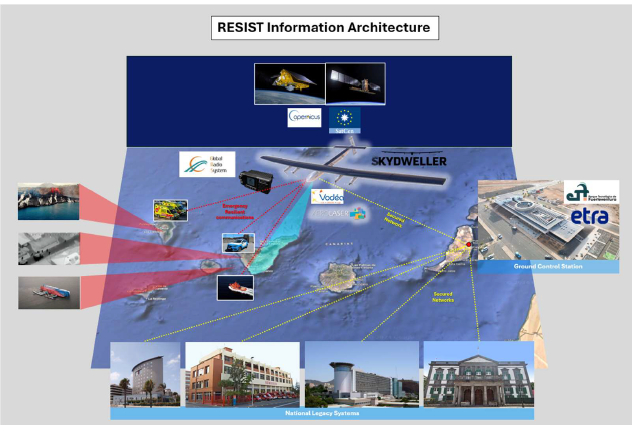
Valencia, January 20, 2026 - The consortium behind RESIST, funded under the Horizon Europe Programme with an EU contribution of around €5 million, has officially begun its activities with the ambition of reshaping how Europe monitors, protects and manages its critical infrastructure. Coordinated by ETRA Investigación y Desarrollo S.A., the initiative brings together thirteen organisations from six EU countries, uniting technology developers, critical infrastructure operators, public bodies and research institutions. Running for 30 months, from 1 October 2025 to 31 March 2028 and with, RESIST is now fully underway with the launch of its technical, operational and strategic workstreams.

Over the next thirty months, RESIST will work to develop an integrated system capable of anticipating, detecting and assessing natural, accidental or deliberate threats that may endanger critical infrastructures across EU territories such as energy transmission assets, power generation sites, industrial facilities or strategic distribution networks. By merging next-generation technologies with multi-source data, the project aims to significantly improve surveillance, diagnosis and coordination capacities in incident prevention and response.

At the core of the project lies the integration of the Skydweller High-Altitude Platform Station (HAPS), a high and medium altitude, ultra-persistent and sustainable aerial platform equipped with electro-optical, infrared, LiDAR and AIS sensors. This airborne capability is complemented by optical, infrared and SAR imagery from the Copernicus satellite programme, enabling a broad and continuous view of critical infrastructure and its surroundings. Through advanced analytical tools, AI-based detection, data fusion and risk assessment methods, RESIST will provide timely and reliable information to support prevention, operational decision-making and coordinated crisis management.

The platform is designed to reinforce the operational readiness of crisis managers and infrastructure operators across Europe. It will support the updating of emergency plans, the validation of multi-risk scenarios and the improvement of coordination between authorities and specialised agencies. Thanks to its strong focus on interoperability, the system will be compatible with existing national and European information frameworks, contributing to enhanced cross-border collaboration and more efficient response strategies.

“What truly sets RESIST apart is the way it combines ultra-persistent aerial surveillance, Copernicus satellite data, and AI-driven intelligence into a single operations-focused system. Instead of addressing threats in isolation, RESIST is designed to provide continuous situational awareness, early warnings and actionable intelligence, all validated in real infrastructure environments. This integrated approach represents a significant advance in the way critical infrastructure resilience is conceived and managed at European level.”, ETRA I+D representatives explain.

RESIST’s technological developments will be validated through two real-world demonstrations and one simulated use case. In the Canary Islands, Red Electrica de España will lead advanced monitoring of transmission power lines. In Portugal, CNET Centre For New Energy Technologies SA (EDP CNET) will coordinate the deployment of tools to monitor electricity generation and distribution infrastructure. In Cyprus, the European University Cyprus will conduct a simulated demonstration to assess surveillance of the strategic Vasiliko hydrocarbons site.

The RESIST consortium comprises key actors with the expertise needed to deal with these complex challenges. Alongside ETRA I+D, the project includes leading technology companies such as Skydweller, VODEA, AEROLASER and AIRMO, as well as major critical infrastructure operators and public authorities including Red Eléctrica de España, EDP CNET, Cyprus Civil Defence and the Autonomous Province of Trento. The partnership also involves respected European and academic institutions, among them the European Union Satellite Centre, European University Cyprus, the Parque Tecnológico de Fuerteventura and Fondazione SAFE. This portfolio of expertise ensures that RESIST’s technological advances remain closely aligned with operational needs, security requirements and public policy priorities.

RESIST contributes directly to the objectives of the Horizon Europe Resilient Infrastructure destination, promoting scientific excellence. Additionally, it places a strong emphasis on legal, ethical and security compliance, covering data protection, aviation regulations and emerging EU frameworks on artificial intelligence.

With its integrated approach, RESIST aims to position Europe at the forefront of critical infrastructure protection, delivering advanced and validated technological solutions that reinforce preparedness, enhance operational response and build long-term resilience against an evolving landscape of threats.

Funded by the European Union. Views and opinions expressed are however those of the author(s) only and do not necessarily reflect those of the European Union. Neither the European Union nor the granting authority can be held responsible for them. Horizon Europe Grant agreement. Nº 101225764.

Most Read

We use cookies

We use cookies on our website. Some of them are essential for the operation of the site, while others help us to improve this site and the user experience (tracking cookies). You can decide for yourself whether you want to allow cookies or not. Please note that if you reject them, you may not be able to use all the functionalities of the site.