



The team behind Stanford’s Our Voice citizen science research initiative explains the community-driven research practice being implemented in communities across the globe
Scientific research isn’t just about laboratory work. With just a few quick photos or observations, anyone who is interested in working with others to improve their community can be a citizen scientist.
Citizen science is a form of research that uses crowdsourced knowledge. This often involves community data-gathering for interpretation and use by researchers, which Stanford’s Our Voice citizen science research initiative refers to as citizen science “for” or “with” the people.
By contrast, their work, which focuses on health equity, enables citizen science “by the people” through engaging community members not only in data collection but also in analysis and use of their collective findings. The Our Voice method emphasizes collaboration with community-engaged researchers and community-based organizations to support residents in becoming agents of local change during their projects and beyond.
The team has found that their approach elicits critical local wisdom (in the form of data) that may not be accessible through traditional research methods. In many cases, data from citizen science projects can also be leveraged by the community itself to inform changes that are both relevant and sustainable.
Here are tips from Our Voice for engaging with and understanding citizen science:
1. Anyone can be a citizen scientist
Every person has valuable lived experiences that can inform research, educate others, and drive meaningful change. These lived experiences can include insights from daily activities, like picking up the kids from school or crossing a busy street.
Becoming a citizen scientist starts with recognizing that people already use observation in their everyday lives. An example is when you observe things that make it harder or easier to walk to your local community center. These observations, when combined with the observations of others, can help groups to identify high-priority concerns that can be improved upon relatively easily.
2. No observation is too small
The Our Voice team advises citizen scientists to err on the side of capturing more data – even what may initially seem insignificant. The team has found that when citizen scientists share their findings with other residents and discuss them together, the result is often more than the sum of its parts.
Through group discussions and analysis of collective experiences around specific local environments and settings, community members can meet other like-minded individuals and work together to broaden community impact. Community change comes from uniting together, and this type of process can also support new understandings and group connections.
3. It’s a win-win for individuals and their communities
Citizen scientists often report gaining new knowledge about their communities, new ways of activating change, and new connections that they can carry into the future. Our Voice projects have not only led to changes in local life, such as better traffic safety or improved health programming; they have also led to increased community cohesion, policy-level change, and individual-level changes in feelings of agency and connectedness.
The Our Voice team also has found that after completing an Our Voice project, citizen scientists may generate ideas for additional projects to address other issues that they deem important to their community.
One example of this phenomenon comes from a San Mateo County Our Voice project called FEAST, Food Environment Assessment using the Stanford Tool, which was initiated in 2013 by Stanford postdoctoral fellows Jylana Sheats and Sandra Winter. The initial FEAST project focused on barriers to food access in older, culturally diverse seniors living in San Mateo County. Then, during the next several years, this group of seniors initiated several more citizen science projects on their own, which focused on additional health and well-being issues, including pedestrian safety and senior affordable housing.
4. Citizen science can contribute to better healthcare
The Our Voice team has found that citizen science can act as a “gateway” for communities to pinpoint important issues and identify relevant stakeholders to drive positive change. For example, the team has seen how this type of community-engaged citizen science can lead to improvements in healthcare delivery.
A recent health clinic success story has been a project led by Holly Tabor of the Stanford Center for Biomedical Ethics at Stanford Medicine. The project is part of IDD-TRANSFORM, which strives to prioritize the perspectives and needs of adults with intellectual and developmental disabilities (IDD) across different aspects of health care. Through this work, individuals with IDD have been able to team up with caregivers and healthcare providers to collect data on what makes it harder or easier for people with IDD to have successful experiences with their healthcare provider or clinic.
Such efforts to bring together clinics and communities to advance a more comprehensive perspective on health is a priority area for Stanford Medicine’s Department of Epidemiology & Population Health, where Professor Abby King’s Health Equity Action Research & Technology Solutions (HEARTS) Lab and Our Voice are located.
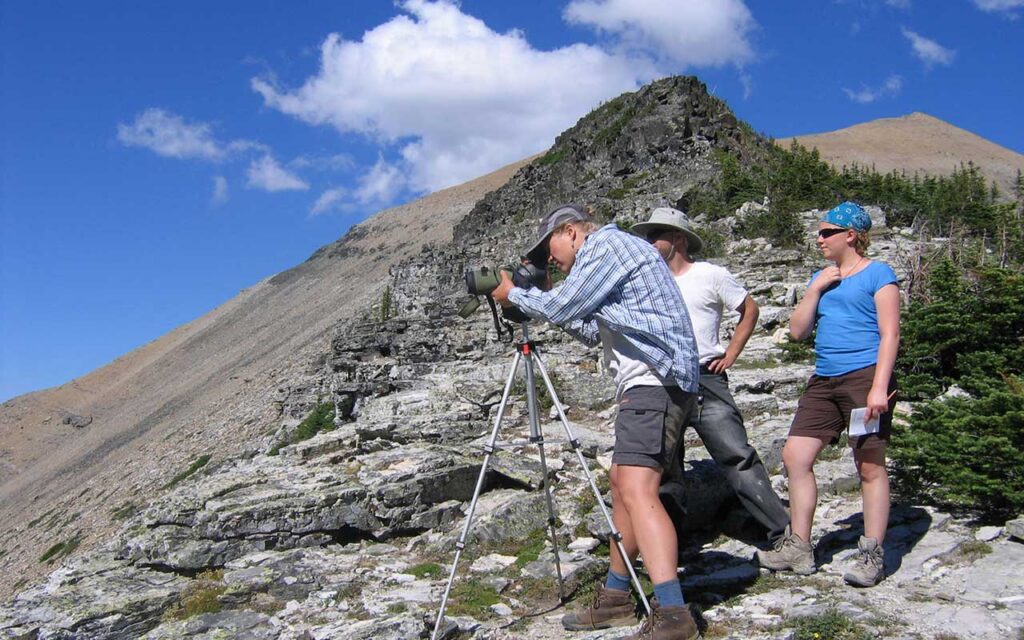
Image: People scanning the cliffs for mountain goats for the High Country Citizen Science Project at Glacier National Park. | GlacierNPS, public domain, via Wikimedia Commons