



For over 40 years, the European Union has supported cutting-edge science, research and innovation. By driving scientific progress, the EU R&I programme helps to tackle some of the most important challenges facing Europe, from cancer to climate change. This CORDIS Results Pack on Horizon in Denmark highlights the impact of EU funding in fostering scientific innovation, increased competitiveness, employment opportunities, and the growth and scale-up of innovative businesses
From the age of the Vikings to the present day, Denmark has consistently punched above its weight in scientific innovation. Technological breakthroughs that emerged during the first millennium AD such as the longboat, the potter’s wheel and the vertical loom enabled Viking settlements to proliferate and prosper.
This tradition of innovation is very much alive and well. Denmark was ranked first in the 2024 European Innovation Scoreboard and is a leader in fields such as digitalisation and intellectual assets. The country has long made the most of its geographic situation: in 2023, wind power met nearly 60 % of the country’s electricity demand. Denmark’s pioneering attitude has been attributed, among other things, to: an excellent education system; strong governmental support; and a thriving start-up community.
Through its flagship funding programmes, most recently Horizon 2020 (2014-2020) and Horizon Europe (2021-2027), the EU has invested over EUR 5 billion across over 1 500 research and industry organisations in Denmark. This support comes from various initiatives, including the European Research Council(opens in new window), Marie Skłodowska-Curie Actions(opens in new window), European Innovation Council(opens in new window), and more.
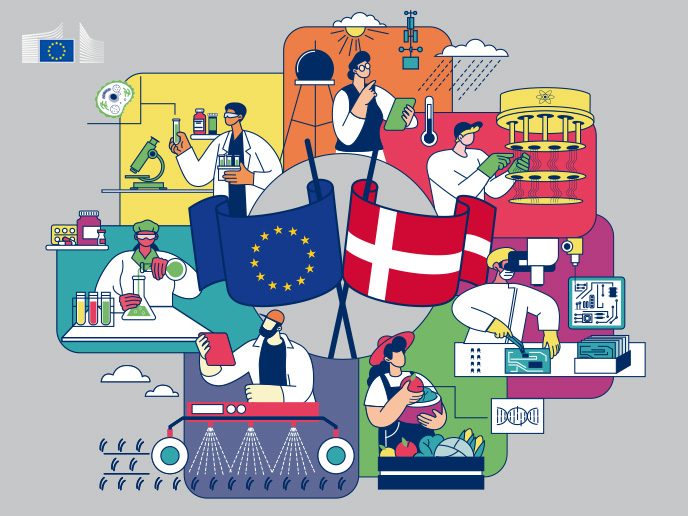
The seven projects in this Pack highlight the breadth of the research supported through Horizon in Denmark. They include work towards an effective treatment for Parkinson’s disease, AI-enhanced devices to detect chemical threats, bacteria-based polymers that could one day replace fossil fuel-based plastics, and new insights into cognitive development in infants. Projects also looked at developing drought-resistant plants, the impact of greening urban areas, and the impact of mercury pollution on Amazonian bird life.
Together, these projects showcase the continuing importance of Denmark’s contributions to science, research and innovation, and the country’s central role in tackling some of the major challenges of our time.
Image: European Union 2025