



The project is expected to recover and valorise more than 960 tonnes of plastic waste annually, create 150 jobs, provide training in recycling and circular production to 150 people, and support the planting of 50,000 trees, directly benefiting 8,500 people and indirectly improving the lives of more than 28,300 residents of Bamako
In a milestone for the circular economy in West Africa, Ayuda en Acción and adaPETation® (IMG Group) are proud to present the second phase of the innovative Bamagreen project, which transforms plastic waste into useful products for construction and electrification, as well as recycled flakes that reintroduce the material into the value chain. The project creates green jobs, promotes the social inclusion of young people and women, and strengthens the resilience of vulnerable and displaced communities in Bamako and the Ségou region.
The project, submitted through a consortium formed by Ayuda en Acción and IMG Group, has received funding from the Spanish Agency for International Development Cooperation (AECID), in line with its Sixth Master Plan and the Country Partnership Framework for Mali. This ensures that the intervention focuses on priority areas and contributes to strategic development objectives related to the circular economy, environmental sustainability, youth employment and social inclusion.
Bamagreen: Phase II forms part of Plastic2Prosperity, the global initiative of adaPETation® (www.adapetation.net), which provides advanced recycling technology adapted to local conditions and combined with a community-centred approach. The project is expected to recover and valorise more than 960 tonnes of plastic waste annually, create 150 jobs, provide training in recycling and circular production to 150 people, and support the planting of 50,000 trees, directly benefiting 8,500 people and indirectly improving the lives of more than 28,300 residents of Bamako.
“Bamagreen: Phase II demonstrates that it is possible to turn an environmental challenge into an opportunity. This project promotes decent employment, strengthens local capacities, and generates sustainable solutions led by the communities themselves, especially by women and young people. Thanks to the support of AECID, we are building a circular economy model with the potential to be replicated in other territories across Africa,” said Marta Tietz Laranjinha, Regional Director for Africa at Ayuda en Acción.
The project builds on IMG Group’s experience in Portugal, where more than 200,000 tonnes of plastic waste have been recycled and transformed into high-quality products. In Mali, this technology is being adapted through semi-industrial machinery and scalable modular systems capable of processing up to 80 tonnes of plastic per month, combining production, technical training and environmental awareness activities.
Bamagreen: Phase II is rooted in a participatory local development approach, in which women and young people, particularly those in vulnerable situations, are the driving force behind the transition towards a fairer, more resilient and more environmentally sustainable model.
The intervention is based on a multi-stakeholder approach that brings together civil society organisations, the private sector, social enterprises, local authorities and government technical services in a strategic alliance to promote sustainable and replicable solutions.
By strengthening the technical, organisational and productive capacities of women and young people in the peri-urban areas of Bamako, and by coordinating actions among public, private and community stakeholders, the project will contribute to the creation of decent jobs, the reduction of plastic waste pollution and the improvement of local environmental sustainability.
This transformation will be achieved through a sequence of outcomes: first, the recycling value chain will be strengthened through collection, processing and commercialisation activities; second, green training and employment opportunities will be created; in parallel, reforestation and environmental awareness initiatives will be promoted; and finally, local innovation and knowledge management will be encouraged.
The project contributes directly to Sustainable Development Goal (SDG) 12.5 by promoting the reduction, recycling and reuse of plastic waste. From an environmental perspective, it also supports SDGs 13.2 and 13.3 by integrating climate change considerations into local policies and educational processes.
Bamagreen: Phase II further promotes youth employment and productive inclusion in line with SDGs 4.4 and 8.6. In addition, it incorporates a strong gender and youth perspective, aligned with SDGs 5.5 and 10.3, encouraging meaningful participation by women and fostering equal opportunities.
The programme offers a replicable and scalable model that combines technical efficiency, economic sustainability and social transformation. Its innovation lies in closing the plastic loop from collection to the production of certified materials, reducing dependence on imports, lowering the carbon footprint and creating skilled employment opportunities for young people and women.
Through Bamagreen: Phase II, Ayuda en Acción and adaPETation®, with the support of AECID, demonstrate that the circular economy can become a driver of inclusive development that is environmentally sustainable and economically viable in Mali.
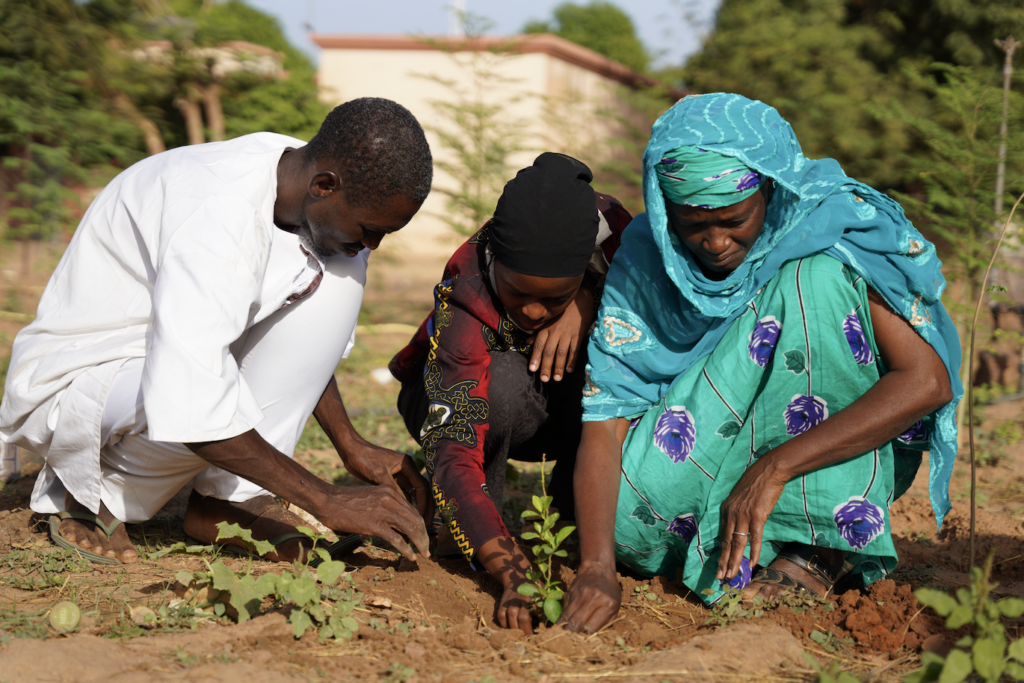
Photo credit: Juan Luis Rod – Reforestation project Bamagreen: Phase II