




Crime is rapidly moving online. An EU-funded project built accurate, human-centric, unbiased AI tools to help investigators turn massive digital evidence into vital clues
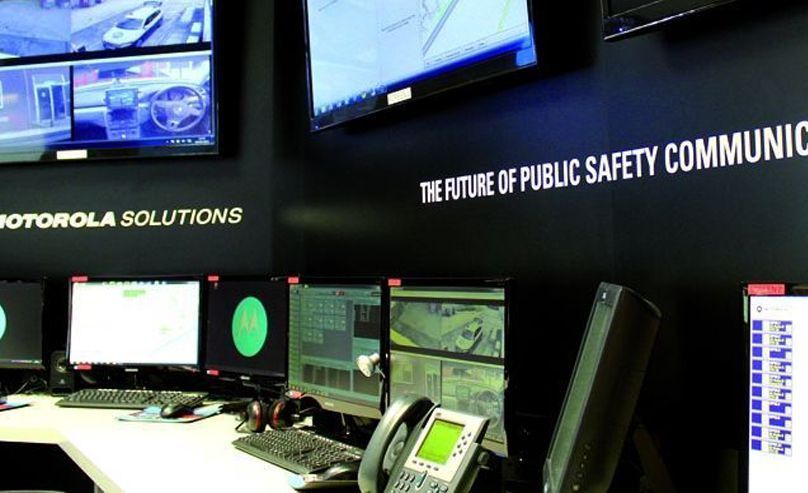
Criminal activity has drastically changed today – it is digital, borderless and leaves behind massive trails of information. Modern investigations no longer rely on physical evidence alone. Instead, police must routinely sift through mountains of heterogeneous data including dark-web content, cyber logs, CCTV frames and location tracking.
To remain effective against these threats, law enforcement agencies (LEAs) increasingly need AI to process data at a scale and speed humans cannot manage alone. The EU-funded STARLIGHT(opens in new window) project was established to enhance European strategic autonomy in AI for law enforcement, improving criminal investigations and cybersecurity across the continent.
Why is digital evidence difficult to analyse
“However, moving AI from laboratory conditions into real-world police work is challenging”, notes Cédric Gouy-Pailler, member of the technical management committee. “AI tools that excel in a laboratory often fail to fit real investigative workflows and strict rules for legal evidence. Furthermore, LEAs must navigate a maze of legal regulations regarding personal data privacy, criminal profiling and whether digital evidence will hold up in court.”
There is also the critical threat of algorithmic discrimination, as bias can easily seep into AI systems during data collection, model training or software design. Crucially, AI systems for law enforcement data must be protected from hacker manipulation and cyberattacks.
AI ethics and data management
To overcome these barriers, STARLIGHT organised iterative co-development cycles, workshops and technology ToolFests. These activities brought together LEAs, researchers, industry partners and legal/ethical experts to build practical tools.
Technical teams were not left to guess how to follow the law on their own. Instead, STARLIGHT simplified the legal landscape by mandating the Accountability principles for artificial intelligence(opens in new window) framework for all technology development. This ensured that the tools complied with the EU AI Act and demonstrated that they could be trusted in policing, security and justice.
Adopting an ‘ethics-by-design’ approach, the consortium tackled bias using technical measures and human checks. This included using representative datasets, rewriting code metrics and training officers to understand AI limits.
Operational AI tools for police investigations
STARLIGHT developed and enhanced more than 70 AI tools tailored to LEA needs.
“Rather than building a single software system, STARLIGHT delivered a broad family of solutions that secure digital evidence through a verifiable chain of custody,” notes Nizar Touleimat, project coordinator of STARLIGHT. “This ecosystem includes tools that discover online sources, gather threat intelligence and protect public spaces, allowing investigators to connect hidden clues across massive amounts of text, image and video streams.”
Among these, the Dark Web Monitor automatically collects and classifies illicit content, filtering data so analysts can focus on critical threats while keeping experts in control when AI is uncertain.
For digital forensic teams dealing with hard drives containing digital activity traces, the Cyber Pattern Investigator scans logs using pattern recognition and AI-driven clustering to spot hidden activities and create explainable visual reports.
Other tactical solutions include tools for scanning visual archives, cleaning up critical audio recordings and analysing complex geolocation data to map and forecast suspicious movements.
“STARLIGHT changed how European police design and use AI. Instead of just creating tools and datasets, it built a safe, legal and human-led model for AI use in law enforcement. Its true legacy is connecting police with agencies like Europol to ensure these tools are used successfully across Europe for years to come,” concludes Gouy-Pailler.