


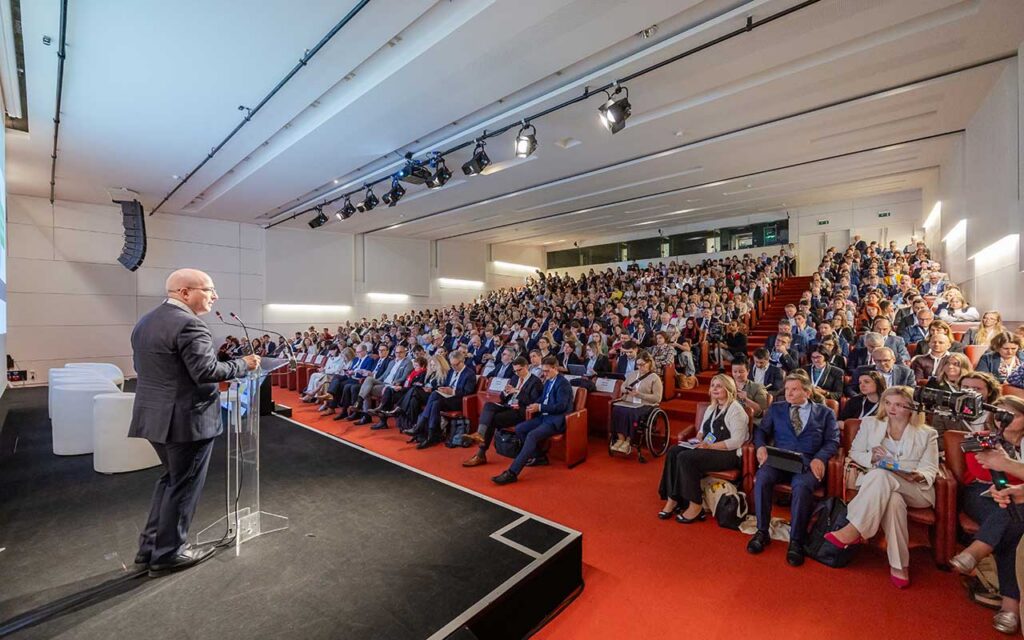
The ninth edition of the event, aligned with the Belgian Presidency of the Council of the EU, brought together more than 600 cluster practitioners, industry leaders, policymakers, and experts from across Europe to explore the pivotal role of clusters in catalysing economic growth, innovation, and sustainability
The European Cluster Conference 2024, organised by the European Commission, was held on May 7th-8th at The Square in Brussels. A recurrent message throughout the discussions was that fostering connections among clusters across Europe is key to strengthening the competitiveness of EU industry and tackling numerous challenges, such as the skills gap, the green transition, and the uptake of new technologies.
Conference Highlights
The European Cluster Conference opened with a video message by European Commissioner for Internal Market Thierry Breton, where he stated that,”Clusters are at the core of Europe’s industrial agenda.”
Following his speech, nearly 60 speakers dived into the key topics on this edition’s agenda. Highlights included:
- Building new and reshaping value chains through clusters: In the opening panel session, speakers emphasised the need to connect the local dynamism and competitiveness created by clusters with the wider national and EU industrial landscapes. One of the ways to achieve this is through metaclusters, a topic addressed on the second day of the event during one of the first parallel sessions. There, speakers introduced the concept of metaclusters as organisational structures that connect multiple clusters across different regions or sectors, and put across the point that metaclusters can help address challenges that transcend individual clusters by leveraging collective resources and by tapping into the competitive advantages of different regions.
- Clusters as hotspots for investments: According to Montse Daban, President of the Council of European BioRegions (CEBR), clusters “provide platforms for innovation and critical mass for investors.” During the second panel session of the Conference, speakers dived into the topic of investments, emphasising the fact that clusters, by fostering collaboration, create the necessary stability and reliability that private investors are looking for. Building on this, in a follow-up parallel session on the following day focused on start-ups and scale-ups, speakers conveyed that clusters can help reduce the uncertainty around start-ups and attract more investors by bringing together all actors in an ecosystem.
- Sustainability, digitalisation, and new technologies: One of the Conference sessions featured a speech by Kirsten Dunlop, CEO of EIT Climate-KIC, where she stated that, “Every job is a green transition job,” highlighting this mindset as crucial to roll out the green transition. A change in mindset was also highlighted as crucial in two parallel sessions focused on the Digital Transition and on Technology, where participants emphasised the reluctance to adapt, as well as the speed of change in the technological landscape and the lack of technical knowledge among industry as some of the main barriers.
- Resilience and security: The more clusters are interconnected in value chains, the bigger the chances of having an uninterrupted supply of energy, medicines, and critical inputs. This was one of the key messages from the Conference session on security, stressing again the importance of connecting industrial clusters. On the topic of Resilience, building trust, engaging in cross-cluster collaboration, and drawing up business continuity and mitigation plans were seen as key.
- Creating social impact through clusters: As part of a parallel session on the topic of shared value, speakers conveyed that clusters can contribute not only to economic but also to social development in their regions, putting forward the gender gap in the tech sector as an example of an area where clusters can play a role.
Side Events
The Conference agenda also featured two noteworthy side events.
The European Cluster Partnerships and Euroclusters session provided a valuable platform for cluster partnerships funded through COSME/SMP to come together and discuss the intricacies of EU funding for cluster initiatives.
Similarly, the gathering of National Cluster Associations offered a unique opportunity for representatives to share insights and ideas regarding cluster support within their respective Member States.
Other activities
On top of this, participants greatly benefited from additional event features, including a dynamic matchmaking session, which brought about a combination of 800+ meetings and networking opportunities, and an exhibition area with 70 stands showcasing multiple Euroclusters projects, several EU cluster organisations, and different policy, business support, and public funding initiatives by the European Commission.
Further to this, participants in the conference were offered the possibility to visit the innovation campus Green Energy Park, where research institutions, government bodies and private sector entities have a dedicated space to co-create, test and refine innovations in a realistic environment.
About ECCP
The European Cluster Collaboration Platform (ECCP) is a dynamic hub for European cluster organisations, facilitating collaboration, communication, and innovation. Through its diverse initiatives and vibrant community, ECCP amplifies European clusters’ impact, driving innovation and economic growth.