



Researchers have shown that various tech business models and characteristics can contribute to societal problems such as extremism, polarization, misinformation, and Internet addiction
With the increasing world population fueling rapid urbanization in various parts of the world, there is a great need to deliberate on the future of cities worth living in. In particular, as modern smart cities increasingly adopt data-driven artificial intelligence services, it is worth remembering that (1) technology can facilitate prosperity, well-being, urban livability, or social justice, but only when it has the right analogue add-ons (such as well thought out policies, mature institutions, responsible governance); and (2) the ultimate goal of these smart cities is to facilitate and enhance human well-being and social flourishing.
Researchers have shown that various tech business models and characteristics can contribute to societal problems such as extremism, polarization, misinformation, and Internet addiction. In light of these observations, addressing the philosophical and ethical issues involved in ensuring the safety, security, and interpretability of such artificial intelligence algorithms that will form the technological foundation of the cities of the future, takes on paramount importance. Globally, calls are being made for technology to be more humane and human-centred.
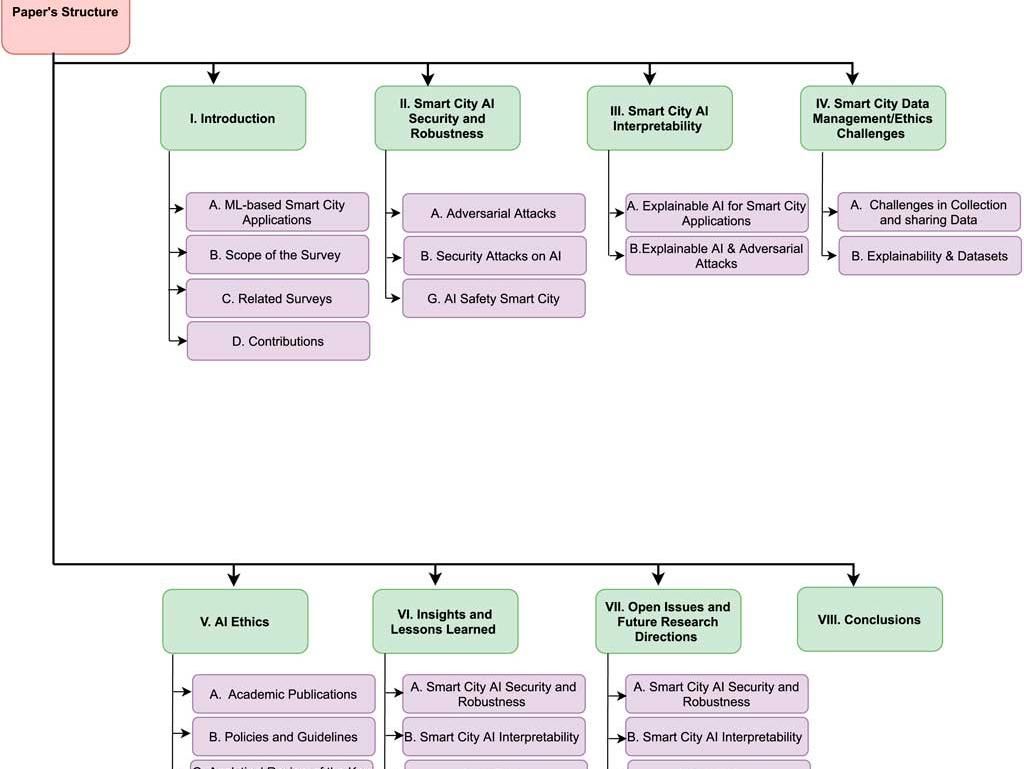
This document analyzes and explores key challenges including security, robustness, interpretability, and ethical challenges (data and algorithmic) for a successful deployment of AI in human-centric applications, with a particular emphasis on the convergence of these concepts/challenges.
Kashif Ahmada, Majdi Maabrehb, Mohamed Ghalyc, Khalil Khand, Junaid Qadiref and Ala Al-Fuqahaa provide a detailed review of the existing literature on these key challenges and discuss how one of these challenges can lead to others or help solve other challenges. The paper also reports on current limitations, pitfalls, and future directions for research in these domains, and how it can fill current gaps and lead to better solutions.
Such a rigorous analysis will provide a baseline for future research in the domain.
Fig. Visual depiction of the scope of the paper.
Find the paper here: https://www.sciencedirect.com/science/article/pii/S1574013721000885