




It is a profound mathematical property that emerges in complex systems, from learning algorithms to the vibrations of the quantum world
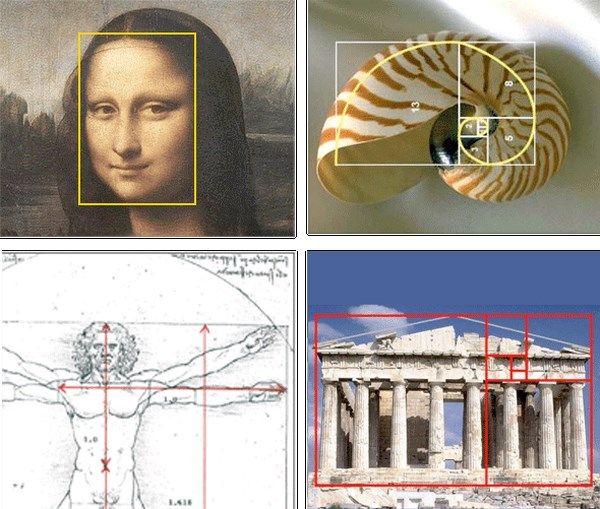
The golden ratio, known as φ (1.618…), has fascinated mathematicians, artists and scientists for centuries because of its presence in nature, art and architecture. However, in recent decades it has begun to appear in disciplines that—at first glance—seem unrelated: artificial intelligence and quantum mathematics. This intersection reveals that the mathematical harmony represented by φ is more universal and profound than previously imagined.
In artificial intelligence, the golden ratio is not a mandatory technical component, but it has become a tool explored by researchers seeking optimization and stability. Some experimental models use φ-inspired proportions to distribute layers and neurons, attempting to mimic efficient structures found in biological systems. In optimization algorithms—a key part of machine learning—the so-called “golden-section search” leverages the geometric efficiency of φ to find minima or maxima more quickly. The nature of computation, guided by the geometric efficiency embodied in the golden ratio, fits well with the challenges modern AI models face.
But it is in quantum mathematics where φ appears most surprisingly. In 2010, an experiment with quantum spins revealed that the relationship between two excitation modes followed the golden ratio exactly, confirming that φ naturally emerges in the subatomic structure of the world. This result is connected to the complex mathematical symmetry known as E₈—one of the most elegant and sophisticated ever discovered—and shows that the golden ratio arises spontaneously in certain quantum states.
Moreover, in quantum computing, φ appears again in the so-called Fibonacci anyons, hypothetical quantum particles that obey mathematical rules based on the Fibonacci sequence. These anyons are candidates for building topological quantum computers, considered the most stable and noise-resistant. In these systems, probabilities, transitions and allowed states directly follow the mathematics of the golden ratio.
When artificial intelligence and quantum computing come together—an emerging field known as quantum machine learning—these connections become even more relevant. Some quantum neural network models and variational circuits have begun to incorporate φ-inspired structures to improve the stability of quantum states and support convergence.
Taken together, these three areas show that the golden ratio is not merely an aesthetic or natural curiosity: it is a profound mathematical property that emerges in complex systems, from learning algorithms to the vibrations of the quantum world. Its presence suggests that the harmony represented by φ could be a common language shared by artificial intelligence, quantum physics and the very structure of the universe.