



The immune cells, known as primitive microphages, were found to enhance heart tissue function and vessel stability
Researchers at the University of Toronto have discovered a novel method for incorporating primitive microphages – crucial immune cells – into heart-on-a-chip technology, in a potentially transformative step forward in drug testing and heart disease modeling.
In a study published in Cell Stem Cell, an interdisciplinary team of scientists describe how they integrated the microphages – which were derived from human stem cells and resemble those found in the early stages of heart development – onto the platforms. These macrophages are known to have remarkable abilities in promoting vascularization and enhancing tissue stability.
Corresponding author Milica Radisic, a senior scientist in the University Health Network’s Toronto General Hospital Research Institute and professor in the Institute of Biomedical Engineering at U of T’s Faculty of Applied Science & Engineering, says the approach promises to enhance the functionality and stability of engineered heart tissues.
“We demonstrated here that stable vascularization of a heart tissue in vitro requires contributions from immune cells, specifically macrophages. We followed a biomimetic approach, re-establishing the key constituents of a cardiac niche,” says Radisic, who holds a Canada Research Chair in Functional Cardiovascular Tissue Engineering
“By combining cardiomyocytes, stromal cells, endothelial cells and macrophages, we enabled appropriate cell-to-cell crosstalk such as in the native heart muscle.”
A major challenge in creating bioengineered heart tissue is achieving a stable and functional network of blood vessels. Traditional methods have struggled to maintain these vascular networks over extended periods, limiting their effectiveness for long-term studies and applications.
In their study, researchers demonstrated that the primitive microphages could create stable, perfusable microvascular networks within the cardiac tissue, a feat that had previously been difficult to achieve.
Furthermore, the macrophages helped reduce tissue damage by mitigating cytotoxic effects, thereby improving the overall health and functionality of the engineered tissues.
“The inclusion of primitive macrophages significantly improved the function of cardiac tissues, making them more stable and effective for longer periods,” says Shira Landau, a post-doctoral fellow in Radisic’s lab and one of the study’s lead authors.
The breakthrough has far-reaching implications for the field of cardiac research. By enabling the creation of more stable and functional heart tissues, researchers can better study heart diseases and test new drugs in a controlled environment.
Researchers say this technology could lead to more accurate disease models and more effective treatments for heart conditions.
Source: Qin Dai (https://www.utoronto.ca/news/u-t-researchers-integrate-crucial-immune-cells-heart-chip-platform)
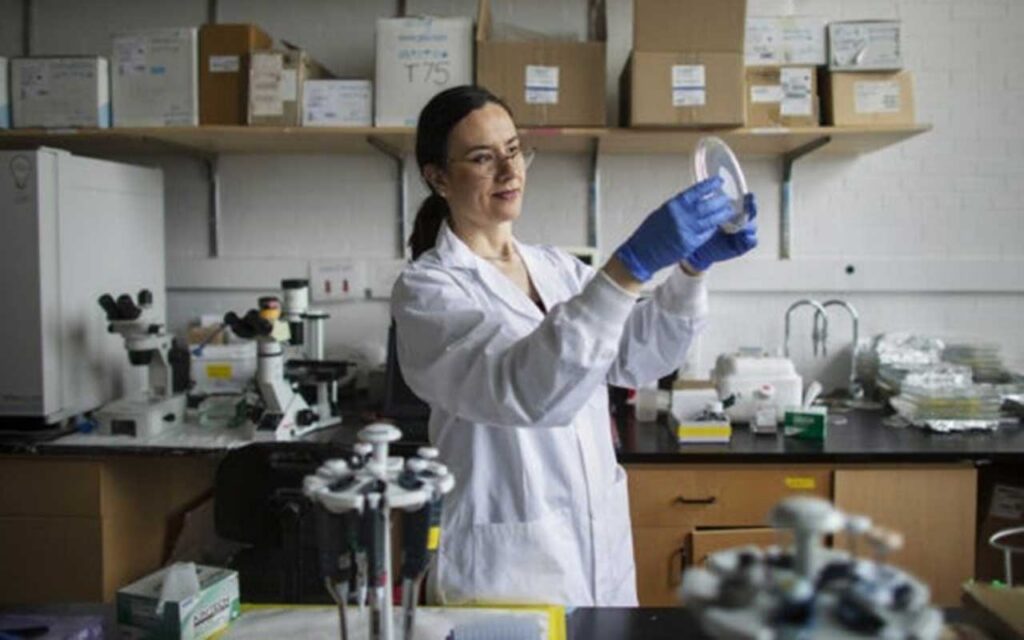
Image: Professor Milica Radisic’s research team have worked on developing a miniaturized version of cardiac tissue on heart-on-a-chip platforms for a decade (photo by Nick Iwanyshyn)