
 How to resolve AdBlock issue?


Interviews
Antonio Ruggiero: “Connectivity will be the nervous system of Smart Cities”
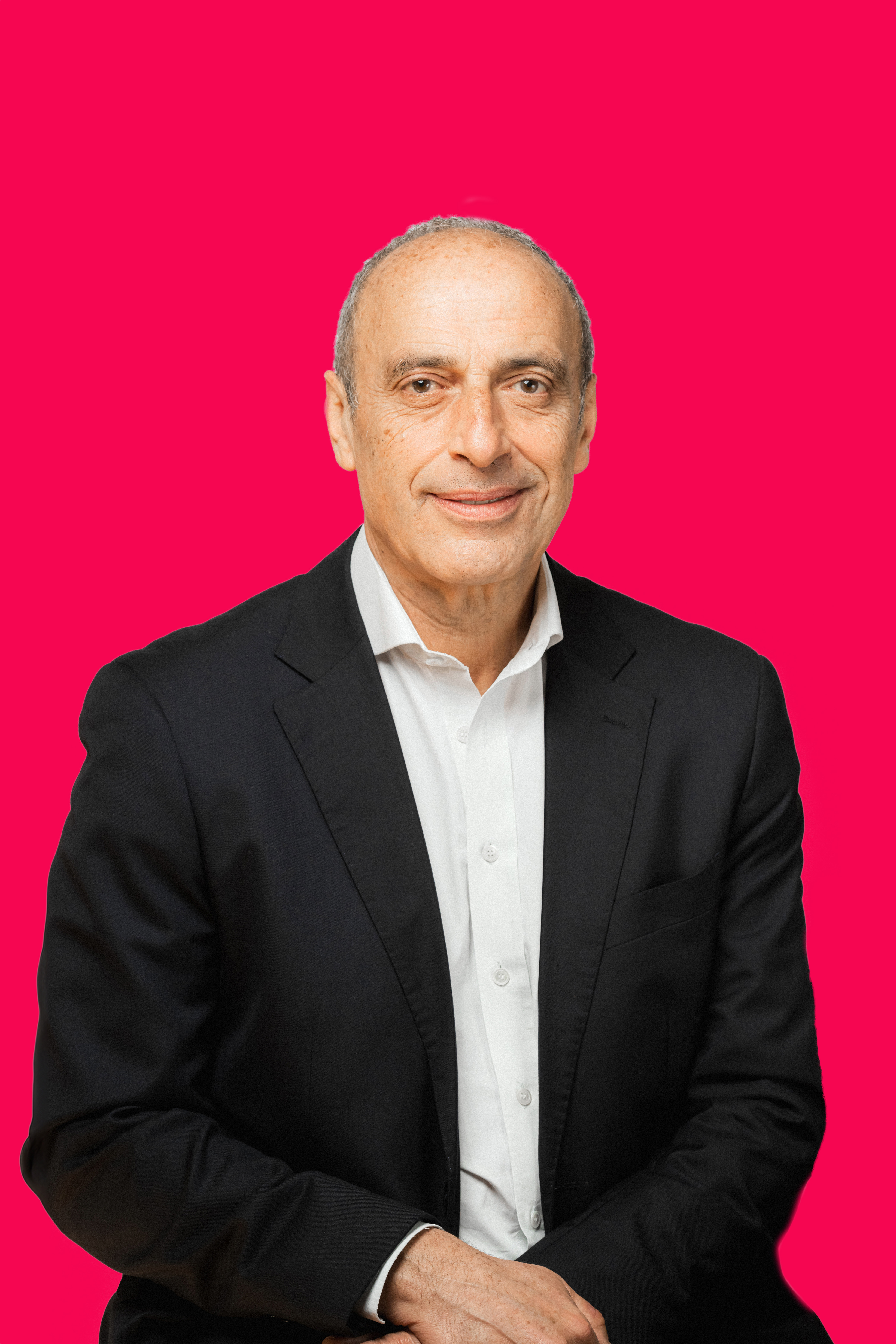
Boldyn Networks’ CEO for Spain and Italy advocates shared infrastructure and private 5G networks as the essential foundation for accelerating the digital transformation of cities and turning innovation into tangible services for citizens.
With more than thirty years of experience leading telecommunications network deployments across Europe and Latin America, Antonio Ruggiero is spearheading Boldyn Networks’ expansion in Spain and Italy. Having driven internationally renowned projects such as Rome 5G, he argues that the future of smart cities will not depend on installing more sensors, but on building shared, resilient digital infrastructure ready to support artificial intelligence, digital twins and connected mobility.
TSCJ.- Boldyn has announced a highly ambitious commitment to Spain. What is your view of the Spanish smart city market over the next five years, and what role does Boldyn intend to play in the major urban projects being developed with European funding?
AR.- Spain is one of the European markets with the greatest potential for smart city development over the next five years. The country is at a genuine turning point in its digital transformation. One clear example is the enormous interest generated by the RedCyTI call for proposals aimed at promoting smart cities and territories, whose initial budget was doubled due to the high number of projects submitted. Spanish cities have understood that digitalisation is a strategic priority for improving public services, attracting investment and addressing challenges such as mobility, sustainability and urban resilience through public-private collaboration.
At Boldyn, we want to play a leading role as a long-term technology partner for public administrations, providing advanced digital infrastructure that drives digital transformation and facilitates the implementation of projects supported by European funds (NextGenerationEU). We currently develop advanced urban networks in cities such as London, New York, San Francisco, Sunderland in the UK, and Rome.
In fact, one of our most ambitious projects is Rome 5G, which demonstrates how one of the continent’s most visited and historic cities can become one of Europe’s best-connected and most sustainable smart cities. To achieve this, a shared 5G infrastructure has been deployed across its public transport network, helping improve mobility management, optimise urban services and respond more effectively to challenges such as mass tourism. Rome has already been recognised for its innovation and urban transformation, winning the 2025 Smart City Award at the World Smart City Awards held during the Smart City Expo World Congress (SCEWC).
In all these cities, we deploy digital “highways” that connect the urban fabric with innovation. Our goal is to enable efficient, real-time, data-driven urban management, ensuring that digitalisation delivers direct, sustainable and measurable benefits for citizens.
TSCJ.- For years, many cities have invested in digital platforms and sensors, yet the major challenge remains having robust and secure connectivity. To what extent does Boldyn believe that private 5G networks and shared infrastructure will be the true catalyst for the next generation of smart cities?
AR.- From my perspective as head of Boldyn Networks in Spain and Italy, the answer is unequivocal: private 5G networks and shared infrastructure are not merely a catalyst; they are the only real foundation for the next generation of smart cities. For years, many cities have fallen into the trap of massive sensor deployment, installing isolated platforms and devices while overlooking the fact that if the arteries carrying that information fail or become congested, the entire digital ecosystem collapses. The real challenge is no longer capturing data, but guaranteeing robust, secure and high-capacity real-time connectivity.
Our global experience with flagship projects such as #Rome5G demonstrates that the traditional deployment model—in which each operator duplicates infrastructure—is economically unviable and unsustainable from an urban planning perspective. Through the Neutral Host model championed by Boldyn, we deploy a single, shared, high-capacity network serving multiple operators and municipal services. At the same time, private 5G networks provide the ultra-low latency and critical security, supported by advanced encryption, required by essential public services, ensuring that the network never becomes congested. It is this invisible yet resilient infrastructure that will truly transform urban management, just as we are already bringing this approach to Spain’s industrial and port sectors.
TSCJ.- More and more local authorities are looking to reduce costs without sacrificing innovation. Boldyn’s Neutral Host model enables infrastructure to be shared among different operators. What economic and operational advantages does this approach offer compared with traditional deployment models?
AR.- The Neutral Host model is based on a very simple idea: it makes no sense for every operator to build its own infrastructure when they can all rely on the same network. For a local authority, the traditional model can mean streets being repeatedly dug up for construction work, visual saturation from antennas on historic façades and excessive costs that ultimately hinder innovation. Boldyn’s approach breaks with this inefficiency: we make the investment, deploy a single shared high-capacity network and enable all operators and public services to connect to it.
From both an operational and economic standpoint, the advantages are transformative for local government. For a city, it means fewer construction works, less occupation of urban space and infrastructure that is ready to adapt to new requirements without having to start from scratch every time a new technology or service emerges, while also reducing expenditure.
At Boldyn, we collaborate with our operators and with public administrations to develop and manage a common digital infrastructure on which different stakeholders can deliver their services. It is a model that already works for other essential infrastructure and makes perfect sense, as it transforms urban connectivity into a public service that is as efficient and seamless as water or street-lighting networks.
We believe this approach enables cities to focus on developing new services for citizens while relying on a solid, open and future-ready technological foundation, which is what really matters.
TSCJ.- Artificial intelligence, digital twins, connected mobility and energy management all require real-time data and ultra-reliable communications. What types of cities are genuinely prepared today to take advantage of these technologies, and what are the main barriers still facing public administrations?
AR.- Rather than talking about large or small cities, I would talk about cities with a clear digital transformation strategy. Those that are best prepared are the ones that have understood that technology is not an end in itself, but a tool for improving public services and citizens’ quality of life.
Leading examples such as Málaga, recognised in the IESE Cities in Motion 2026 report, demonstrate that urban innovation is not the exclusive preserve of major global capitals. These cities have a long-term vision, and the key factor is not their size but their structural maturity.
Public administrations face several challenges. On the one hand, they need to optimise public investment and prioritise projects that deliver real impact. On the other, they face the complexity of coordinating the different stakeholders involved and ensuring that solutions deployed today remain useful ten or fifteen years from now. This is why we believe collaboration between public administrations and specialised companies will become increasingly important.
Cities that are truly prepared to become smart cities are those capable of segmenting their networks in real time to prioritise a connected ambulance or process massive traffic flows without causing the slightest impact on citizens’ commercial networks.
To address these challenges, Boldyn is firmly committed to the public-private partnership model. If the private sector assumes the technological and financial risks of deployment through a Neutral Host model, cities can overcome these barriers at once, ensuring military-grade security for their communications while freeing up public resources to focus exclusively on innovation and improving citizens’ lives.
TSCJ.- If we were to interview Boldyn again five years from now, what milestones would you like to be able to point to as evidence that the company has transformed the way Spanish cities manage their connectivity and smart services?
AR.- We would like to be able to say that we have established our model as the undisputed standard for managing urban telecommunications. Our ambition is to bring to Spain a model that has already demonstrated its success in cities such as London, New York, San Francisco, Sunderland and Rome, adapting it to the needs of each territory. We believe the best solutions do not involve starting from scratch, but rather drawing on accumulated experience and applying approaches that have already proven their ability to create value.
If, five years from now, we can say that we have helped accelerate urban digitalisation projects, facilitated shared infrastructure models and enabled more cities to deploy new services more quickly, efficiently and sustainably, we will consider that we have achieved our goal.
Ultimately, Boldyn’s greatest success will not be measured by the number of networks deployed, but by having become a trusted partner for public administrations and the wider ecosystem, helping to build the digital infrastructure that will enable the next generation of smart cities.
TSCJ.- Many smart city projects remain pilots that never manage to scale. What needs to change in the collaboration between public administrations, technology operators and companies for cities to finally move from demonstration projects to large-scale urban transformation?
AR.- Our role is precisely to facilitate that transition by providing the digital infrastructure and collaboration models that have already proven effective in other cities. Our goal is to help public administrations move from isolated projects towards a sustained, long-term urban transformation strategy based on robust, shared and future-ready connectivity.
Public administrations need to move away from the traditional technology procurement model based on one-off subsidies or capital expenditure, which finances an initial deployment but leaves the project without sufficient resources for maintenance and evolution. The real leap in scale will come when long-term public-private partnership models become widespread. In this scenario, companies such as Boldyn assume the initial investment, technological risk and infrastructure lifecycle, allowing cities to pay for the service predictably as an operating expense while ensuring that the technology never becomes obsolete.
The second major change involves ecosystem governance and network interoperability. Until now, technology operators and companies have tended to work in silos: one pilot for street lighting, another independent project for water management and another for mobility, each with its own fragmented connectivity. For a project to scale, we need to understand that connectivity is not a product that is simply purchased and installed. It is a common, neutral and shared infrastructure that acts as the city’s nervous system.
Our experience in Sunderland demonstrates that cities achieve better results when they stop focusing on technology itself and instead focus on the problems they want to solve. Connectivity, data and collaboration between public administrations, companies and other local stakeholders then become enablers of continuous urban transformation, focused on tangible outcomes such as more efficient mobility, better environmental management, greater climate resilience, more preventive public healthcare and, ultimately, a better quality of life for citizens both today and in the future.
Interview by
Manuel Tarín Alonso
Tags :
Related Articles

22 December 2015

