




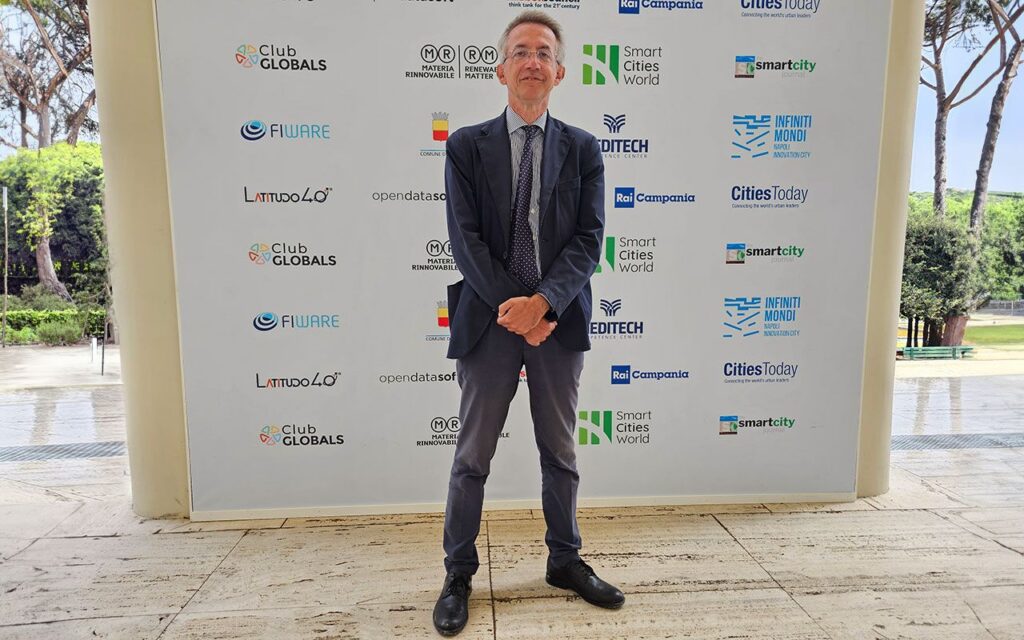
In this interview, the Mayor of Naples shares his vision for a connected and inclusive future, highlighting smart mobility, sustainable tourism, and FIWARE’s role in transforming the city
Naples is a city known for its rich history and vibrant culture, but like many urban centers, it faces modern challenges—overcrowded streets, a heavy reliance on private cars, and the need to embrace digital inclusivity. These hurdles make the city’s transformation into a smart city both crucial and complex. Gaetano Manfredi, Mayor of Naples, leads this effort and has placed innovation and community involvement at the heart of his strategy. Manfredi, an engineer by training and former Minister of Universities and Research in Italy, brings a wealth of experience to his role as mayor. His vision is to ensure that technological advancements benefit not only tech-savvy citizens but also marginalized groups, including the elderly and migrants.
In the context of the FIWARE Global Summit hosted in Naples, we had the opportunity to sit down with Mayor Manfredi. He shared insights into his bottom-up approach to smart city development, the city’s focus on sustainable tourism, and the ambitious mobility projects to reduce traffic congestion. Throughout the conversation, Manfredi emphasized the importance of inclusive innovation, ensuring that no one is left behind as Naples transitions into a smarter, more connected urban hub.
TSCJ.- What does your bottom-up approach to transforming Naples into a smart city involve, and how do you ensure inclusivity in this process?
GM.- Our approach is centered around the active participation of the community. We believe integrating new technology into the city must involve all citizens, not just the tech-savvy. It’s crucial to include marginalized groups such as the elderly and migrants, who might not have access to or understand digital tools. By involving the local community, we ensure that the impact of our solutions is felt across all sectors of society, making the transformation inclusive and beneficial to everyone.
TSCJ.- Tourism is a vital part of Naples’ economy. How is technology enhancing the tourist experience through smart city initiatives?
GM.- Tourism is indeed a cornerstone of our economy, with millions of tourists visiting each year. We are working on two key projects in this area. First, we’re leveraging big data to manage and streamline the flow of visitors, ensuring their experience is smooth and sustainable. Second, we’re developing digital services to improve access to the city’s attractions, making it easier for tourists to navigate Naples and enjoy their stay with minimal friction.
TSCJ.- Can you elaborate on Naples’ smart mobility projects? How are they shaping the future of transportation in the city?
GM.- We are developing an integrated mobility system that combines public transport with private options, including smaller-scale mobility solutions like bicycles and electric scooters. Our goal is to introduce the concept of ‘mobility as a service,’ where all transportation options are accessible through a single platform. This will allow residents and visitors to move more efficiently through the city by seamlessly transitioning between different modes of transport.
TSCJ.- What challenges are you encountering in implementing these smart city projects, especially in terms of mobility?
GM.- Our primary challenge is reducing reliance on private cars, both within Naples and in the wider metropolitan area. We aim to encourage the use of public transportation, such as buses and the metro, alongside alternative mobility options like bicycles. The challenge is to make these services easily accessible and efficient enough that people choose them over private cars, improving traffic flow and reducing emissions across the city.
TSCJ.- Are there any significant infrastructure developments you foresee soon that will support these efforts?
GM.- Yes, there’s a growing openness within our community to embrace new technologies for public services. However, ensuring that this technology is accessible to all 3 million inhabitants in our metropolitan area is a major hurdle. Our goal is to create open and inclusive digital platforms so that people from all social backgrounds can benefit from these innovations. It’s about making sure no one is left behind as we modernize.
TSCJ.- How does FIWARE fit into Naples’ smart city transformation?
GM.- FIWARE plays an essential role through our ‘Casa delle Tecnologie Emergenti,’ or House of Emerging Technologies. This initiative focuses on using cutting-edge technology, including FIWARE’s open-source solutions, to create new services for residents and visitors alike. These services are designed to improve daily life and ensure Naples is at the forefront of technological innovation.
TSCJ.- Can you share a major milestone or success you’ve seen in the smart city transformation so far?
GM.- Looking ahead, our goal for the next five years is to create a city where both residents and tourists can fully access and benefit from digital services. This includes everything from mobility solutions to public services, all available through seamless digital platforms. We’re already seeing progress, but there’s much more to come as we work toward a smarter, more connected Naples.
As Naples continues its journey towards becoming a smart city, Mayor Manfredi’s commitment to inclusive innovation and sustainable urban development offers a glimpse into a future where technology and community work hand in hand to create a better quality of life for all.
by Esther Fuldauer, The Smart City Journal