Picture of Redacción de The Smart City Journal

Redacción de The Smart City Journal

The Smart City Journal editorial team.
Robots to the rescue: miniature robots offer new hope for search and rescue operations

Robots to the rescue: miniature robots offer new hope for search and rescue operations

EU-funded researchers have developed robust mini robots with advanced sensors to help search and rescue teams find survivors in the aftermath of earthquakes and other disasters In the critical 72 hours after an earthquake or explosion, a race against the clock begins to find survivors. After that window, the chances of survival drop sharply. When…
An AI analyst made 30 years of stock picks – and outperformed human investors by a ‘stunning’ degree

An AI analyst made 30 years of stock picks – and outperformed human investors by a ‘stunning’ degree

Using public information and making small tweaks, an alpha-seeking AI fund manager outperformed 93% of mutual fund managers by an average of 600% The researchers’ findings were so striking that they started hunting for mistakes. “We had this result a year ago,” says Ed deHaan, a professor of accounting at Stanford Graduate School of Business. “And we…
Fighting environmental pollution with microbes

Fighting environmental pollution with microbes

Two EU-funded projects met to promote collaboration, share progress and tackle common challenges in advancing bioremediation. Their goal is to combat environmental pollution The EU-funded BIOSYSMO(opens in new window) and MIBIREM(opens in new window) projects have a common goal: to sustainably remediate contaminated environments using microbes. On 19 and 20 March 2025, the two projects’…
Startup’s biosensor makes drug development and manufacturing cheaper

Startup’s biosensor makes drug development and manufacturing cheaper

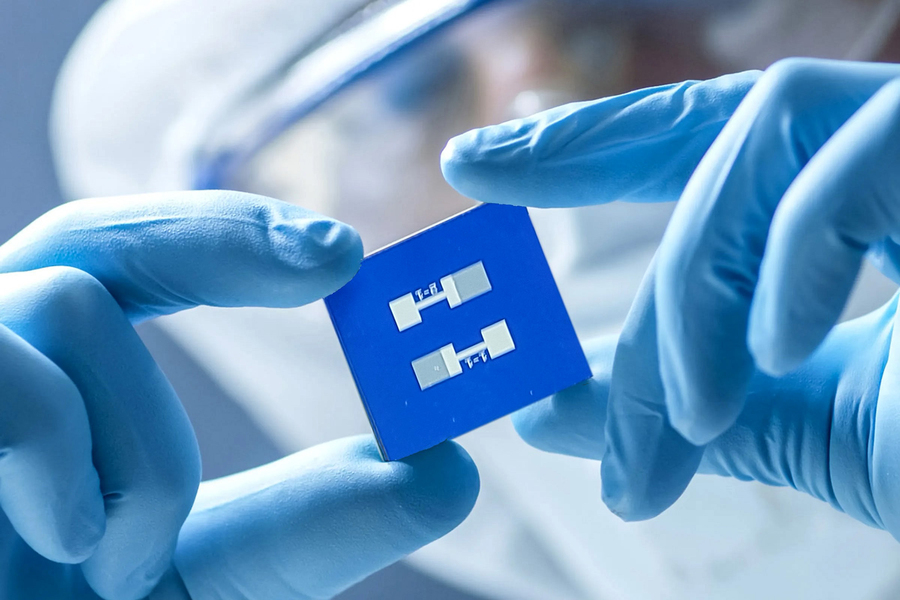
Protein sensor developed by alumna-founded Advanced Silicon Group can be used for research and quality control in biomanufacturing In the biotech and pharmaceutical industries, ELISA tests provide critical quality control during drug development and manufacturing. The tests can precisely quantify protein levels, but they also require hours of work by trained technicians and specialized equipment.…
Brain-like chips are boosting computers and battling cybercrime

Brain-like chips are boosting computers and battling cybercrime

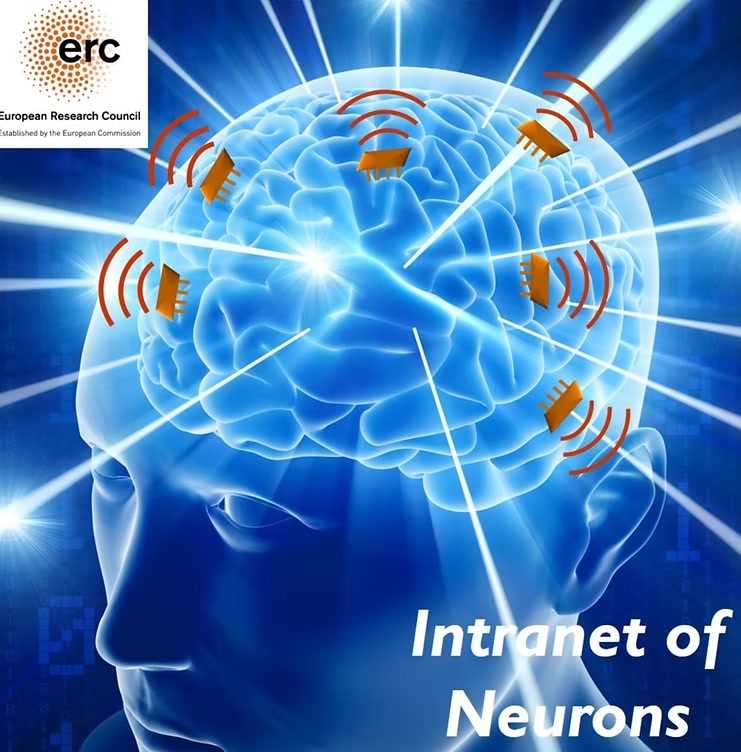
The human brain is more powerful and energy-efficient than any computer. Scientists are imitating the way it works to produce better computer chips and help deal with the growing amounts of data generated every day To prevent smart household devices from being hacked, researchers are developing ultra-fast, energy-efficient brain-like chips that can detect threats in…
Study on genetics and sex differences in health outcomes published by Queen Mary University of London

Why do diseases affect men and women differently?

New research looks into factors beyond genes to explain what is causing the differences between the sexes It’s no secret that men and women face unique health challenges because of their genes. But to truly understand and address these challenges, are we relying too much on genetic factors that affect diseases, symptoms and health results?…
Global drought intensified by rising atmospheric evaporative demand due to climate change

Earth’s growing thirst is making droughts worse, even where it rains

New research led by Dr Solomon H. Gebrechorkos, Researcher in Climate Change Attribution, Smith School of Enterprise and the Environment, published in Nature, has found that this 'thirst' has made droughts 40% more severe across the globe Atmosphere's growing 'thirst' worsens global droughts Droughts are usually blamed on a lack of rain, but a team…
Artificial intelligence outperforming humans in emotional intelligence tests, study by UNIGE and UniBE

Can AI understand emotions better than humans?

Study looks into whether AI is able to outperform humans in emotional intelligence tests Can AI outperform humans in emotional intelligence? Large language models (LLMs) are a type of AI capable of understanding and generating human language by processing massive amounts of data. As they become more complex and human-like, their ability to replicate human…
Stanford researchers demonstrate the milli-spinner, a breakthrough device for removing blood clots without rupture

A game-changing way to treat stroke

Researchers at Stanford have developed a new technology for removing blood clots that is more than twice as effective as current techniques Breakthrough blood clot removal device doubles success rate When treating an ischemic stroke – where a clot is blocking the flow of oxygen to the brain – every minute counts. The more quickly…
Autonomous robots from the SMARTEDGE project collaborating using edge AI on a simulated factory floor

Creating advanced tools for smart robot swarms

The SMARTEDGE project is using edge AI to transform autonomous robot collaboration and communication in factories and more Since its launch in January 2023, the EU-funded SMARTEDGE project has been creating tools and methods that facilitate the development of edge intelligence solutions for real-world scenarios. Taking advantage of edge computing and the Internet of things…

Latest News