


Montserrat Daban Marín offers an insightful and illuminating perspective on the crucial role of bioclusters in health innovation and biotechnology
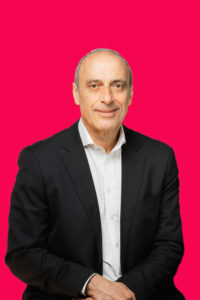
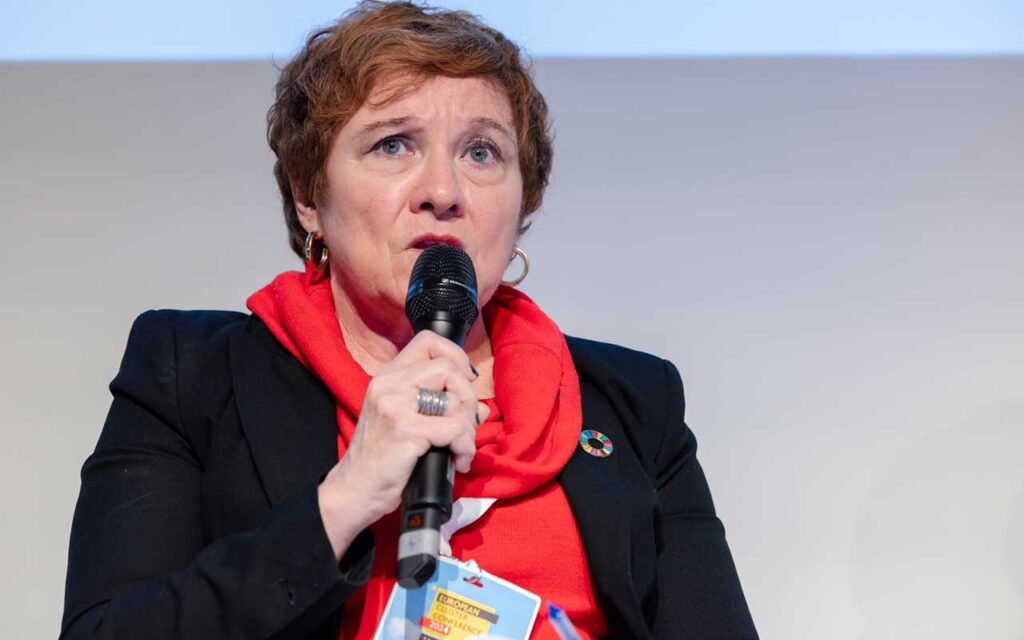
At the European Cluster Conference, organized by the European Cluster Collaboration Platform and held this May in Brussels, we had the privilege of speaking with Montserrat Daban Marín. As President of the Council of European BioRegions (CEBR) and Director of Strategic Foresight and International Relations at Biocat, Montserrat provided a deep and enlightening perspective on the crucial role of bioclusters in health innovation and biotechnology.
During our conversation, we explored the complexities of bioclusters, the barriers faced by biotechnology in Europe, and how the COVID-19 pandemic disrupted this industry, highlighting the lessons learned and new European policies to strengthen resilience and strategic autonomy. Montserrat also reflected on the positive aspects of the event and suggested improvements for future meetings, emphasizing the importance of including external and less convinced voices on the value of clusters.
TSCJ.- What are bioclusters and their role in the European Community?
MD.- Let’s start with the concept of a cluster. In life sciences and the field of health innovation, there is much talk about clusters, often referring to definitions from 30 years ago.
For us, and for Biocat, which I represent, and also for the Council of European BioRegions, which I chair, clusters are ecosystems in themselves. They are no longer just business associations or entities where members are part of an association; they can be very different types of entities representing ecosystems.
In these ecosystems, especially bioclusters, we find generators and receivers of knowledge, solutions, and ideas. Therefore, we are talking about a very complex ecosystem of entities involving the health system itself, buyers or payers of innovation, generators, entrepreneurs, startups, SMEs, pharmaceutical companies, investors, and patient society.
Thus, a biocluster can be as complex or as specific as the members that comprise it. Whether it is a business association in the life sciences field or, in the case of Biocat, representing the BioRegion of Catalonia, it includes everyone working in Life Sciences and Health Innovation in Catalonia, with all its derivatives. Within this ecosystem, there are other umbrella entities representing the interests of a group of these agents, but for us, the BioRegion is this complex of 1,700 entities, parks, centers, and universities, that collaborate or contribute to the growth of this sector.
Within the Council of European BioRegions, the nearly 50 members of this network represent both regions and ecosystems and in some cases, adopt the business association model. Ultimately, we represent a significant number of companies, hospitals, academic entities, etc., which are relevant for the growth, and security of the health sector, advancement, and connection between health providers and the generation of innovation in Europe. This is what we bioclusters do.
TSCJ.- Are bioclusters then more related to health?
MD.- When we talk about bioregions, an example is what we have in Catalonia, we mostly refer to the biofield applied to human health. In this context, we find sectors such as pharmaceuticals, biotechnology, medical devices, medical technologies, devices, and digital health.
Industrial biotechnology indeed has applications in food, animal health, energy, and new materials. Therefore, there are agents in these environments working in other sectors or related subsectors. However, Biocat, and most bioclusters in the CEBR, focus primarily on human health.
TSCJ.- What are the main barriers for biotechnology that clusters are working on with the European Community and how do they affect the market arrival of innovations?
MD.- The barriers for biotechnology, as technology itself, multiply when it comes to turning innovation into business, that is, turning ideas and solutions into products for users, the health system, or the market. Small companies and startups that are at the origin of ideas and knowledge transform knowledge, and research, into business models.
The transition from research to business requires, first, market knowledge. It is not just about pushing knowledge to the market; there needs to be a clear need. If you are developing a solution for a health challenge, you need to know what the current need is or anticipate a future one.
The process of bringing the solution to the patient or market involves several aspects. Financing is one, as investment is needed to launch the initial stages of development. Everything developed in this sector has a long development timeline, especially due to clinical phases. Additionally, the regulatory aspect is crucial: besides the European Medicines Agency, each country has its own agency, adding complexity to the regulatory framework. Moreover, if a solution reaches the health system, there must be a process of purchasing, reimbursement, and market access. In the case of a drug, the biotech company collaborates with the pharmaceutical company, which acts as a driver for biotech products.
Regarding medical devices, these can be accompanied by a therapeutic solution. Devices have their own regulatory framework, which was updated a few years ago and created additional barriers for some companies. Besides certifying the new, everything previously certified must be reviewed. The notified bodies responsible for this validation vary in number by country, and in Spain, there is only one, creating a bottleneck for innovation.
Besides the difficulty of generating and validating the product, this regulatory process adds complexity to bringing solutions to the market. The entire process is long-term and requires substantial funding. Clusters play a crucial role in driving actions for flexibility, support, and assistance to SMEs. Clusters facilitate access to opportunities for all types of agents in the sector.
Other examples of barriers include the need to attract and train talent, or the need for investment to advance the business through all these costly stages, especially for small companies. Therefore, it is important to protect the capacity of startups to reach the market and ensure that the need exists.
TSCJ.- How did COVID-19 affect the biotechnology industry and what were the lessons learned?
MD.- What happened during that time was influenced by three main factors.
One was the disruption of supply chains for materials and products. There was a blockage of people and economic activities, affecting the circulation of certain products.
Another was the extreme focus on public health. Authorities and administrations concentrated on keeping the population safe and managing hospital capacity to handle emerging cases.
The third had to do with the mobility of people and talent.
These factors caused the interruption of the supply of vital products at the time, such as masks and respirators, there was no production or distribution capacity. This highlighted the disruption of value and supply chains. We discovered that Europe depended heavily on raw materials and processes from other countries and regions. In crisis situations, such as the pandemic, this dependence demonstrated Europe’s vulnerability.
During this period, the lack of personal protective equipment (PPE) and masks was notable. Clusters, working in a network, were able to meet some needs while authorities focused on safeguarding public health and hospital operations. The European Clusters Alliance met every morning to identify and solve supply shortages.
Lessons learned: new European resilience policies have been implemented to recover value chains and achieve greater strategic autonomy. The Critical Medicines Alliance, for example, has identified 200 essential medicines and narrowed the list to 11 vital drugs, ensuring that the entire value chain is in Europe. This is crucial for the safety of the European population.
Additionally, institutions like the Health Emergency Preparedness and Response Authority (HERA), now DG HERA, are working to ensure the supply of critical medicines and tackle antimicrobial resistance, thus guaranteeing better preparedness for future health emergencies.
TSCJ.- What positive aspects would you highlight from the European Cluster Conference and what do you think could be improved in future events?
MD.- Very positively, this cluster event provides the opportunity to meet partners, update on their projects, and attend debates on the role of these entities. Although some define them as clusters, others see them as value multipliers. We discuss how we can help the European industry be more cohesive, resilient, innovative, and advance towards sustainability, digitalization, social impact, resilience, and strategic independence challenges. This exchange of information is invaluable.
Another very positive aspect is that the audience consists of people convinced of the value of clusters. Most of us work in these entities or are managers involved in projects with them. Additionally, it is important to have representatives from different units of the European Commission in this ongoing dialogue that has taken place over these two days.
A third positive point is staying updated on what the European Commission is generating in terms of policies and exploring how we can collaborate with them.
In terms of areas for improvement, I believe the audience should include more members who are not convinced or do not recognize the value of clusters. In the end, the European Clusters Conference aims to promote the value of these, but often
we are speaking among people who already know and appreciate their value. It would be useful to preach to the unconvinced. It is necessary to amplify the results and work on disseminating what has been generated during these days.
Moreover, there has been a strong emphasis on the instruments that the European Commission can implement to reinforce our role, such as Euroclusters calls and cascading funding, which allow receiving funding to generate support tools for our agents, companies, and public-private organizations. This focus is also one of the most valuable aspects of the event.
An interview by Esther Fuldauer, The Smart City Journal