Technews

Leveraging artificial intelligence and haptic solutions, researchers aim to make digital devices and content more accessible to the visually impaired

Digital technology seems to have permeated nearly every aspect of our lives, radically transforming how we connect, work and interact.

But this isn’t the case for everyone.

Because digital devices rely almost exclusively on visual and auditory feedback, they raise inherent accessibility issues. In fact, access to digital content by the visually impaired – especially low vision and blind people – remains challenging, even for content as elementary as text.

“Considering our increasing reliance on technologies, dematerialisation and the use of buttonless touchscreens, a significant portion of the population is at risk of being denied access to content and becoming stigmatised even more because of their disabilities,” explains Sabrina Panëels, a researcher on interactive systems at CEA-List(opens in new window).

With the support of the EU-funded ABILITY(opens in new window) project, Panëels is leading a group of partners(opens in new window) working to help close this digital accessibility gap.

“By using and developing new technologies and software and by leveraging haptic solutions, we aim to make digital content and devices more tangible for everyone,” she says.

The first multisensory tablet

Having directly engaged with 285 sighted and visually impaired users to identify actual user needs, the project went on to achieve a lot of firsts.

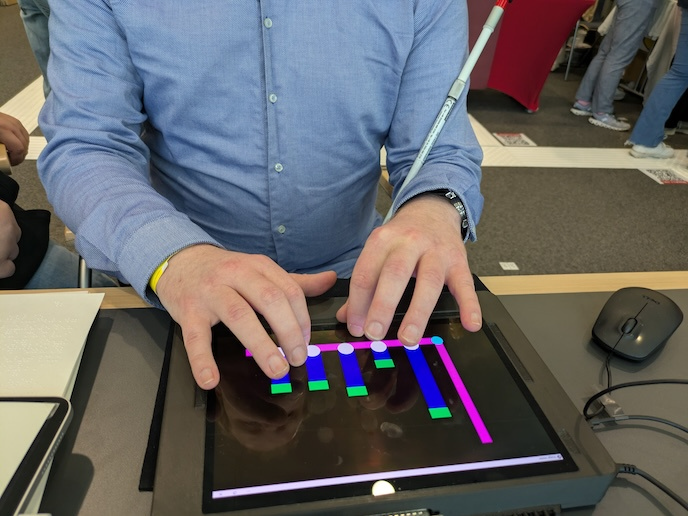
This includes the first multisensory tablet able to render textures on a standard OLED screen. The 10.5-inch tablet prototype runs on Windows and features a screen equipped with surface haptics.

“The prototype uses localised and multitouch vibrations that can render textures depending on the underlying content, for both static and moving fingers,” notes Panëels. “It can also be felt independently by different fingers, meaning that when a user for example explores a map, one finger can feel the waves of the sea while another can feel the texture of forests and other topological elements.”

The project further investigated design strategies to render content haptically, as well as the benefits of using a combined 2D pin display and the multisensory tablet with artificial intelligence (AI) for converting images, PDFs and graphs into touchable content in real time.

Using AI to make digital content more accessible

The project also made advances in developing machine learning algorithms tailored to the unique needs of the visually impaired. This work includes creating new software that uses AI for image analysis and predictive writing to turn digital content into accessible visual, audio and touch alternatives.

“We are particularly proud of our use of an image analysis pipeline and conversation AI solutions to deliver interactive descriptions of an image tailored to the individual user, as well as our predictive writing app that allows users to include emojis in their communications,” remarks Panëels.

Raising the bar for inclusive technology

Despite encountering many challenges, the project successfully demonstrated that an affordable, AI-powered, multisensory tablet is technically achievable, laying the groundwork for a commercial product and for a new standard for user-centred, inclusive technology development in Europe.

“Our work moves the needle on inclusive design and inclusion in general, benefiting not only the visually impaired, but also people with other disabilities, the elderly and even children,” concludes Panëels.

But before that can happen, more work needs to be done. That’s why researchers are currently working to secure the funding and partnerships needed to further develop and market its inclusive solutions.

Image: © PANEELS, Sabrina

A Cambridge-led team has developed a way to engineer better vaccines that could provide broad protection from thousands of variants of viruses - such as coronaviruses or Ebola - in a single vaccine. This represents a fundamental new vaccine technology that could prevent future pandemics before they begin

The first human clinical trial of a universal Sarbeco coronavirus vaccine, developed by the University of Cambridge and spin-out DIOSynVax (DVX) Ltd, has shown that the vaccine is safe and has no significant side-effects.

The trial, involving 39 healthy volunteers, tested a vaccine designed to provide protection against multiple Sarbeco coronaviruses - the large group of viruses that occur in nature including SARS-CoV-2, which caused the COVID pandemic. 

The vaccine triggered immune responses in the volunteers not only to SARS-CoV-2 and SARS, but to related bat viruses that could potentially jump from animals to humans and cause future pandemics. 

This trial proves the safety of an entirely new way of designing vaccines. The technology uses an AI-designed ‘super-antigen’ to provide lasting protection against a broad range of viruses - for example the Ebola group, or Sarbeco coronavirus group - even as they mutate.

Vaccines developed in this way could protect against future emerging virus threats. The technology also reduces the need for frequent reformulation, which is a fundamental limitation of current vaccines.

This is the first time that a vaccine whose active component was designed entirely by computer simulations has been tested in humans.

Participants took part in the trials at National Institute for Health and Care Research (NIHR) Clinical Research Facilities in Southampton and Cambridge. The study was sponsored by University Hospital Southampton NHS Foundation Trust (UHSFT).

The results are published in the Journal of Infection.

“We’ve converted vaccine development from being reactive to being future proof. Our vaccines will continue to provide protection against viruses even as they mutate into new strains,” said Professor Jonathan Heeney from the Lab of Viral Zoonotics, University of Cambridge’s Department of Veterinary Medicine, the scientific lead of the research.

He added: “We’ve overcome the problem of traditional vaccines, which have limited protection. It means we can escape the constant cycle of chasing the virus variants circulating in humans and updating the vaccines to try to catch up, like a dog chasing its tail.”

The antigen is the active ingredient in a vaccine – it triggers the body’s immune system to produce a protective immune response, training it to fight off future infection by a broad array of pathogens containing these specific DVX antigens. 

Current vaccines, such as the seasonal flu vaccine and existing Covid-19 vaccines, use antigens from specific virus strains or variants that have already been detected in humans. But since viruses are constantly mutating, by the time these traditional vaccines are manufactured and distributed, they have limited protection and must be updated annually in an effort to keep up.

To design the antigen for a universal coronavirus vaccine, the team used all the available genetic sequence data for Sarbeco coronaviruses logged by surveillance programmes around the world. Using machine learning, they then designed a super antigen containing the antigen features common to this whole group of viruses – including ones that haven’t emerged yet.

Human clinical trials

The vaccine was given to volunteers between 18 and 50 years old at the NIHR Southampton Clinical Research Facility at UHSFT, and at the NIHR Cambridge Clinical research Facility at Addenbrooke's Hospital, Cambridge.

The super antigen is compatible with most vaccine delivery systems. In this trial it was administered as DNA vaccine through a micro fluid jet. This needle-free delivery method offers an alternative to those with a fear of needle-based injections. This could make vaccination faster and easier to carry out in large numbers of people, especially in settings where conventional injections are more challenging to deliver. 

previous trial in animals - an important step before beginning human clinical trials - found that the vaccine provided a strong immune response against a range of coronaviruses. 

Further development of the vaccine is needed before it is ready for public use. A larger Phase 2 trial will next assess the vaccine’s ability to induce immune responses in a wider and more diverse population, and confirm that it generates strong, broadly protective immune responses.

The continuous pandemic threat

“Viruses like Influenza, Coronaviruses and the Ebola group are evolving continuously and by the time vaccines are rolled out, they may be poorly matched - the current ‘reactive’ vaccine system struggles to keep pace,” said Professor Saul Faust from the University of Southampton, the trial’s chief investigator.

He added: “This new class of universal vaccines are future-proofed. They not only protect against many variants simultaneously, but potentially against related viruses that haven’t yet emerged and spilt over to humans.

“If we can develop and clinically advance this new class of vaccines before a virus outbreak begins, millions of lives could be saved, lockdowns avoided and the economy preserved.”

Professor Marian Knight, Scientific Director for NIHR Infrastructure, said: "The remarkable success of this AI-designed ‘super-antigen’ trial marks a pivotal leap forward in our ability to deliver broad, lasting viral protection.” 

She added: “This milestone was only made possible through partnerships between the life sciences sector and our world-class NIHR infrastructure in Cambridge and Southampton, whose Clinical Research Facilities provided the vital expertise and environment needed to safely fast-track this innovation, and bring it one big step closer to patients.”

Coronaviruses such as SARS-CoV-2 and related Sarbeco coronaviruses continue to pose a threat to public health. A wide range of these and other viruses continue to circulate in animals that could potentially jump to humans at any time – but it’s not possible to predict which one, or when. 

The research was primarily funded by Innovate UK. The DIOSynVax pipeline includes vaccine candidates for human seasonal Flu and the pandemic influenza threats, haemorrhagic fever viruses, and coronaviruses including SARS-CoV-2. 

DIOSynVax - Digitally Immune Optimised Synthetic Vaccines - is a spin-out company from the University of Cambridge, established in 2017 with the support of Cambridge Enterprise, the University’s commercialisation arm. Jonathan Heeney is the Professor of Comparative Pathology at the University of Cambridge, and a Fellow at Darwin College.

Reference: Munro, APS: ‘A phase I, needle free, dose escalation clinical trial of pEVAC-PS, a candidate pan-a.’ Journal of Infection, June 2026. DOI: 10.1016/j.jinf.2026.106759

Berkman Klein researchers unveil new tool to verify identity, let users limit information they share, where it is stored

In our increasingly online lives, convenience has come at a cost. 

The average person has more than 100 online accounts, and creating a new one often requires handing over personal information like an email address or a birthdate. 

Researchers at the Applied Social Media Lab at the Berkman Klein Center for Internet & Society say the current system puts your privacy at risk and makes you more vulnerable to identity theft, and they have a plan to fix it. 

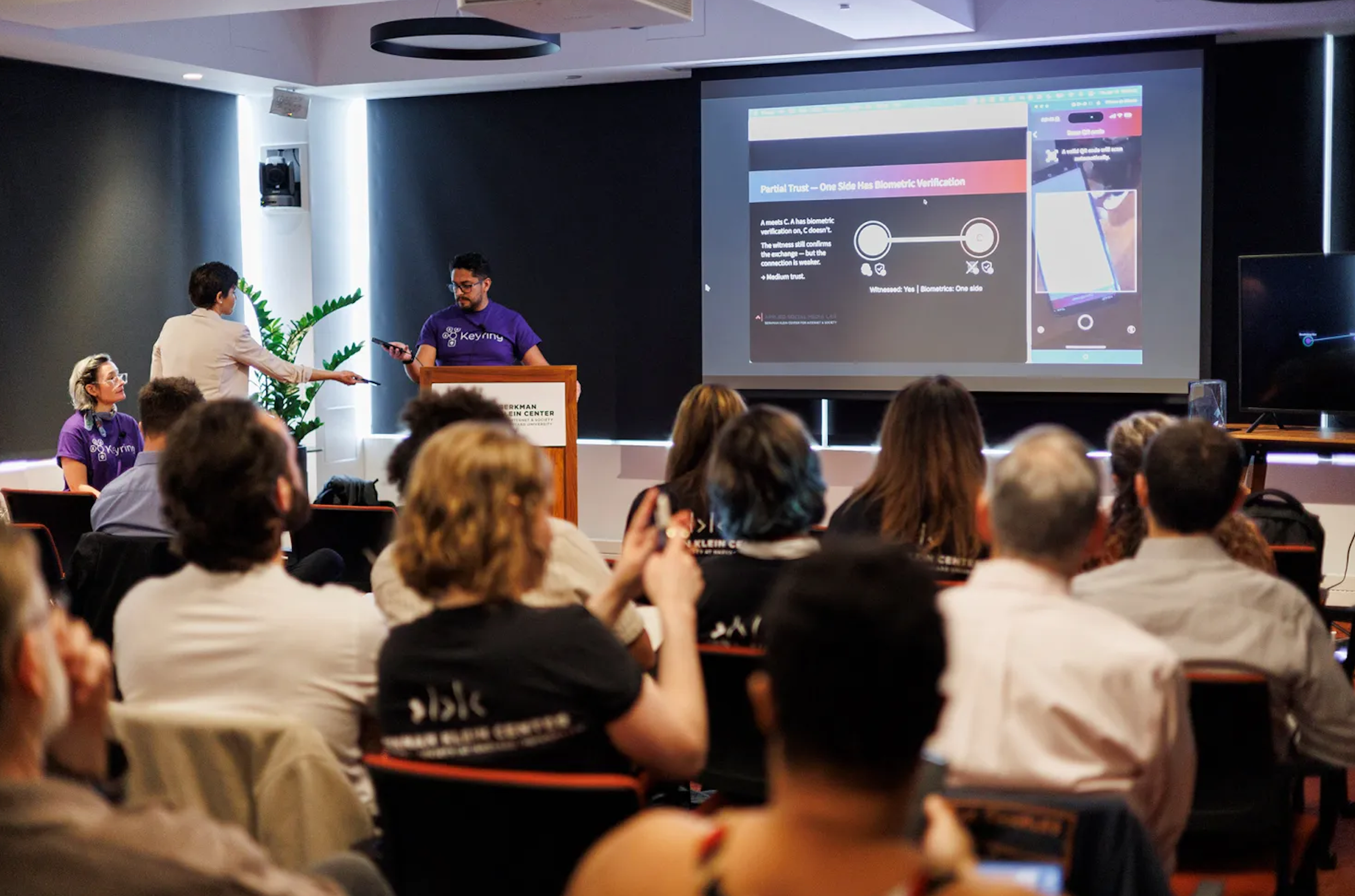
As part of a digital identity symposium in April, engineers from ASML launched the Keyring wallet, an open-source identity verification tool. Rather than surrendering personal data to be stored in corporate databases, Keyring lets users keep their information on their mobiles and disclose only what is absolutely necessary to verify who you are. 

“Identity is actually deeply personal,” said ASML principal investigator James Mickens, Gordon McKay Professor of Computer Science at Harvard John A. Paulson School of Engineering and Applied Sciences. “Your age, your name, your location, your gender — all of these are inextricably tied to you as the user, not to some company or some particular piece of technology.” 

During the symposium, researchers described what they see as an increasingly insecure digital identity ecosystem. Meg Marco, senior director of ASML, said individuals have too much data spread out over too many accounts they don’t fully control. 

“This is important, not only because it is annoying. It is also insecure,” Marco said. She pointed to the 2022 breach of the password manager LastPass’s cloud database, in which hackers obtained copies of tens of millions of users’ encrypted data. 

Keyring, which was developed in collaboration with the Linux Foundation’s Decentralized Trust Graph Working Group, was designed around a user-owned identity wallet where users can share a specific but limited aspect of their identity. That might mean revealing age but not birth date or that they possess an account with a specific email provider without disclosing the username.

To use the wallet, users prove their identity through biometric data such as a fingerprint or face scan, which is only stored on the user’s cellphone. They can also add verifiable credentials like a digital version of a driver’s license or proof of employment. 

Keyring also supports verification of in-person connections without a company operating as an intermediary — for instance, two people who meet at a professional conference could securely verify their identities and confirm they met in person without handing over their data to a service like LinkedIn. 

Each securely verified connection contributes to what researchers call a decentralized trust graph: There is no centralized database of identity data, but each user can be sure of the credentials of everyone in their network. 

“Our hypothesis is that this type of trust graph can help address important challenges in social media, such as distinguishing people from AI agents, providing age assurance or determining the origin of certain content,” said principal engineer Brendan A. Miller.

Nicole Brennan, senior UX designer, said one of the main goals for Keyring ease of use. “We were handed a problem nobody had solved. We had no UX patterns, no templates, no precedent. And we built something that a real person can pick up and use in seconds,” she said.

According to Yajaira Gonzalez, a product leader at ASML, the technology’s main challenge is buy-in from institutions, governments, and corporations, because they would need to issue and recognize verified credentials. Without their participation, the system is limited to peer-to-peer or experimental use. 

“Incentives for all of these entities to join into this model are misaligned,” Gonzalez said, “because currently they do benefit a lot from owning and controlling your data, because at the end of the day, they monetize it.”

Gonzalez said there may be technological workarounds, but her main hope was for a grassroots movement demanding greater agency over user data.

Text: Sy Boles. Harvard  Staff Writer

Photo: Keyring wallet senior engineer Alberto Leon demonstrates the app. (by Grace DuVal)

From war zones to coal mines and prison camps, a new generation of video games is helping museums bring history to life and reach audiences far beyond their walls

What does war look like through the eyes of a child? For those far removed from conflict, it can be hard to imagine. A new narrative adventure game, We Grew Up in War, sets out to answer that question through the stories of Mak, Anna, Valerie and Melisa.

Co-developed by Prague-based studio Charles Games and the War Childhood Museum in Sarajevo, the game draws on real testimonies from children who grew up in conflict.

The museum, founded in the aftermath of Bosnia’s 1992–95 war, is building one of the world’s largest archives on wartime childhood. The institution is part of Sites of Conscience, a global network of organisations that confront difficult pasts to foster dialogue.

The game reflects that work, offering a record of events, but also a window into how war feels from a child’s perspective.

We Grew Up in War is not a conventional game: there is no scoring, advancing or winning. It draws on the real experiences of children growing up in conflict zones, with a focus on Bosnia and Ukraine, using immersive wartime sketches to bring their stories to life and foster empathy and awareness among players.

This approach is part of a broader EU-funded research effort known as MEMENTOES, where museums, historians and game developers explore how video games can tell difficult stories from the past and reach audiences beyond traditional exhibitions.

They use virtual reality and other immersive techniques to make painful histories more tangible for players.

“The game is not only about suffering or portraying survivors as victims,” said Jasminko Halilović, founder and director of the Sarajevo museum, which focuses on childhood experiences in wartime. “It is also about family life, friendships, education, and having dreams and hopes.”

A new way to tell old stories

Museums have long grappled with how to communicate complex and often traumatic histories. Through the MEMENTOES collaboration, researchers from Austria, Belgium, Czechia, Greece, Ireland and the Netherlands set out to test whether video games could provide a new way of reaching a wider – and younger – audience.

We Grew Up in War is one of several titles developed by the MEMENTOES team, which brought together curators, researchers and game designers.

Project coordinator Nikolaos Dimitriou, a senior researcher at the Centre for Research & Technology Hellas (CERTH) in Thessaloniki, Greece, was a bit sceptical at first, but intrigued by the idea of interactive storytelling.

“When I was younger, I played video games just for fun,” he said. “At some point I thought I was spending too much time on them. But this is different. It’s like taking a history class, but in a more engaging way.”

Stepping into the past

Alongside We Grew Up in War, the MEMENTOES team produced two other very different game experiences. One of them, Those From Below, uses virtual reality to revisit the 1956 mining disaster in Marcinelle, Belgium.

Developed with Causa Creations, alongside input from the Le Bois du Cazier museum in Marcinelle, another Site of Conscience in the network, and relatives of the victims, it places players inside the coal mine, confronting them with the harsh realities faced by the miners.

Another game, Gulag Diaries, takes players to Soviet-era forced labour camps in Siberia.

It was developed by researchers at the Institute of Computer Science of the Foundation for Research & Technology – Hellas (ICS-FORTH), in collaboration with Gulag.cz, a Czech-based research and educational initiative that documents the history of the labour camps (gulags) through expeditions, survivor testimonies and digital reconstructions.

Based on a real-life expedition and historical data from Gulag.cz, the game follows a researcher on a trip into the Siberian wilderness to explore the remains of a fictional Gulag, connecting players with the experiences of victims.

“The player finds objects left behind by the prisoners,” said Stavroula Ntoa, who led the scientific work of the project. “Each item reveals a personal story, helping players understand what life was like in these camps.”

Walking a thin line

Using games to explore sensitive historical topics comes with its own challenges. Unlike traditional exhibits, games are interactive, and that raises questions about tone, accuracy and respect. It can be a very fine line to tread.

“What we try to do in the game is the same as in our exhibitions: show how complex these experiences are,” said Halilović. But striking the right balance is not always easy.

“One of the challenges was not to ‘gamify’ the experience too much,” Ntoa said. “The goal wasn’t to make it fun. It was to make it engaging and a valuable learning experience.”

Achieving that balance required close collaboration between developers, historians and the people whose stories inspired the games.

“When you use real testimonies, they are unique and can become identifiable,” Halilović explained. “We worked closely with contributors to ensure they were comfortable with how their stories were presented.”

More than just information

The games engage visitors and bring historical injustices into focus. “Games are a great tool to make cultural heritage tangible, accessible and memorable to the public,” said Dimitriou.

But their real strength may lie in building empathy – by putting players in someone else’s shoes and letting them experience events from the inside.

“If players can understand the layered consequences of war for children, we also hope that it helps them appreciate the importance of peace,” Halilović said.

Early findings suggest that this approach can have a real impact. In some cases, researchers found that engaging secondary school students in We Grew Up in War could change their attitudes towards refugees.

And the lessons learned are not confined to the past.

“These issues are not just historical,” Dimitriou said. “Children are still growing up in war zones today. Helping people relate to those experiences is very important.”

Beyond the museum visit

Although the research collaboration behind these games wrapped up in 2025, the work is far from over. We Grew Up in War is set for wider release, including an educational edition and a commercial version on the Steam video game platform.

For Halilović, the potential goes well beyond a single project.

“Thanks to the game, people anywhere in the world can now engage with our collection,” he said. “That was not possible before.”

As museums look for new ways to connect with audiences, digital tools are becoming increasingly important, in line with efforts across Europe to digitise cultural heritage and make it more widely accessible.

Games are starting to play a key role in that shift, especially when they draw on immersive technologies and rich digital archives to carry the museums’ messages into players’ homes and classrooms.

“They allow us to extend our stories beyond museum walls,” Halilović said. “And to reach people who might never otherwise walk through our doors.”

This article was originally published in Horizon the EU Research and Innovation Magazine.

Text: By Hannah Docter-Loeb

Selected projects will receive up to €60,000 in funding, alongside access to the project’s Cloud-Edge Data & Intelligence Service Platform and a dedicated mentoring and support programme

The Horizon Europe project ODEON has launched its Open Call to support organisations developing innovative digital solutions that accelerate Europe’s green and digital energy transition.

The call invites small and medium-sized enterprises (SMEs), startups, and technology providers to design, develop, and validate data- and intelligence-driven energy services using the ODEON ecosystem. Selected projects will receive up to €60,000 in funding, alongside access to the project’s Cloud-Edge Data & Intelligence Service Platform and a dedicated mentoring and support programme. The Open Call is open from 8 April until 9 July 2026 at 17:00 (Brussels time).

In total, up to 20 third-party projects will be funded, contributing to the development of advanced solutions based on federated data sharing, artificial intelligence, and cloud-edge technologies. These solutions are expected to enhance flexibility, resilience, and efficiency across Europe’s energy system.

“With this Open Call, we aim to empower innovative companies to turn data into actionable energy solutions,” said Moisés Antón- project coordinator of ODEON. “By combining federated data spaces, artificial intelligence, and cloud-edge technologies, ODEON provides a unique environment to develop and validate services that can strengthen Europe’s energy system and accelerate the green transition.”

The ODEON Open Call aims to foster a new generation of digital energy services that leverage interoperable data spaces and AI-based tools. Selected projects will build on the ODEON technological framework to deliver solutions supporting key actors across the energy value chain, including network operators, Local Energy Communities (LECs), aggregators, and consumers and prosumers.

Applicants are invited to address one of 13 predefined challenges, covering areas such as Edge-AI deployment, load forecasting, smart charging (V2G/G2V), demand response, and cross-dataspace interoperability. The proposed solutions should contribute to improving renewable energy integration, optimising energy management, and strengthening grid resilience.

Selected projects will benefit from a 10-month support programme structured in three phases: project design and mentoring plan, service development using the ODEON platform, and validation with real users and stakeholders. This approach ensures that funded solutions are not only technically robust but also market-relevant and scalable.

Interested organisations can submit their proposals via the official application platform: https://opportunities.getonepass.eu/open-opportunities/odeon/opencall?utm_campaign=1OC&utm_medium=website&utm_source=ats-application-page

About ODEON project

ODEON, funded by the Horizon Europe Programme, is driving the resilient transformation of Europe’s energy system by supporting greater integration of Renewable Energy Sources (RES) and enabling the smart orchestration of flexibility from distributed assets at the grid edge. With a budget of €22.56 million over four years, the project marks a major step toward a sustainable, secure, and competitive energy future.

Coordinated by ETRA and bringing together 34 partners from 13 European countries, ODEON officially launched in January 2024 and will run through December 2027. 

Website: odeonproject.eu

LinkedIn: linkedin.com/company/odeoneu

YouTube: youtube.com/@ODEONproject

X: x.com/odeonEU

New technique could improve the scalability of trapped-ion quantum computers, an essential step toward making them practically useful.

Quantum computers could rapidly solve complex problems that would take the most powerful classical supercomputers decades to unravel. But they’ll need to be large and stable enough to efficiently perform operations. To meet this challenge, researchers at MIT and elsewhere are developing trapped-ion quantum computers based on ultra-compact photonic chips. These chip-based systems offer a scalable alternative to existing trapped-ion quantum computers, which rely on bulky optical equipment.

The ions in these quantum computers must be cooled to extremely cold temperatures to minimize vibrations and prevent errors. So far, such trapped-ion systems based on photonic chips have been limited to inefficient and slow cooling methods.

Now, a team of researchers at MIT and MIT Lincoln Laboratory has implemented a much faster and more energy-efficient method for cooling trapped ions using photonic chips. Their approach achieved cooling to about 10 times below the limit of standard laser cooling.

Key to this technique is a photonic chip that incorporates precisely designed antennas to manipulate beams of tightly focused, intersecting light.

The researchers’ initial demonstration takes a key step toward scalable chip-based architectures that could someday enable quantum computing systems with greater efficiency and stability.

“We were able to design polarization-diverse integrated-photonics devices, utilize them to develop a variety of novel integrated-photonics-based systems, and apply them to show very efficient ion cooling. However, this is just the beginning of what we can do using these devices. By introducing polarization diversity to integrated-photonics-based trapped-ion systems, this work opens the door to a variety of advanced operations for trapped ions that weren’t previously attainable, even beyond efficient ion cooling — all research directions we are excited to explore in the future,” says Jelena Notaros, the Robert J. Shillman Career Development Associate Professor of Electrical Engineering and Computer Science (EECS) at MIT, a member of the Research Laboratory of Electronics, and senior author of a paper on this architecture.

She is joined on the paper by lead authors Sabrina Corsetti, an EECS graduate student; Ethan Clements, a former postdoc who is now a staff scientist at MIT Lincoln Laboratory; Felix Knollmann, a graduate student in the Department of Physics; John Chiaverini, senior member of the technical staff at Lincoln Laboratory and a principal investigator in MIT’s Center for Quantum Engineering; as well as others at Lincoln Laboratory and MIT. The research appears today in two joint publications in Light: Science and Applications and Physical Review Letters.

Seeking scalability

While there are many types of quantum systems, this research is focused on trapped-ion quantum computing. In this application, a charged particle called an ion is formed by peeling an electron from an atom, and then trapped using radio-frequency signals and manipulated using optical signals.

Researchers use lasers to encode information in the trapped ion by changing its state. In this way, the ion can be used as a quantum bit, or qubit. Qubits are the building blocks of a quantum computer.

To prevent collisions between ions and gas molecules in the air, the ions are held in vacuum, often created with a device known as a cryostat. Traditionally, bulky lasers sit outside the cryostat and shoot different light beams through the cryostat’s windows toward the chip. These systems require a room full of optical components to address just a few dozen ions, making it difficult to scale to the large numbers of ions needed for advanced quantum computing. Slight vibrations outside the cryostat can also disrupt the light beams, ultimately reducing the accuracy of the quantum computer.

To get around these challenges, MIT researchers have been developing integrated-photonics-based systems. In this case, the light is emitted from the same chip that traps the ion. This improves scalability by eliminating the need for external optical components.

“Now, we can envision having thousands of sites on a single chip that all interface up to many ions, all working together in a scalable way,” Knollmann says.

But integrated-photonics-based demonstrations to date have achieved limited cooling efficiencies.

Keeping their cool

To enable fast and accurate quantum operations, researchers use optical fields to reduce the kinetic energy of the trapped ion. This causes the ion to cool to nearly absolute zero, an effective temperature even colder than cryostats can achieve.

But common methods have a higher cooling floor, so the ion still has a lot of vibrational energy after the cooling process completes. This would make it hard to use the qubits for high-quality computations.

The MIT researchers utilized a more complex approach, known as polarization-gradient cooling, which involves the precise interaction of two beams of light.

Each light beam has a different polarization, which means the field in each beam is oscillating in a different direction (up and down, side to side, etc.). Where these beams intersect, they form a rotating vortex of light that can force the ion to stop vibrating even more efficiently.

Although this approach had been shown previously using bulk optics, it hadn’t been shown before using integrated photonics.

To enable this more complex interaction, the researchers designed a chip with two nanoscale antennas, which emit beams of light out of the chip to manipulate the ion above it.

These antennas are connected by waveguides that route light to the antennas. The waveguides are designed to stabilize the optical routing, which improves the stability of the vortex pattern generated by the beams.

“When we emit light from integrated antennas, it behaves differently than with bulk optics. The beams, and generated light patterns, become extremely stable. Having these stable patterns allows us to explore ion behaviors with significantly more control,” Clements says.

The researchers also designed the antennas to maximize the amount of light that reaches the ion. Each antenna has tiny curved notches that scatter light upward, spaced just right to direct light toward the ion.

“We built upon many years of development at Lincoln Laboratory to design these gratings to emit diverse polarizations of light,” Corsetti says.

They experimented with several architectures, characterizing each to better understand how it emitted light.

With their final design in place, the researchers demonstrated ion cooling that was nearly 10 times below the limit of standard laser cooling, referred to as the Doppler limit. Their chip was able to reach this limit in about 100 microseconds, several times faster than other techniques.

“The demonstration of enhanced performance using optics integrated in the ion-trap chip lays the foundation for further integration that can allow new approaches for quantum-state manipulation, and that could improve the prospects for practical quantum-information processing,” adds Chiaverini. “Key to achieving this advance was the cross-Institute collaboration between the MIT campus and Lincoln groups, a model that we can build on as we take these next steps.”

In the future, the team plans to conduct characterization experiments on different chip architectures and demonstrate polarization-gradient cooling with multiple ions. In addition, they hope to explore other applications that could benefit from the stable light beams they can generate with this architecture.

Other authors who contributed to this research are Ashton Hattori (MIT), Zhaoyi Li (MIT), Milica Notaros (MIT), Reuel Swint (Lincoln Laboratory), Tal Sneh (MIT), Patrick Callahan (Lincoln Laboratory), May Kim (Lincoln Laboratory), Aaron Leu (MIT), Gavin West (MIT), Dave Kharas (Lincoln Laboratory), Thomas Mahony (Lincoln Laboratory), Colin Bruzewicz (Lincoln Laboratory), Cheryl Sorace-Agaskar (Lincoln Laboratory), Robert McConnell (Lincoln Laboratory), and Isaac Chuang (MIT).

This work is funded, in part, by the U.S. Department of Energy, the U.S. National Science Foundation, the MIT Center for Quantum Engineering, the U.S. Department of Defense, an MIT Rolf G. Locher Endowed Fellowship, and an MIT Frederick and Barbara Cronin Fellowship.

Text: Adam Zewe | MIT News

The EU-funded RAISE project is helping researchers make their data available securely. This means sensitive data is protected, research work is recognised and more data is available for open science

Today’s researchers are wary about making their data publicly accessible. Their reluctance is justified, since after all that time and effort spent, sharing this data means they have no idea what happens to it or how it is used in other research.

This is where RAISE(opens in new window) comes in, democratising data sharing and data spaces while transforming data sharing into a secure, controlled process. “RAISE enables moving from data sharing to data visiting, to address researchers’ concerns in open science and to support use cases where datasets cannot be openly shared, aiming to increase the datasets available for open research,” explains Evdokimos Konstantinidis, an assistant professor at the Lab of Medical Physics and Digital Innovation of the Aristotle University of Thessaloniki, Greece, which is coordinating the project.

The tech at work

RAISE’s technology allows data providers and organisations to act as hosts, keeping their datasets securely within their own infrastructure, while retaining control and ownership. Meanwhile, those who want to use the datasets do not download the data. Instead, they execute their algorithms on similar trusted environments that take care of data access.

The RAISE platform records every data processing and provides a persistent Research Analysis Identifier, which Konstantinidis likens to a digital object identifier. This enables reproducibility and guarantees traceability, attribution and compliance with sensitive data regulations. In this way, RAISE guarantees recognition of research data and research work, as well as accountability for all involved parties.

In the three years since its launch, the project has had a number of successes. These include the launch of the RAISE Platform(opens in new window) and a spin-off company on blockchain and AI technologies. What is more, private and public organisations beyond the project and the open science community have begun to explore RAISE services and the value they can derive from them.

By the time RAISE ends in 2026, it will have created trusted environments for carrying out research. It will have made it possible for datasets that otherwise would not be shared to become available in a controlled and reproducible way, making more datasets available to the open science community. Researchers will be accredited for their work and all research data will be equally accessible for processing without violating data protection regulations.

Building on the foundations of the RAISE (Research Analysis Identifier SystEm) project, the research team’s subsequent goal is to break down the barriers to research data sharing further in (https://raise-suite.eu(opens in new window)) RAISE Suite – its next EU-funded project. The project will provide tools to automate the creation of FAIR (findable, accessible, interoperable and reusable), high-quality and valuable datasets. It will also introduce machine-actionable data management plans to streamline the entire data life cycle, from data collection to creation, sharing, access and processing. By supporting the entire data life cycle, the project will enable the seamless integration of data management practices with minimal disruption to researchers’ daily workflows.

The EU project VEDLIoT shows how Deep Learning and Artificial Intelligence are helping to accelerate the potential of IoT systems

The Internet of Things (IoT), a network of interconnected devices equipped with sensors and software, has revolutionised how we interact with the world around us, empowering us to collect and analyse data like never before.

As technology advances and becomes more accessible, more objects are equipped with connectivity and sensor capabilities, making them part of the IoT ecosystem. The number of active IoT systems is expected to reach 29.7 billion by 2027, marking a significant surge from the 3.6 billion devices recorded in 2015. This exponential growth requires a tremendous demand for solutions to mitigate the safety and computational challenges of IoT applications. In particular, industrial IoT, automotive, and smart homes are three main areas with specific requirements, but they share a common need for efficient IoT systems to enable optimal functionality and performance.

Increasing the efficiency of IoT systems and unlocking their potential can be achieved through Artificial Intelligence (AI), creating AIoT architectures. By utilising sophisticated algorithms and Machine Learning techniques, AI empowers IoT systems to make intelligent decisions, process vast amounts of data, and extract valuable insights. For instance, this integration drives operational optimisation in industrial IoT, facilitates advanced autonomous vehicles, and offers intelligent energy management and personalised experiences in smart homes.

Among the different AI algorithms, Deep Learning that leverages artificial neural networks is very appropriate for IoT systems for several reasons. One of the primary reasons is its ability to learn and extract features automatically from raw sensor data. This is particularly valuable in IoT applications where the data can be unstructured, noisy, or have complex relationships. Additionally, Deep Learning enables IoT applications to handle real-time and streaming data efficiently. This ability allows for continuous analysis and decision-making, which is crucial in time-sensitive applications such as real-time monitoring, predictive maintenance, or autonomous control systems.

Despite the numerous advantages of Deep Learning for IoT systems, its implementation has inherent challenges, such as efficiency and safety, that must be addressed to fully leverage its potential. The Very Efficient Deep Learning in IoT (VEDLIoT) project aims to solve these challenges.

VEDLIoT: Enhancing IoT systems with efficient Deep Learning

A high-level overview of the different VEDLIoT components is given in Fig. 1. IoT is integrated with Deep Learning by the VEDLIoT project to accelerate applications and optimise the energy efficiency of IoT. VEDLIoT achieves these objectives through the utilisation of several key components:

  • Specialised AI accelerators:
    These accelerators are employed to optimise energy consumption, enabling significant reductions in energy usage without compromising performance. Additionally, they enhance the overall efficiency of Deep Learning models, enabling faster inference and improved scalability for IoT applications;
  • Hardware-aware pruning and quantisation: By employing hardware-aware pruning and quantisation techniques, VEDLIoT accelerates Deep Learning models and reduces memory footprint while maintaining high accuracy;
  • Safety and security: The usage of hardware-based trusted execution environments ensures the integrity and reliability of the Deep Learning models deployed in IoT systems. Moreover, a specialised architectural framework helps to consider and integrate security and ethical aspects during requirements engineering; and
  • Customisable hardware platforms: VEDLIoT leverages customisable hardware platforms, allowing for tailored solutions that meet specific IoT requirements and optimise Deep Learning algorithms.

VEDLIoT concentrates on some use cases, such as demand-oriented interaction methods in smart homes (see Fig. 2), industrial IoT applications like Motor Condition Classification and Arc Detection, and the Pedestrian Automatic Emergency Braking (PAEB) system in the automotive sector (see Fig. 3). VEDLIoT systematically optimises such use cases through a bottom-up approach by employing requirement engineering and verification techniques, as shown in Fig. 1. The project combines expert-level knowledge from diverse domains to create a robust middleware that facilitates development through testing, benchmarking, and deployment frameworks, ultimately ensuring the optimisation and effectiveness of Deep Learning algorithms within IoT systems. In the following sections, we briefly present each component of the VEDLIoT project.

Specialised AI accelerators

Various accelerators are available for a wide range of applications, from small embedded systems with power budgets in the milliwatt range to high-power cloud platforms. These accelerators are categorised into three main groups based on their peak performance values, as shown in Fig. 4.

The first group is the ultra-low power category (< 3 W), which consists of energy-efficient microcontroller-style cores combined with compact accelerators for specific Deep Learning functions. These accelerators are designed for IoT applications and offer simple interfaces for easy integration. Some accelerators in this category provide camera or audio interfaces, enabling efficient vision or sound processing tasks. They may offer a generic USB interface, allowing them to function as accelerator devices attached to a host processor. These ultra-low power accelerators are ideal for IoT applications where energy efficiency and compactness are key considerations, providing optimised performance for Deep Learning tasks without excessive power.

The VEDLIoT use case of predictive maintenance is a good example and makes use of an ultra-low power accelerator. One of the most important design criteria is low power consumption, as it is a battery-powered small box that can externally be installed on any electric motor and should monitor the electronic motor for at least three years without a battery change.

The next category is the low-power group (3 W to 35 W), which targets a broad range of automation and automotive applications. These accelerators feature high-speed interfaces for external memories and peripherals and efficient communication with other processing devices or host systems such as PCIe. They support modular and microserver-based approaches and provide compatibility with various platforms. Additionally, many accelerators in this category incorporate powerful application processors capable of running full Linux operating systems, allowing for flexible software development and integration. Some devices in this category include dedicated application-specific integrated circuits (ASICs), while others feature NVIDIA’s embedded graphics processing units (GPUs). These accelerators balance power efficiency and processing capabilities, making them well-suited for various compute-intensive tasks in the automation and automotive domains.

The high-performance category (> 35 W) of accelerators is designed for demanding inference and training scenarios in edge and cloud servers. These accelerators offer exceptional processing power, making them suitable for computationally-intensive tasks. They are commonly deployed as PCIe extension cards and provide high-speed interfaces for efficient data transfer. The devices in this category have high thermal design powers (TDPs), indicating their ability to handle significant workloads. These accelerators include dedicated ASICs, known for their specialised performance in Deep Learning tasks. They deliver accelerated processing capabilities, enabling faster inference and training times. Some consumer-class GPUs may also be included in benchmarking comparisons to provide a broader perspective.

Selecting the proper accelerator from the abovementioned wide range of available options is not straightforward. However, VEDLIoT takes on this crucial responsibility by conducting thorough assessments and evaluations of various architectures, including GPUs, field-programmable gate arrays (FPGAs), and ASICs. The project carefully examines these accelerators’ performances and energy consumptions to ensure their suitability for specific use cases. By leveraging its expertise and comprehensive evaluation process, VEDLIoT guides the selection of Deep Learning accelerators within the project and in the broader landscape of IoT and Deep Learning applications.

Hardware-aware pruning and quantisation

Trained Deep Learning models have redundancy that can sometimes be compressed to 49 times their original size, with negligible accuracy loss. Although many works are related to such compression, most results show theoretical speed-ups that only sometimes translate into more efficient hardware execution since they do not consider the target hardware. On the other hand, the process of deploying Deep Learning models on edge devices involves several steps, such as training, optimisation, compilation, and runtime. Although various frameworks are available for these steps, their interoperability can vary, resulting in different outcomes and performance levels. VEDLIoT addresses these challenges through hardware-aware model optimisation using ONNX, an open format for representing Machine Learning models, ensuring compatibility with the current open ecosystem. Additionally, Renode, an open-source simulation framework, serves as a functional simulator for complex heterogeneous systems, allowing for the simulation of complete System-on-Chips (SoCs) and the execution of the same software used on hardware.

Furthermore, VEDLIoT uses the EmbeDL toolkit to optimise Deep Learning models. The EmbeDL toolkit offers comprehensive tools and techniques to optimise Deep Learning models for efficient deployment on resource-constrained devices. By considering hardware-specific constraints and characteristics, the toolkit enables developers to compress, quantise, prune, and optimise models while minimising resource utilisation and maintaining high inference accuracy. EmbeDL focuses on hardware-aware optimisation and ensures that Deep Learning models can be effectively deployed on edge devices and IoT devices, unlocking the potential for intelligent applications in various domains. With EmbeDL, developers can achieve superior performance, faster inference, and improved energy efficiency, making it an essential resource for those seeking to maximise the potential of Deep Learning in real-world applications.

Safety and security

Since VEDLIoT aims to combine Deep Learning with IoT systems, ensuring security and safety becomes crucial. In order to emphasise these aspects in its core, the project leverages trusted execution environments (TEEs), such as Intel SGX and ARM TrustZone, along with open-source runtimes like WebAssembly. TEEs provide secure environments that isolate critical software components and protect against unauthorised access and tampering. By using WebAssembly, VEDLIoT offers a common environment for execution throughout the entire continuum, from IoT, through the edge and into the cloud.

In the context of TEEs, VEDLIoT introduces Twine and WaTZ as trusted runtimes for Intel’s SGX and ARM’s TrustZone, respectively. These runtimes simplify software creation within secure environments by leveraging WebAssembly and its modular interface. This integration bridges the gap between trusted execution environments and AIoT, helping to seamlessly integrate Deep Learning frameworks. Within TEEs using WebAssembly, VEDLIoT achieves hardware-independent robust protection against malicious interference, preserving the confidentiality of both data and Deep Learning models. This integration highlights VEDLIoT’s commitment to securing critical software components, enabling secure development, and facilitating privacy-enhanced AIoT applications in cloud-edge environments.

Additionally, VEDLIoT employs a specialised architectural framework, as shown in Fig. 5, that helps to define, synchronise and co-ordinate requirements and specifications of AI components and traditional IoT system elements. This framework consists of various architectural views that address the system’s specific design concerns and quality aspects, including security and ethical considerations. By using these architecture views as templates and filling them out, correspondences and dependencies can be identified between the quality-defining architecture views and other design decisions, such as AI model construction, data selection, and communication architecture. This holistic approach ensures that security and ethical aspects are seamlessly integrated into the overall system design, reinforcing VEDLIoT’s commitment to robustness and addressing emerging challenges in AI-enabled IoT systems.

Customisable hardware platforms for IoT systems

Traditional hardware platforms support only homogeneous IoT systems. However, RECS, an AI-enabled microserver hardware platform, allows for the seamless integration of diverse technologies. Thus, it enables fine-tuning of the platform towards specific applications, providing a comprehensive cloud-to-edge platform. All RECS variants share the same design paradigm to be a densely-coupled, highly-integrated communication infrastructure. For the varying RECS variants, different microserver sizes are used, from credit card size to tablet size. This allows customers to choose the best variant for each use case and scenario. Fig. 6 gives an overview of the RECS variants.

The three different RECS platforms are suitable for cloud/data centre (RECS|Box), edge (t.RECS) and IoT usage (u.RECS). All RECS servers use industry-standard microservers, which are exchangeable and allow for use of the latest technology just by changing a microserver. Hardware providers of these microservers offer a wide spectrum of different computing architectures like Intel, AMD and ARM CPUs, FPGAs and combinations of a CPU with an embedded GPU or AI accelerator.

VEDLIoT addresses the challenge of bringing Deep Learning to IoT devices with limited computing performance and low-power budgets. The VEDLIoT AIoT hardware platform provides optimised hardware components and additional accelerators for IoT applications covering the entire spectrum, from embedded via edge to the cloud. On the other hand, a powerful middleware is employed to ease the programming, testing, and deployment of neural networks in heterogeneous hardware. New methodologies for requirement engineering, coupled with safety and security concepts, are incorporated throughout the complete framework. The concepts are tested and driven by challenging use cases in key industry sectors like automotive, automation, and smart homes.

Photo: Smart mirror demonstrator developed as part of the smart home application in VEDLIoT

This article will also appear in the fifteenth edition of the Innovations News Network quarterly publication.

 

Critical infrastructures such as public and private networks for different verticals are hugely important for society and underscore the essence of Taiwan's technological capabilities

At the upcoming Mobile World Congress Barcelona, Taiwan Pavilion organized by Industrial Development Bureau (IDB), Ministry of Economic Affairs will showcase a variety of solutions ranging from network equipment, system software and integration service for 4G, 5G traditional Radio Access Network (RAN) and Open RAN infrastructure developed by Taiwanese companies. In Taiwan Pavilion, these companies will be exhibiting Taiwan's leadership and technological capabilities from 27 February to 2 March.

The novelties presented will focus on infrastructure for 5G networks and connectivity platforms for private networks, offering industry partners the best-of-breed end-to-end (E2E) network solution to cater for massive commercial deployment in the global telecom market.

Some of the most prominent companies presenting their solutions and products at Taiwan Pavilion are the following:

1. Alpha Networks Inc.

Alpha Networks Inc. is one of Taiwan's largest manufacturers of professional networking equipment. With years of profound experience in product design and development, Alpha Networks has been an important provider of ODM services for designing, developing, and manufacturing of network products for world-renowned brands. The company's product lines range from local area and metropolitan networks to wireless broadband networks, digital multimedia, mobile solutions for businesses, MEC platform, 5G RAN and CPE for vertical applications. More information at www.alphanetworks.com

2. Ataya

Ataya is named after the Atayal people of Taiwan and meaning of the word is "human." The founding team has been part of companies such as Cisco, Ruckus, Commscope, Broadcom and Qualcomm with experience in building products ranging from System-on-Chip solution to Cloud-native telecom and enterprise software. Ataya's mission is to build a universal connectivity platform for Industry 4.0 that is simple, secure, scalable and application aware. Its recently launched Harmony platform is Industry's first and only Universal Connectivity Platform for Private Networks. Its platform includes single pane of glass for uniform policy and subscriber management, API Gateway and platform to deploy enterprise edge applications. The company is based in Santa Clara, CA and with engineering centers in Taipei, Taiwan. For more information visit www.ataya.io

3. Compal Electronics, Inc.

Compal Electronics, Inc. was established in 1984 and is one of the top 500 companies in the world by 《Fortune》in 2022. Compal actively develops diversified businesses and has invested in 5G development since 2018. Starting from 2020, a number of 5G smart application solutions were launched, including 5G O-RAN, 5G Small Cell, 5G Modules, 5G MiFi Routers and 5G smart wearable devices. Compal has been adhering to the vision promoting the spirit of "common good" in supply chain and serving as the paradigm in the industry. It has cultivated the connection between technology and people through innovative technology and green design. For more information: www.compal.com

4. Edgecore Networks Corporation

Edgecore Networks Corporation is a subsidiary of Accton Technology Corporation, the leading network ODM. Edgecore Networks delivers wired and wireless networking products and solutions through channel partners and system integrators worldwide for data center, service provider, enterprise and SMB customers. Edgecore Networks is the leader in open networking, providing a full line of open Wi-Fi access points, packet transponders, virtual PON OLTs, cell site gateways, aggregation routers and 1G, 10G, 25G, 40G, 100G and 400G OCP Accepted™ switches that offer choice of commercial and open source NOS and SDN software. More information at www.edge-core.com

5. Groundhog Technologies Inc.

Groundhog Technologies is the leading provider of geolocation for mobile networks and mobility intelligence. Our solutions can reveal the locations, Quality of Experience (QoE), context, and lifestyles of all mobile users in the operator's entire network 24×7. This carrier-grade platform continuously transforms billions of daily network events and petabytes of data into ubiquitous intelligence. This invaluable knowledge empowers our partners to improve services and generate new revenue streams across various departments: Network & Operations, Customer Experience, Sales & Marketing, Digital Services, and now being extended to the Public Health domain. Since 2001, Groundhog Technologies has been helping the foremost operators in the world to maximize their network and business potential. More information at www.ghtinc.com

6. Industrial Technology Research Institute

Industrial Technology Research Institute (ITRI) is a world-leading R&D organization focused on applied technology and technical services. Founded in 1973, ITRI has played a vital role in transforming Taiwan's economy from a labor-intensive industry to a high-tech industry. At MWC Barcelona 2023, ITRI will showcase gNB E2E solution with seamless mobility technology for smart factories and ubiquitous connectivity technology for Low Earth Orbit (LEO) satellite communication. More information at www.itri.org.tw/english

7. NEXCOM International Co., Ltd.

NEXCOM, a leading network appliance supplier, helps customers build an agile, cloud-native, safe, and efficient network environment. At MWC 2023, NEXCOM showcases its latest full-scale network product portfolio for building a solid 5G O-RAN infrastructure. The products leverage the latest network technologies, including mmWave, PTP, SyncE, TSN, FWA, enhanced security, built-in acceleration, and advanced Ethernet connectivity. If you are looking for entry-level Edge devices, professional 5G uCPE, cell site gateway, switch, aggregation router, DU, CU, or high-performance appliance for 5G networking security – be sure to visit NEXCOM at MWC Barcelona 2023 in Hall 5 Stand 5A61! More information at www.nexcom.com

8. Pegatron Corporation

Founded in 2008 with a solid R&D team, Pegatron combined EMS (electronic manufacturing services) and ODM (original design manufacturer) industries to become a DMS (design manufacturing services) company, offering leading, state-of-the-art products to the industry to create cost-effective solutions. The company delivers new business opportunities to its partners. Prominent among its services are computer design, computer hardware, portable devices and networks and associated peripherals for others relating to operative and support services, among others. More information at www.pegatroncorp.com

9. Quanta Computer Inc.

Established in 1988, Quanta Computer is the world's largest ODM company for notebooks and servers. With state-of-the-art technology and strong R&D capability, Quanta has become a leader in hi-tech markets and the best partner for providing quality design and manufacturing services for top-tier brands worldwide for technology products. Aside from its leadership position in notebook manufacturing, it has extended its reach to cloud computing, enterprise network solutions, wireless communications (Wi-Fi, LTE, 5G NR), smart home, automobile, smart healthcare and AIoT applications to proactively expand the integrated deployment of its operations to explore new business opportunities. At the Mobile World Congress Barcelona Quanta Computer will demonstrate its 5G RAN and 5G user equipment, the sustainable networking product for global digital transformation. It will also showcase its latest ARM platform and its innovations in providing low energy consumption and profitability for telecommunications industries, small businesses and vertical industries. More information at www.quantatw.com

10. Synergy Design Technology Limited

5G Smart RAN Software Solution Provider: its 5G Smart RAN software service and system works in compliance with 3GPP/O-RAN/SCF. The Synergy 5G Physical Layer solution can be divided and delivers PHY small-cell "aggregation" and "disaggregation." It is a scalable and comprehensive solution, as it enables complete standardization, multiple portfolios, PHY divisible and system integration. More information at www.synegydesigntek.com

11. Tailyn Technologies, INC.

TAILYN possesses 40 years of experience in the development of industrial applications, telecommunications, telematics and other precision equipment. It provides comprehensive solutions integrated through design, pilot execution, mass production and test engineering. Through its high-level integration and engineering capabilities, enthusiastic attitude and high learning skills, it actively and effectively addresses customers' dilemmas from design to the process of attaining product production objectives. TAILYN industrial networking solutions are reliable and are used in vertical markets such as industrial 5G mobile networks, factory automation, public energy services, surveillance systems, vehicles, etc. With a long history of success stories worldwide, TAILYN is positioned as a key partner in the construction of a solid networking infrastructure for its customers. Its long-term relations with customers are the best endorsement of its quality and good service. More information at www.tailyn.com.tw

12. ThroughTek Co., Ltd.

With its Kalay® platform, ThroughTek Co., Ltd. (TUTK) is a provider of cloud services in the IoT industry. On the basis of its wide-ranging experience in the integration of P2P connections in surveillance systems, ThroughTek has been applying this cutting-edge technology to help businesses enter the IoT markets. It transformed its business in 2012 to become one of the major providers of IoT solutions. TUTK IoT Solution allows device manufacturers, retailers, and telecom operators a quick launch of ideal overall IoT services conjoined by ThroughTek. TUTK IoT Solution is an ideal solution for various vertical markets. More information at www.throughtek.com

13. Ufi Space Co., Ltd.

UfiSpace provides end-to-end open and disaggregated transport network solutions for telecommunications companies, cloud service providers and data centers. UfiSpace's focus on customer service and engineering excellence has brought them to the forefront of 5G innovation. Their mission is to provide future-proof solutions for service providers to build their next-generation network with a more flexible and efficient architecture. UfiSpace is also engaged in accelerating industry growth by playing an active role within open networking communities such as the Open Compute Project (OCP) and Telecom Infra Project (TIP), contributing their solution designs to the open networking ecosystem. More information at www.ufispace.com

14. Wave-In Communication Inc.

Wave-In Communication is a renowned system integrator in Taiwan that specializes in providing comprehensive AIoT solutions. With its expertise in P5G, SATCOM, and digital content, Wave-In Communication has emerged as a market leader in the industry. The company takes pride in serving as a distributor of world-class B5G technologies and has a robust in-house R&D team that ensures top-notch quality in all its solutions. In recognition of its outstanding contributions to Taiwan's 5G independent supply chain, Wave-In Communication has been acknowledged by the Taiwan MOEA (Ministry of Economic Affairs) as a key systems integrator. The company has also received multiple accolades from the SCSE for its innovative applications that have helped transform the technology landscape. More information at www.wavein.com.tw

15. WHA YU Industrial Co., Ltd.

M.gear, the trade name of WHA YU Industrial Co., has led the forefront of active and passive RF devices. Driven by the high demand of the communications industry, our products focus on the RF industry and offer a wide range of antennas to enable wireless network system integrators. We help customers deploy network under diverse climate circumstances, in cities with skyscrapers, in rural areas, as well as in indoor environments such as offices, factories and event venues, etc. M.gear is the best partner for network operators, systems integrators and last-mile equipment suppliers in its deployment of networks in multiple scenarios. More information: www.whayu.com

16. Wiwynn Corporation

Wiwynn is a leading open server provider. It works with hyperscale data centers and telcos to design, manufacture, and integrate cloud computing, storage products and rack solutions. Their activity is committed to the best TCO (Total Cost Ownership) optimization for data centers and telecoms and actively participates in OCP (Open Compute Project), ORAN Alliance, ONF (Open Networking Foundation) and TIP (Threat Intervention and Prevention) for 5G/Edge solutions. Wiwynn has been working with telco and technology partners to deploy Wiwynn open edge servers, EP100 and ES200, for multiple PoCs globally. The successful deployments have proven the performance and flexibility of Wiwynn's edge solutions are perfect for open RAN CU/DU, smart factory, immersive entertainment, low-latency CDN, and XR-based training at the edge sites. More information at www.wiwynn.com/events/mwc-2023

17. YTTEK Technology Corp.

YTTEK provides highly flexible and affordable measuring solutions with integrated software and hardware, a comprehensive system team with wide-ranging experience in wireless communications, committed to providing a platform defined by highly flexible and scalable software that can be used with mmWave modules for developing 5G sub-6GHz, 5G mmWave, LEO and RIS. Their testing platform is useful for 5G technology verification processes in the lab as well as in production lines. Their testing platforms are some of the most versatile on the market, with best quality and price. They can generate substantial savings in phased-array antenna spacing (AAU) as well as 5G millimeter wave and the 5G millimeter wave front-end module (5G mmWave FEM), which verify and ensure that the network performance matches the previously designed one. More information at www.yttek.com

Featured

Most Read

We use cookies

We use cookies on our website. Some of them are essential for the operation of the site, while others help us to improve this site and the user experience (tracking cookies). You can decide for yourself whether you want to allow cookies or not. Please note that if you reject them, you may not be able to use all the functionalities of the site.