Smart Ports / Airports

A new EU-funded initiative aims to help them do both, with digital tools and better tracking of energy use and materials to improve their environmental footprint and reduce waste

By Anthony King

In September 2026, naval architect Thomas Koch is bringing his firm’s virtual shipyard to a maritime trade fair in Hamburg, Germany. The virtual shipyard is a digital replica that tracks shipbuilding progress in real time and can suggest improvements that save money and energy. Such tools are badly needed as European shipbuilding struggles to keep up with rivals.

Many large docks in Europe have shut down over the last three decades. China, Japan and South Korea dominate shipbuilding in volume, benefiting from huge scales and automation to make container ships, tankers and other commercial vessels.

European shipyards now focus mostly on specialised high-value vessels such as cruise ships, coastal ferries, yachts, icebreakers and offshore engineering vessels. Many have carved out niches in particular ship types and are testing new technologies to cut emissions and fuel use.

“Europe can gain an edge in global shipping by adopting new clean technologies,” said Koch, the founder of Atlantec Enterprise Solutions, which provides IT for the maritime industry.

Koch and a team of researchers are tackling some of the challenges by combining renewable energy, digital advances and material tracking systems to boost sustainability in a new EU-funded project called ESY.

The researchers look at emissions from ships at sea, but also at shipyards’ environmental footprints: how much energy they use, how much steel and other materials they need, and how much waste they produce.

Koch estimates that assisted wind power can cut fuel use by 20 to 30 %, for example, which means lower costs for operators and fewer emissions overall.

“Shipbuilding in Europe has a future and Europe has specific strengths,” he said. Retrofitting ships with new technology has seen a surge in demand.

A sector in slow decline

Labour accounts for as much as 70 % of shipbuilding costs, which makes Europe expensive. Unlike car manufacturing, where identical models are made over and over, shipbuilding usually involves a single bespoke vessel, made without much automation.

Also, small and medium-sized shipyards in Europe operate independently – not benefiting from scale – and often rely on large expensive equipment that must work for decades.

“Shipbuilding is rather old fashioned and still very labour intensive,” said Dimitrios Lyridis, a naval engineer and professor at the National Technical University of Athens (NTUA), who is also part of the ESY team.

For decades, he said, it was seen as a sunset industry in Europe, receiving little government or EU support or funding, especially from the 1970s to the early 2000s.

This may be changing. In March 2026, the European Commission adopted a new Industrial Maritime Strategy to boost Europe’s manufacturing and shipping industries. ESY researchers are working towards the same goal.

“Our main focus is to try to improve competitiveness of the European shipbuilding industry by providing tools to monitor their processes and improve their environmental footprint,” said Panos Evangelou, a naval economist at NTUA.

This means giving shipyards digital tools that show where they waste energy and materials, and which simple changes would cut this waste the most.

The ambition is to construct advanced vessels boosted by green technology in leaner, more sustainable shipyards. The ESY team is launching an EU material passport that tracks materials from production to ship decommissioning.

The passport is a digital logbook for each ship, listing which materials go into it, where they come from and how they are used, so that parts can be repaired, reused or recycled more easily later.

“There’s often lots of waste throughout shipbuilding,” said Lyridis. “By tracking how much waste you have, you can redesign, for example, the way you cut steel in a more efficient manner.” The idea is to use materials more efficiently, save energy, cut costs and introduce better standards.

Greener shipyards in practice

In one demonstration, a steel cutting process was retrofitted at Astilleros de Santander, a Spanish shipyard in the Bay of Biscay that has been operating for over a century. A piece of equipment was modified so that it would use less energy, thereby reducing costs and emissions.

The same setup will also be used to test the material passport and other ESY tools – in a real yard with ships.

The researchers are also developing an environmental performance index for shipyards that helps to measure and reduce their environmental footprint.

The index combines simple figures – electricity, fuel and water use, waste and emissions – into a single score. In this way, shipyards can see if they are getting better over time, or compare different projects or sites.

“By benchmarking what you are doing, you can find alternative ways that are more economical and more energy-efficient,” Lyridis said.

This fits into the general trend of greener industrial processes, with potential competitive advantages.

“Financing for shipping is easier if you have a greener profile and now cargo owners have been requesting that ships be green,” said Lyridis. There are more stringent regulations on emissions and noise, and in how ships and shipyards operate.

The ESY material passport is a first step in delivering a certification for sustainability compliance, noted Professor Marc Bonazountas at Epsilon Group, a maritime technology and consulting firm. This could become crucial in future.

“Ports are now thinking about giving priority to those vessels that are greener and emit less pollution. Dirty, noisy vessels may have less access to harbours in Europe,” said Bonazountas.

Why shipyards still matter

There are strategic reasons for Europe not to neglect shipbuilding.

“The dominant countries that govern the world are those that dominate the seas. For that, you must have shipyards,” Bonazountas said, adding that the USA is now offering subsidies and support to get its shipbuilding back.

Europe, Bonazountas said, must create a unified maritime industrial strategy where shipyards become part of the wider transport value chain. This means not only constructing new vessels, but also providing lifecycle services, retrofitting, digital support, and, in the future, leasing advanced vessels to operators, particularly as nuclear propulsion technologies emerge.

“Europe’s competitiveness will depend on the shipyards it preserves, modernises and empowers,” said Bonazountas.

Lyridis said shipbuilding in Europe had survived despite years of neglect. “Now it has been realised how important it is for Europe to retain a shipping industry.”

For Koch, Lyridis and their colleagues, the next steps are to prove that tools such as the material passport and performance index work in busy shipyards – and to show that making ships greener can also help keep Europe’s shipyards in business.

By Anthony King

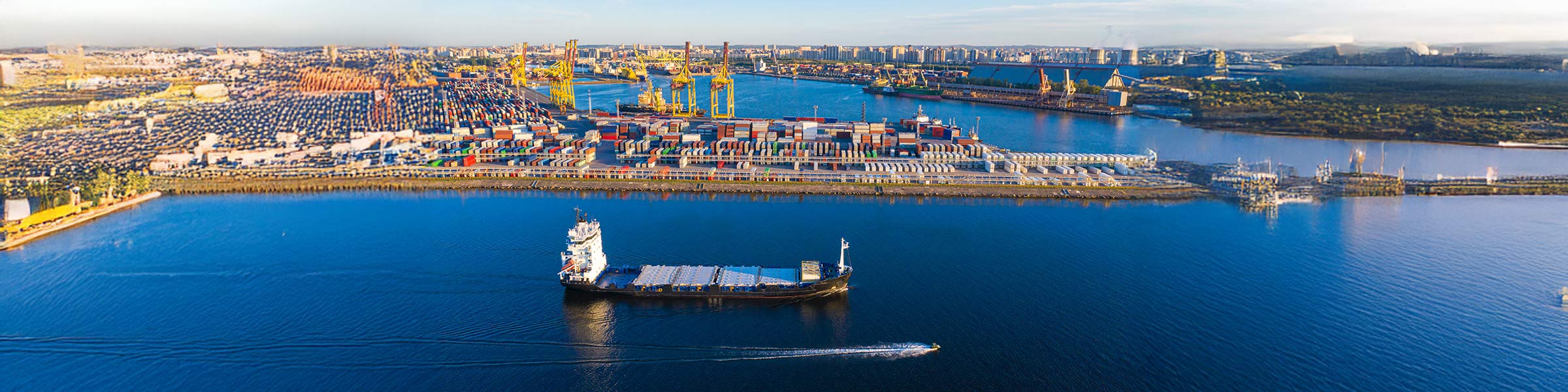
Image: European shipyards seek to cut costs and pollution with new digital tools. © FOTOGRIN, Shutterstock.com

This article was originally published in Horizon the EU Research and Innovation Magazine.
Innovations and solutions to transform Europe’s ports into green infrastructure and boost resilience against climate and criminal threats have been trialled by a broad European network organised under the EU-funded PIONEERS project

Ports have evolved alongside Europe’s economy for centuries. To meet the continent’s climate ambitions, these freight and passenger hubs must now find a way to reduce their environmental impact while staying globally competitive. This is not all bad news for operators: ports hold the potential to become sources of renewable energy, further reducing environmental harm and contributing to the green economy. This transformation will not be simple, however.

“Transitioning ports to green infrastructure is not simply a matter of adopting new technology – it is a systemic challenge,” explains Inge De Wolf(opens in new window), PIONEERS(opens in new window) project coordinator at the Port of Antwerp-Bruges. “Decarbonisation must be pursued alongside resilience, operational efficiency, safety and long-term competitiveness,” she adds.

In the PIONEERS project, a consortium of 46 partners demonstrated a range of innovative solutions designed to transform ports into green infrastructures while addressing other vulnerabilities, including climate impacts and cyberattacks. A showcase of the various demonstrators(opens in new window) is available online.

“PIONEERS demonstrated several ways in which ports can reduce their carbon footprint,” says De Wolf. “These are not isolated actions, but part of a broader transition strategy that balances environmental goals with operational and commercial realities.”

Demonstrations of green innovation

PIONEERS was designed not to invent solutions from scratch, but to test, validate and scale promising innovations in real port-operating conditions, many for the first time at a large scale.

The project tested 19 solutions through live trials in different port environments, primarily at the Port of Antwerp-Bruges, but also at Barcelona in Spain, and Venlo in the Netherlands. They were developed under a framework that allows transfer and scale between ports beyond the pilots. Further projects are under way.

Innovations were organised around four pillars: clean energy, sustainable port design, modal shift and flow optimisation, and digital transformation. Examples include a hydro turbine system to capture residual water and generate clean electricity, autonomous vessel technology for inland waterway transport, and the world’s first dual-fuel straddle carrier(opens in new window), which used hydrogen to cut its diesel consumption by 35 %.

“The goal was not only to showcase what works, but also to understand why certain solutions succeed and others do not,” explains De Wolf. Other innovations included a digital twin of port operations and a maritime 5G network with AI-powered vessel tracking.

Scalable, transferable green solutions

The most important result was not any single innovation, but the transition framework itself, remarks De Wolf. A Handbook of Best Practices, a flagship deliverable, is in production. This brings together tools, guidance and system mapping – all grounded in lessons learned from real port environments.

“Crucially, the handbook is designed to be adaptable: it does not prescribe a single solution, but equips ports to navigate their own transition based on their specific context, size and ecosystem,” notes De Wolf.

Inspiring Europe’s ports to go green

The legacy of PIONEERS goes beyond the individual solutions, especially as ports all vary significantly in size, needs and challenges. PIONEERS therefore offers a menu of potential innovations to be adopted. “The message is simple and clear: you do not have to start from scratch,” says De Wolf. “The methodology and the evidence are there, and you can tailor it to your port ecosystem.”

Strategic partnership with the Innovation Center of Port of Ashdod in Israel enabling the company to extend its market reach and engage large ports and terminal operators in the United States, Europe, and Southeast Asia

Salvador Technologies, the pioneering cyber-attack recovery platform provider for critical infrastructures and industrial organizations, today announced that the company is experiencing an increased demand for its cyber-attack recovery platform from organizations in the maritime sector and shipping industry.

Whether for financial gain or geopolitical considerations, cyber-terrorists and other malicious actors are increasingly targeting the maritime sector and shipping industry. Last year, crippling ransomware attacks in Australia and Japan shut down the operations of major ports, severely disrupting the flow of goods into and out of these countries. More recently, the United States government and its top cybersecurity officials urged the port authorities and operators across the country to improve their preparedness for increased cyber-attacks on key US infrastructure, encouraging ports to rapidly encrypt data, patch vulnerabilities in critical systems, maintain a well-trained cyber team and improve the backup of their critical systems.

Salvador Technologies reports that an increasing number of port authorities, terminal operators, shipping companies and other organizations in the maritime ecosystem around the world are using the company’s cyber-attack recovery platform to improve their cyber-resilience and ensure operational continuity by automating backup and recovery processes for their critical infrastructures. The company also indicates that compliance with a range of cybersecurity regulations and mandates related to on-ship and offshore restore capabilities, such as IMO IEC 62443, ISPS Part 13.2, IEC 62443-3-3 special clauses E.2.6 (E26) E.2.7 (E27), and others, is another significant factor driving the demand for its cyber-attack platform.

Recently, Salvador Technologies established a strategic business partnership with the Port of Ashdod in Israel. The Port of Ashdod is the country’s largest seaport in terms of cargo volume and has deployed Salvador Technologies’ cyber-attack platform to replace previous backup practices of its control systems and operational technology (OT) that relied on cumbersome manual processes.

Through this partnership, Salvador Technologies is engaging port authorities and terminal operators that have signed cooperation agreements with the Innovation Center at the Port of Ashdod, including the Port of New York & New Jersey and the Port of Corpus Christi in the United States, the Port of Rotterdam in the Netherlands, the Port of Singapore and others. Salvador Technologies further reports that the company is currently migrating successful trials of its cyber-attack recovery platform into full deployments for several port authorities and terminal operators in the United States, Europe and Southeast Asia engaged through its strategic partnership with the Port of Ashdod.

“Over the years, the maritime industry has been facing a rising threat rate of cyber-attacks that results in downtime, causing damages to the efficient operations, competitiveness and reputations of ports around the world,” said Gadi Benmoshe, Managing Director of Marinnovators and Vice Chair of the International Association of Ports and Harbors (IAPH) Data Collaboration Committee . “As these issues are becoming more and more critical, an incident recovery solution is now an essential proactive measure that should be taken by port authorities and terminal operators worldwide.”

Salvador Technologies’ air-gapped cyber-attack recovery platform consists of hardware connected to the HMI or SCADA, an agent software and a monitoring system, enabling full visibility of the operations. The platform protects customer data from being attacked and, in case of an incident, bypasses standard recovery protocols to enable a full recovery from cyber-attacks and any malfunction within only 30 seconds.

“We are tremendously pleased with our growth in the maritime sector and our expanding footprint across the shipping industry,” said Alex Yevtushenko, Co-Founder and CEO of Salvador Technologies. “The market drivers pushing the demand for our cyber-attack recovery platform are clear and we have strong expectations for continued growth in this and other verticals.”

Image: Alex Yevtushenko, Co-Founder and CEO of Salvador Technologies, onsite at the Port of Ashdod.

Ammonia could be a nearly carbon-free maritime fuel, but without new emissions regulations, its impact on air quality could significantly impact human health

As container ships the size of city blocks cross the oceans to deliver cargo, their huge diesel engines emit large quantities of air pollutants that drive climate change and have human health impacts. It has been estimated that maritime shipping accounts for almost 3 percent of global carbon dioxide emissions and the industry’s negative impacts on air quality cause about 100,000 premature deaths each year.

Decarbonizing shipping to reduce these detrimental effects is a goal of the International Maritime Organization, a U.N. agency that regulates maritime transport. One potential solution is switching the global fleet from fossil fuels to sustainable fuels such as ammonia, which could be nearly carbon-free when considering its production and use.

But in a new study, an interdisciplinary team of researchers from MIT and elsewhere cautioned that burning ammonia for maritime fuel could worsen air quality further and lead to devastating public health impacts unless it is adopted alongside strengthened emissions regulations.

Ammonia combustion generates nitrous oxide (N2O), a greenhouse gas that is about 300 times more potent than carbon dioxide. It also emits nitrogen in the form of nitrogen oxides (NO and NO2, referred to as NOx), and unburnt ammonia may slip out, which eventually forms fine particulate matter in the atmosphere. These tiny particles can be inhaled deep into the lungs, causing health problems like heart attacks, strokes, and asthma.

The new study indicates that, under current legislation, switching the global fleet to ammonia fuel could cause up to about 600,000 additional premature deaths each year. However, with stronger regulations and cleaner engine technology, the switch could lead to about 66,000 fewer premature deaths than currently caused by maritime shipping emissions, with far less impact on global warming.

“Not all climate solutions are created equal. There is almost always some price to pay. We have to take a more holistic approach and consider all the costs and benefits of different climate solutions, rather than just their potential to decarbonize,” says Anthony Wong, a postdoc in the MIT Center for Global Change Science and lead author of the study.

His co-authors include Noelle Selin, an MIT professor in the Institute for Data, Systems, and Society and the Department of Earth, Atmospheric and Planetary Sciences (EAPS); Sebastian Eastham, a former principal research scientist who is now a senior lecturer at Imperial College London; Christine Mounaïm-Rouselle, a professor at the University of Orléans in France; Yiqi Zhang, a researcher at the Hong Kong University of Science and Technology; and Florian Allroggen, a research scientist in the MIT Department of Aeronautics and Astronautics. The research appears this week in Environmental Research Letters.

Greener, cleaner ammonia

Traditionally, ammonia is made by stripping hydrogen from natural gas and then combining it with nitrogen at extremely high temperatures. This process is often associated with a large carbon footprint. The maritime shipping industry is betting on the development of “green ammonia,” which is produced by using renewable energy to make hydrogen via electrolysis and to generate heat.

“In theory, if you are burning green ammonia in a ship engine, the carbon emissions are almost zero,” Wong says.

But even the greenest ammonia generates nitrous oxide (N2O), nitrogen oxides (NOx) when combusted, and some of the ammonia may slip out, unburnt. This nitrous oxide would escape into the atmosphere, where the greenhouse gas would remain for more than 100 years. At the same time, the nitrogen emitted as NOx and ammonia would fall to Earth, damaging fragile ecosystems. As these emissions are digested by bacteria, additional N2O  is produced.

NOx and ammonia also mix with gases in the air to form fine particulate matter. A primary contributor to air pollution, fine particulate matter kills an estimated 4 million people each year.

“Saying that ammonia is a ‘clean’ fuel is a bit of an overstretch. Just because it is carbon-free doesn’t necessarily mean it is clean and good for public health,” Wong says.

A multifaceted model

The researchers wanted to paint the whole picture, capturing the environmental and public health impacts of switching the global fleet to ammonia fuel. To do so, they designed scenarios to measure how pollutant impacts change under certain technology and policy assumptions.

From a technological point of view, they considered two ship engines. The first burns pure ammonia, which generates higher levels of unburnt ammonia but emits fewer nitrogen oxides. The second engine technology involves mixing ammonia with hydrogen to improve combustion and optimize the performance of a catalytic converter, which controls both nitrogen oxides and unburnt ammonia pollution.

They also considered three policy scenarios: current regulations, which only limit NOx emissions in some parts of the world; a scenario that adds ammonia emission limits over North America and Western Europe; and a scenario that adds global limits on ammonia and NOx emissions.

The researchers used a ship track model to calculate how pollutant emissions change under each scenario and then fed the results into an air quality model. The air quality model calculates the impact of ship emissions on particulate matter and ozone pollution. Finally, they estimated the effects on global public health.

One of the biggest challenges came from a lack of real-world data, since no ammonia-powered ships are yet sailing the seas. Instead, the researchers relied on experimental ammonia combustion data from collaborators to build their model.

“We had to come up with some clever ways to make that data useful and informative to both the technology and regulatory situations,” he says.

A range of outcomes

In the end, they found that with no new regulations and ship engines that burn pure ammonia, switching the entire fleet would cause 681,000 additional premature deaths each year.

“While a scenario with no new regulations is not very realistic, it serves as a good warning of how dangerous ammonia emissions could be. And unlike NOx, ammonia emissions from shipping are currently unregulated,” Wong says.

However, even without new regulations, using cleaner engine technology would cut the number of premature deaths down to about 80,000, which is about 20,000 fewer than are currently attributed to maritime shipping emissions. With stronger global regulations and cleaner engine technology, the number of people killed by air pollution from shipping could be reduced by about 66,000.

“The results of this study show the importance of developing policies alongside new technologies,” Selin says. “There is a potential for ammonia in shipping to be beneficial for both climate and air quality, but that requires that regulations be designed to address the entire range of potential impacts, including both climate and air quality.”

Ammonia’s air quality impacts would not be felt uniformly across the globe, and addressing them fully would require coordinated strategies across very different contexts. Most premature deaths would occur in East Asia, since air quality regulations are less stringent in this region. Higher levels of existing air pollution cause the formation of more particulate matter from ammonia emissions. In addition, shipping volume over East Asia is far greater than elsewhere on Earth, compounding these negative effects.

In the future, the researchers want to continue refining their analysis. They hope to use these findings as a starting point to urge the marine industry to share engine data they can use to better evaluate air quality and climate impacts. They also hope to inform policymakers about the importance and urgency of updating shipping emission regulations.

This research was funded by the MIT Climate and Sustainability Consortium.

Text: Adam Zewe | MIT News

The Finnish and Estonian ports will work with companies and government bodies on a range of projects to improve the sustainability of their operations and those of their customers.

The ports of Helsinki and Tallinn have led an agreement to create a new green corridor between Finland and Estonia across the Gulf of Finland as they seek to lower the emissions of the two million vehicles that cross the water every year. 

Bringing together the ports, companies such as Rederi AB Eckerö, Tallink Grupp and Viking Line, Estonia’s Ministry of Climate and Finland’s Ministry of Transport and Communications, the agreement is the latest to use the idea of a green corridor as a way of highlighting climate change efforts. 

Port of Tallinn CEO Valdo Kalm said: “It is important that the connection between Helsinki and Tallinn is, environmentally, even more sustainable in the future. More than the mandatory steps need to be taken to ensure that. 

“It is vital that all major players participate in this activity, so this is a day of great importance and a turning point for working together with all partners in favour of climate and nature.” 

While the Port of Tallinn and the Port of Helsinki have both set a goal of achieving climate/carbon neutrality by 2050, the green corridor partners are hoping that the agreement will allow the ports to reach their targets ahead of schedule. 

Alongside the Helsinki-Tallinn route, the corridor will also cover the Muuga-Vuosaari connection, with joint roadmaps for shipping companies, cities and ports consisting of specific milestones to achieve on the road to net zero.


Source: Noah Bovenizer (https://www.ship-technology.com/news)


Valenciaport and Nextport have collaborated on the creation of innovative software designed to forecast the volume of trucks expected to traverse the port’s facilities

This new solution not only predicts the number of trucks but also determines the specific terminal they are likely to utilise and whether they will engage in loading or unloading activities.

The new Artificial Intelligence (AI) system combines Valenciaport’s data – both land and seaside – with key information to understand the behaviour of the ship on arrival at the port.

The size of the ships, the type of services and routes, the terminal timetables, the weather, the calendars of festivities in third countries, or a history of world GDP, among other information, have reportedly helped to adjust this predictive machine learning model.

With this software, Valenciaport can know days in advance what will happen in the Valencian docks both in terms of loading and unloading of ships, as well as the movements that will take place at the terminal gates and the number of truck entries.

Thus, when Valenciaport enters in this system that a ship is going to arrive at the Port of Valencia on a specific day, it will be able to forecast from that moment on, what workload both import and export is going to involve.

In this sense, by adding the prediction of all the ships, you will have the prediction of everything that is going to move in each terminal. This is key information both for the management of the terminals and for the carriers.

According to Valenciaport, this predictive AI-assisted model represents a competitive advantage for terminals and carriers operating in Valenciaport’s docks as they will be able to improve their planning and manage their operations more efficiently.

On the one hand, the terminals will have the traffic flow data days in advance and be able to predict what machinery they need per day and thus hire more or less staff if necessary.

On the other hand, for shippers, this system will help them to know more accurately the schedules and cargo volumes of ships, being able to efficiently manage their schedules of entry and exit from the port or waiting times, reported Valenciaport.

The information gathered can also be shared with the administrations, which, if necessary, will be able to improve traffic management on the roads near the access points to the ports.

In this sense, by knowing the volume of hauliers that are going to circulate each hour on the port’s access points, they will be able to warn drivers via panels and propose alternative routes to cars.

This is a further step in the digitalisation strategy of the Port Authority of Valencia (APV), which involves integrating the Big Data generated by Valenciaport into a machine-learning model assisted by professionals.

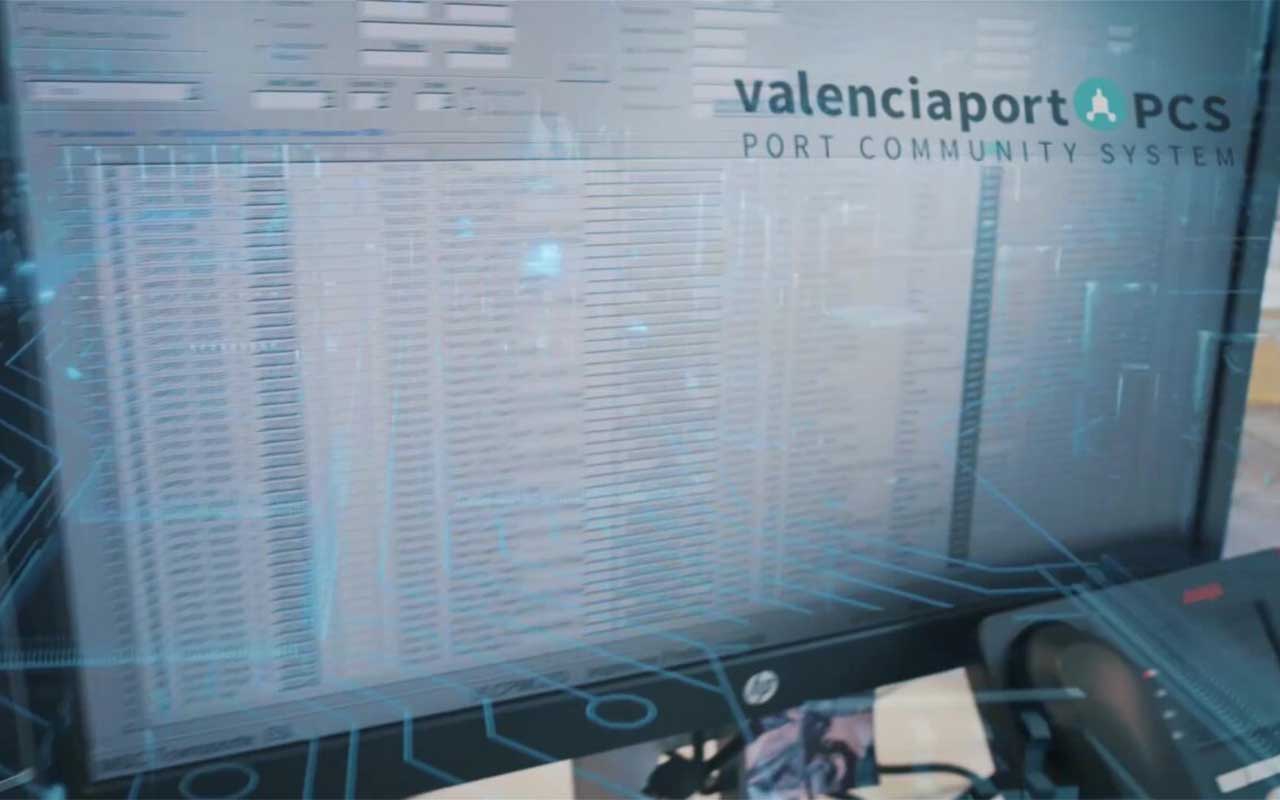
The Port of Valencia has successfully trained 2,600 lorry drivers in the use of the ValenciaportPCS mobile application. This digital innovation aimed to reduce waiting times, cut emissions, eliminate paper, speed up procedures, and support environmental sustainability according to the port.

More recently in June 2023, the Costa-MSC Transversal dock in Valencia announced it will put out to bid the first On-Shore Power Supply (OPS) electrification project, with an estimated cost of $11.7 million.

A new 600MW facility pioneered by three industry leaders will produce 240 tonnes of clean hydrogen per day

ABB, Lhyfe, and Skyborn have collaborated on the green hydrogen project, known as SoutH2Port. They believe it will be Europe’s most ambitious project in this area to date.

It will be built in Söderhamn, Sweden, and will utilise the 1GW of power produced by Skyborn’s wind farm nearby.

Moreover, it will make significant contributions towards Sweden’s 2045 net zero goal. The country will produce clean hydrogen for downstream production, sustainable aviation fuels, and ammonia.

Brandon Spencer, President of ABB Energy, explained: “Hydrogen plays a crucial role in helping achieve the world’s climate goals when it comes to decarbonising the industrial and transportation sectors.”

What is clean hydrogen and how does it contribute to carbon neutrality?

The process of creating clean hydrogen means that its only by-products are water vapour and oxygen. This process results in completely clean energy production with zero carbon emissions emitted.

This is done through a chemical process called electrolysis, which uses an electrical current to separate hydrogen from oxygen in the water.

Electrolysis for clean hydrogen production is predicted to save 830 million tonnes of CO2 emissions that are emitted annually when this gas is produced using fossil fuels. Likewise, replacing all grey hydrogen in the world would require 3,000 TWh/year from new renewables — equivalent to the current demand of Europe.

Additionally, falling renewable energy prices coupled with the dwindling cost of electrolysers and increased efficiency due to technology improvements have increased the commercial viability of green hydrogen production.

The collaboration will benefit from leading industry expertise

Taia Kronborg, Co-Founder at Lhyfe, said: “Skyborn’s track record in offshore wind power, Lhyfe’s expertise in renewable hydrogen production, coupled with ABB’s technological expertise creates new opportunities for enabling Power-to-X solutions linked with clean hydrogen production at scale.”

“This is clearly a strategic move for the project. We believe that the collaboration will enable us to accelerate our high ambitions in the region,” concluded Achim Berge Olsen, Chairman of Skyborn.

Source: https://www.innovationnewsnetwork.com


The Himalaya Express service directly links Jeddah Islamic Port and the ports of Colombo, Nhava Sheva, Mundra, Salalah, King Abdullah, Valencia, Felixstowe, Rotterdam, Hamburg, and Antwerp

The new shipping service connects the United Arab Emirates (UAE) to 260 global ports across Northern Europe, the Americas, the Mediterranean Sea, the Red Sea, the Indian Subcontinent, and Eastern Asia.

The Saudi Ports Authority (MAWANI) said this new service will boost imports and exports as well as expand shipping operations to and from the Kingdom.

The Himalaya Express service directly links Jeddah Islamic Port and the ports of Colombo, Nhava Sheva, Mundra, Salalah, King Abdullah, Valencia, Felixstowe, Rotterdam, Hamburg, and Antwerp through 11 motherships out of 730 vessels that have an average carrying capacity of 14,000 TEU.

The addition of Jeddah to the MSC service follows strategic efforts from MAWANI to expand liner shipping networks in a bid to boost global trade connection.

Just recently, the port authority added King Abdulaziz Port in Dammam to its Aladin Express DMCC’s shipping service, Gulf-India Express 2 (GIX2).

In addition, MAWANI signed new contracts in October to deepen and build new berths at Jeddah Islamic Port.

The two contracts, worth a total of SAR642 million ($171 million), were signed with major contractors PC Marine Services and Modern Building Leaders (MBL), the latter in consortium with HutaHegerfeld Saudia Ltd.


Port of Antwerp-Bruges is set to play a vital role in Belgium’s revised hydrogen strategy through the production and importation of green hydrogen

A revision of Belgium’s federal hydrogen strategy has been proposed by Prime Minister Alexander De Croo during a visit to the Port of Antwerp-Bruges. The amendment contains the development of a federal hydrogen council, which will align with the government’s broader energy objective of achieving climate neutrality. The Port of Antwerp-Bruges will play a crucial role in facilitating Belgium to become the hydrogen hub of Europe, through its strategy and projects for the importation, production, and throughput of green hydrogen.

New insights into green hydrogen’s role in the energy transition

As part of Belgium’s clean energy transition to a carbon-neutral society, the federal hydrogen strategy was approved late last year. Hydrogen has a vital role in the energy transition and is necessary for guaranteeing the country’s sustainability. To ensure that the country can successfully transition to a zero-emission society, Belgium requires not only renewable energy, but a large amount of renewable hydrogen. Green hydrogen is produced locally but will mainly have to be imported in large quantities. The country has the potential to position itself as an import and transit hub for green hydrogen in Europe.

The revision of the federal hydrogen strategy was explained by Prime Minister Alexander De Croo, Minister of Energy, Tinne Van der Straeten, and State Secretary for Economic Recovery, Thomas Dermine, yesterday at the Port of Antwerp-Bruges Port House, in the presence of stakeholders from various sectors such as chemistry, industry, and energy.

The modifications are based upon recommendations from a Boston Consulting Group (BCG) study that surveyed various sectors. Highlights from this study included the import of hydrogen and the announcement of a federal hydrogen council with WaterstofNet and Cluster TWEED as chairs.

The Port of Antwerp-Bruges’ vital role

Belgium is located at the heart of various significant industrial clusters and at an energy crossroads in the centre of Europe. The country has the potential to become the hydrogen hub of Western Europe, due to the strategic location of its ports, the expertise of innovative companies, research centres and educational institutions, and the infrastructure and industry already in place.

The Port of Antwerp-Bruges is a world port and envisions itself in the import, local production, processing, and throughput of green hydrogen and hydrogen carriers, for example, ammonia and methanol, to the country and beyond.

Belgium cannot produce the required quantities of green hydrogen on its own due to a lack of space. Imports of green hydrogen and hydrogen carriers from areas that have a significant amount of space, as well as sufficient wind and sun, will therefore be necessary to supplement local production.

The current capacity of the Port of Antwerp-Bruges will be expanded from 2026 onwards, to receive the first green hydrogen molecules on its platform. To strengthen its position as a major player in the hydrogen industry, the Port of Antwerp-Bruges formed the hydrogen import coalition with five major industrial players and public stakeholders: DEME, Engie, Exmar, Fluxys, and WaterstofNet. To develop the hydrogen chain, collaborations with several exporting regions have also been established. Currently, global hydrogen export projects are being developed by several Belgian companies.

Hydrogen and hydrogen carriers are carried to Europe by various modes of transport, such as pipelines, rail, and inland waterways. Therefore, it is essential to have good infrastructures, such as open-access hydrogen pipelines and terminals. Because of this, the port is aiming to expand terminal capacity for existing and new hydrogen carriers at both port sites. The government is also funding a network of hydrogen pipelines that will connect ports to Belgian industrial areas and Germany by 2028.

Local production

Local production of hydrogen will also take place at the Zeebrugge and Antwerp port platforms. Zeebrugge has wind farms and natural gas infrastructure, making it the ideal location for the construction of a green hydrogen production plant. Fluxys and Eoly are responsible for the construction of this plant under the name HyoffWind.

Plug, an American company, will build a green hydrogen production plant in Antwerp at the circular hotspot NextGen District, with its location near Europe’s largest chemical cluster set to play a significant role.

Jacques Vandermeiren, CEO of the Port of Antwerp-Bruges, said: “Together with our partners in organisations such as the Hydrogen Import Coalition, and the major players on our port platform, we are investing in infrastructure and projects to accelerate the import, transport, and production of green hydrogen. Co-operation with, and the appropriate support from the government, is key to this. I therefore sincerely welcome this revised strategy that provides concrete direction, recognises imports as a pillar of our energy and resource supply, and demonstrates our commitment to working with industry on the development of solutions to potential challenges that may lie in our path.”

Prime Minister Alexander De Croo added: “Together with all stakeholders from government and industry, we have developed a focused strategy built on all the know-how that Belgium has accumulated over the past decades. We want to seize our potential to become a European leader in hydrogen, by ensuring the security of hydrogen supply by the second half of this decade, strengthening our technological leadership, developing a hydrogen market, and turning Belgium into a leading, continental hub for hydrogen. We believe hydrogen will play a key role in our wish to redraw the energy fundamentals of our entire continent post-Ukraine.”

Page 1 of 2

Featured

We use cookies

We use cookies on our website. Some of them are essential for the operation of the site, while others help us to improve this site and the user experience (tracking cookies). You can decide for yourself whether you want to allow cookies or not. Please note that if you reject them, you may not be able to use all the functionalities of the site.