Smart Leaders

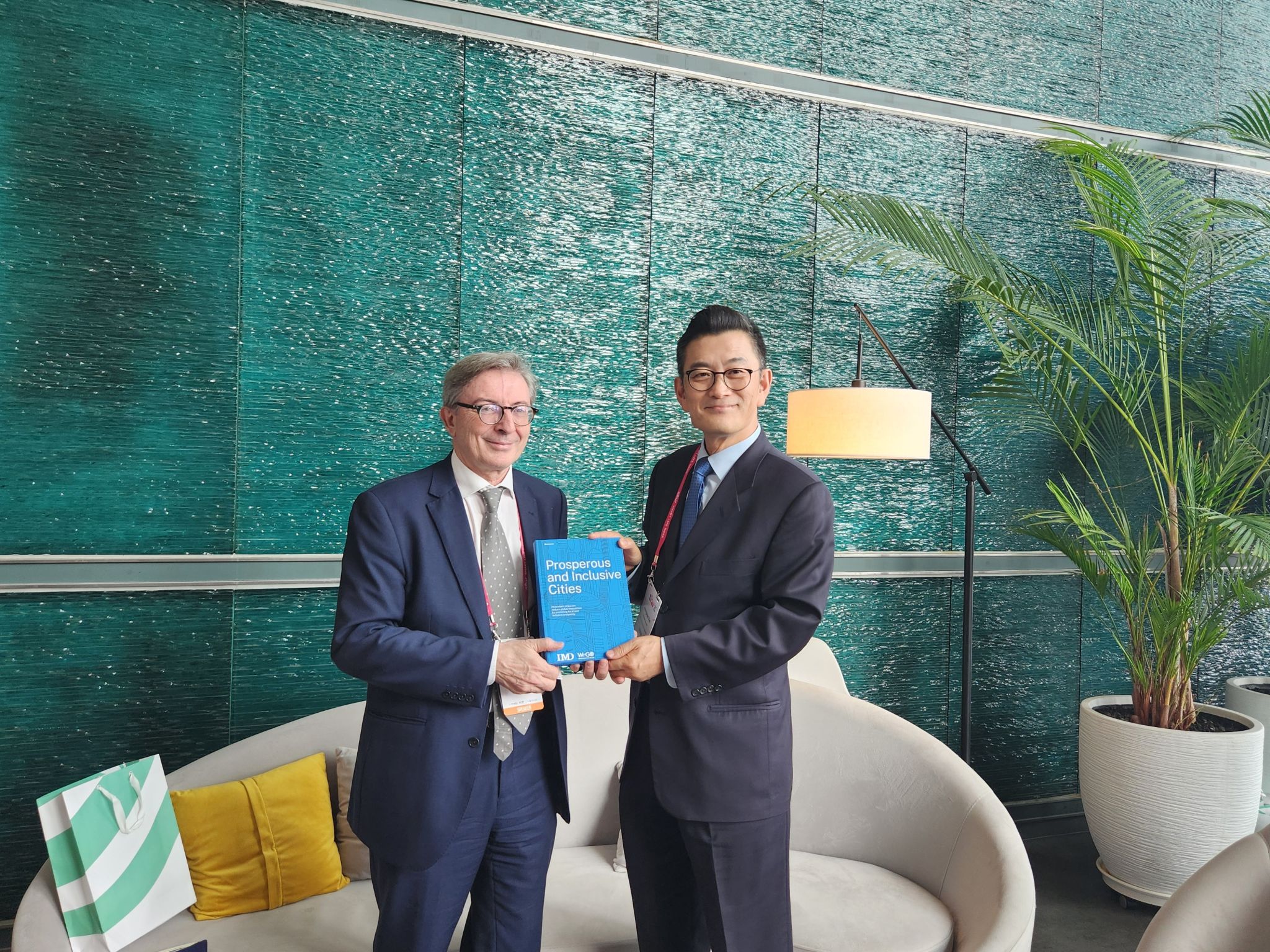
Boldyn Networks’ CEO for Spain and Italy advocates shared infrastructure and private 5G networks as the essential foundation for accelerating the digital transformation of cities and turning innovation into tangible services for citizens.

With more than thirty years of experience leading telecommunications network deployments across Europe and Latin America, Antonio Ruggiero is spearheading Boldyn Networks’ expansion in Spain and Italy. Having driven internationally renowned projects such as Rome 5G, he argues that the future of smart cities will not depend on installing more sensors, but on building shared, resilient digital infrastructure ready to support artificial intelligence, digital twins and connected mobility.

TSCJ.- Boldyn has announced a highly ambitious commitment to Spain. What is your view of the Spanish smart city market over the next five years, and what role does Boldyn intend to play in the major urban projects being developed with European funding?

AR.- Spain is one of the European markets with the greatest potential for smart city development over the next five years. The country is at a genuine turning point in its digital transformation. One clear example is the enormous interest generated by the RedCyTI call for proposals aimed at promoting smart cities and territories, whose initial budget was doubled due to the high number of projects submitted. Spanish cities have understood that digitalisation is  a strategic priority for improving public services, attracting investment and addressing challenges such as mobility, sustainability and urban resilience through public-private collaboration.

At Boldyn, we want to play a leading role as a long-term technology partner for public administrations, providing advanced digital infrastructure that drives digital transformation and facilitates the implementation of projects supported by European funds (NextGenerationEU). We currently develop advanced urban networks in cities such as London, New York, San Francisco, Sunderland in the UK, and Rome.

In fact, one of our most ambitious projects is Rome 5G, which demonstrates how one of the continent’s most visited and historic cities can become one of Europe’s best-connected and most sustainable smart cities. To achieve this, a shared 5G infrastructure has been deployed across its public transport network, helping improve mobility management, optimise urban services and respond more effectively to challenges such as mass tourism. Rome has already been recognised for its innovation and urban transformation, winning the 2025 Smart City Award at the World Smart City Awards held during the Smart City Expo World Congress (SCEWC).

In all these cities, we deploy digital “highways” that connect the urban fabric with innovation. Our goal is to enable efficient, real-time, data-driven urban management, ensuring that digitalisation delivers direct, sustainable and measurable benefits for citizens.

TSCJ.- For years, many cities have invested in digital platforms and sensors, yet the major challenge remains having robust and secure connectivity. To what extent does Boldyn believe that private 5G networks and shared infrastructure will be the true catalyst for the next generation of smart cities?

AR.- From my perspective as head of Boldyn Networks in Spain and Italy, the answer is unequivocal: private 5G networks and shared infrastructure are not merely a catalyst; they are the only real foundation for the next generation of smart cities. For years, many cities have fallen into the trap of massive sensor deployment, installing isolated platforms and devices while overlooking the fact that if the arteries carrying that information fail or become congested, the entire digital ecosystem collapses. The real challenge is no longer capturing data, but guaranteeing robust, secure and high-capacity real-time connectivity.

Our global experience with flagship projects such as #Rome5G demonstrates that the traditional deployment model—in which each operator duplicates infrastructure—is economically unviable and unsustainable from an urban planning perspective. Through the Neutral Host model championed by Boldyn, we deploy a single, shared, high-capacity network serving multiple operators and municipal services. At the same time, private 5G networks provide the ultra-low latency and critical security, supported by advanced encryption, required by essential public services, ensuring that the network never becomes congested. It is this invisible yet resilient infrastructure that will truly transform urban management, just as we are already bringing this approach to Spain’s industrial and port sectors.

TSCJ.- More and more local authorities are looking to reduce costs without sacrificing innovation. Boldyn’s Neutral Host model enables infrastructure to be shared among different operators. What economic and operational advantages does this approach offer compared with traditional deployment models?

AR.- The Neutral Host model is based on a very simple idea: it makes no sense for every operator to build its own infrastructure when they can all rely on the same network. For a local authority, the traditional model can mean streets being repeatedly dug up for construction work, visual saturation from antennas on historic façades and excessive costs that ultimately hinder innovation. Boldyn’s approach breaks with this inefficiency: we make the investment, deploy a single shared high-capacity network and enable all operators and public services to connect to it.

From both an operational and economic standpoint, the advantages are transformative for local government. For a city, it means fewer construction works, less occupation of urban space and infrastructure that is ready to adapt to new requirements without having to start from scratch every time a new technology or service emerges, while also reducing expenditure.

At Boldyn, we collaborate with our operators and with public administrations to develop and manage a common digital infrastructure on which different stakeholders can deliver their services. It is a model that already works for other essential infrastructure and makes perfect sense, as it transforms urban connectivity into a public service that is as efficient and seamless as water or street-lighting networks.

We believe this approach enables cities to focus on developing new services for citizens while relying on a solid, open and future-ready technological foundation, which is what really matters.

TSCJ.- Artificial intelligence, digital twins, connected mobility and energy management all require real-time data and ultra-reliable communications. What types of cities are genuinely prepared today to take advantage of these technologies, and what are the main barriers still facing public administrations?

AR.- Rather than talking about large or small cities, I would talk about cities with a clear digital transformation strategy. Those that are best prepared are the ones that have understood that technology is not an end in itself, but a tool for improving public services and citizens’ quality of life.

Leading examples such as Málaga, recognised in the IESE Cities in Motion 2026 report, demonstrate that urban innovation is not the exclusive preserve of major global capitals. These cities have a long-term vision, and the key factor is not their size but their structural maturity.

Public administrations face several challenges. On the one hand, they need to optimise public investment and prioritise projects that deliver real impact. On the other, they face the complexity of coordinating the different stakeholders involved and ensuring that solutions deployed today remain useful ten or fifteen years from now. This is why we believe collaboration between public administrations and specialised companies will become increasingly important.

Cities that are truly prepared to become smart cities are those capable of segmenting their networks in real time to prioritise a connected ambulance or process massive traffic flows without causing the slightest impact on citizens’ commercial networks.

To address these challenges, Boldyn is firmly committed to the public-private partnership model. If the private sector assumes the technological and financial risks of deployment through a Neutral Host model, cities can overcome these barriers at once, ensuring military-grade security for their communications while freeing up public resources to focus exclusively on innovation and improving citizens’ lives.

TSCJ.- If we were to interview Boldyn again five years from now, what milestones would you like to be able to point to as evidence that the company has transformed the way Spanish cities manage their connectivity and smart services?

AR.- We would like to be able to say that we have established our model as the undisputed standard for managing urban telecommunications. Our ambition is to bring to Spain a model that has already demonstrated its success in cities such as London, New York, San Francisco, Sunderland and Rome, adapting it to the needs of each territory. We believe the best solutions do not involve starting from scratch, but rather drawing on accumulated experience and applying approaches that have already proven their ability to create value.

If, five years from now, we can say that we have helped accelerate urban digitalisation projects, facilitated shared infrastructure models and enabled more cities to deploy new services more quickly, efficiently and sustainably, we will consider that we have achieved our goal.

Ultimately, Boldyn’s greatest success will not be measured by the number of networks deployed, but by having become a trusted partner for public administrations and the wider ecosystem, helping to build the digital infrastructure that will enable the next generation of smart cities.

TSCJ.- Many smart city projects remain pilots that never manage to scale. What needs to change in the collaboration between public administrations, technology operators and companies for cities to finally move from demonstration projects to large-scale urban transformation?

AR.- Our role is precisely to facilitate that transition by providing the digital infrastructure and collaboration models that have already proven effective in other cities. Our goal is to help public administrations move from isolated projects towards a sustained, long-term urban transformation strategy based on robust, shared and future-ready connectivity.

Public administrations need to move away from the traditional technology procurement model based on one-off subsidies or capital expenditure, which finances an initial deployment but leaves the project without sufficient resources for maintenance and evolution. The real leap in scale will come when long-term public-private partnership models become widespread. In this scenario, companies such as Boldyn assume the initial investment, technological risk and infrastructure lifecycle, allowing cities to pay for the service predictably as an operating expense while ensuring that the technology never becomes obsolete.

The second major change involves ecosystem governance and network interoperability. Until now, technology operators and companies have tended to work in silos: one pilot for street lighting, another independent project for water management and another for mobility, each with its own fragmented connectivity. For a project to scale, we need to understand that connectivity is not a product that is simply purchased and installed. It is a common, neutral and shared infrastructure that acts as the city’s nervous system.

Our experience in Sunderland demonstrates that cities achieve better results when they stop focusing on technology itself and instead focus on the problems they want to solve. Connectivity, data and collaboration between public administrations, companies and other local stakeholders then become enablers of continuous urban transformation, focused on tangible outcomes such as more efficient mobility, better environmental management, greater climate resilience, more preventive public healthcare and, ultimately, a better quality of life for citizens both today and in the future.

Interview by
Manuel Tarín Alonso

With AI making it easier for businesses to tailor prices to individual customers, Maryland recently became the first state to prohibit the use of personal data in setting prices. We asked Yale SOM economist Jidong Zhou whether such restrictions are likely to work as intended—and whether they will benefit consumers.

Setting prices differently for different customers has been a practice for a long time. Are AI tools making personalized pricing more common or more effective?

Yes. Firms have often tried to charge different customers different prices, but AI makes this practice easier, cheaper, and more precise. In the past, price discrimination often relied on fairly broad categories: business versus leisure travelers, coupon users versus non-coupon users, students versus non-students. Today, firms have access to much richer information. A consumer’s browsing behavior, purchase histories, app usage, location data, social media activity, and even items left in online shopping carts can all leave useful digital traces. AI tools make it much easier to analyze this kind of scattered data and generate predictions on consumer preferences. In economic terms, this moves firms closer to “first-degree price discrimination,” in which each consumer could be charged a different price based on their preferences. We are not fully there, of course, but the direction is clear: pricing is becoming more data-driven and more individualized.

AI also makes it much cheaper to carry out personalized pricing at scale. Airlines, hotels, and ride-hailing platforms already adjust prices as demand changes, and algorithmic pricing makes these adjustments faster and more individualized. Similarly, online retailers and subscription services can test different discounts, send coupons to shoppers who seem likely to leave without buying, or offer special retention deals to customers who appear likely to cancel. Digital platforms can change targeted prices or offers almost instantly, so the practical cost of using personalized pricing has fallen dramatically.

The push to regulate personalized pricing reflects some discomfort with the practice. What does your research say about how this kind of pricing affects consumers overall?

A common concern is that personalized pricing, compared with uniform pricing, allows firms to extract more surplus from consumers. This concern goes back at least to Pigou’s classic analysis more than a century ago: in the textbook monopoly case, if a firm knows exactly how much each consumer is willing to pay, it can charge each person that amount and leave consumers with no surplus. This is the standard reason people worry about personalized pricing.

But that conclusion depends on two strong assumptions: that pricing is perfectly personalized and that the firm has monopoly power. Once we relax either assumption, the effect on consumers becomes more complicated. For example, in a competitive market, personalized pricing can actually help some consumers. In particular, consumers who view competing products as close substitutes may benefit because firms have strong incentives to undercut each other to win their business. By contrast, consumers with strong brand preferences, or those who do not shop around, may be worse off, because firms know they are less likely to switch and may charge them more.

My own research emphasizes that the overall effect of personalized pricing is therefore nuanced. It depends on market conditions, including production costs, the degree of competition, and of course also the distribution of consumer preferences in the population. In general, personalized pricing is more likely to benefit consumers in aggregate when costs are lower, when there are more competitors, or when more consumers have weak preferences across competing products.

Can a ban like the one proposed in Maryland be effective? Is there a better approach?

A ban like Maryland’s may address some consumer concerns, but it is unlikely to fully stop personalized pricing, even if we assume that personalized pricing is bad for consumers—which, as discussed above, is not always true. One potential loophole is that firms could raise their posted sticker prices and then offer individualized discounts to selected consumers through emails, apps, or loyalty programs. Economically, this achieves the exact same result as personalized pricing, but legally, it remains entirely permissible under the bill’s exceptions for promotions, loyalty programs, retention offers, or consent-based discounts. As a result, the ban may simply push firms to reframe personalized high prices as personalized discounts without changing the underlying practice.

Regulating personalized pricing is difficult in practice. To evaluate whether such a regulation is working, policymakers may want to monitor how affected firms adjust their posted prices after the law takes effect. If regular prices rise while individualized discounts become more common, the law may have changed the form of personalized pricing rather than its substance. More generally, policymakers may want to regulate the conditions under which personalized pricing is used, rather than trying to ban it outright. For example, they could require firms to disclose when personal data affect prices or discounts, and to keep records that regulators can audit. Of course, these measures also have practical limits: disclosures may be too vague to be useful, and audits of complex pricing algorithms may require substantial technical expertise. Still, this approach may be more workable than a simple ban, because it could curtail predatory “price gouging” while still preserving legitimate, targeted discounts that can benefit consumers in competitive markets.

How the so-called ‘game of kings’ defied racial attitudes by celebrating the intellectual prowess of winners, irrespective of their skin colour

A 13th-century Black chess player is about to defeat his white opponent. He looks relaxed – he has a bottle of red wine within reach and a glass filled to the brim. He sits on a finely decorated bench as an equal to his light-skinned opponent: a cleric.

This friendly, intellectual scene appears in a lavish treatise on chess completed in Seville in 1283 CE for King Alfonso X of Castile.

This image is a world away from contemporary depictions of Muslim captives being forcibly baptized, or of darker-skinned people executing white Christian martyrs. But it is far from unique.

Cambridge historian Dr Krisztina Ilko has found a wealth of international evidence of chess subverting racial stereotypes and structures in the Middle Ages. Today, her study, ‘Chess and Race in the Global Middle Ages’, published in Speculum, received the Medieval Academy of America’s prestigious ‘Article Prize in Critical Race Studies’.

King Alfonso’s Libro de axedrez (1283), now housed in El Escorial in Spain, features dozens of depictions of non-white players from Africa, the Middle East and Asia, each demonstrating their intellectual prowess.

One scene depicts a contest between a Muslim and a Jewish player. Another depicts four players identified as Mongols. One casually leans on a sabre but the weapon doesn’t pose a threat – the only combat is on the chess board. This scene contrasts other European depictions of Mongols which often associated them with vice and violence.

“Medieval sources repeatedly state that chess is war without bloodshed, and that it represents a just world,” says Dr Ilko, a medieval historian from Queens’ College, Cambridge.

“Chess became a representation of the known world, the people in it and how society should function through orderly moves. Chess was a powerful vehicle for people hailing from widely different places, even civilizations, to interact with each other. It was an intellectual exchange.”

Racial structures and race thinking were very much present in the medieval period, even if they didn't use the same words we use today. Chess, Dr Ilko argues, shows that these structures and ideas could be countered and that intellectual prowess could empower people to challenge them.

Dr Ilko says: “When people with non-white skin colour are depicted in medieval images, scholars have tended to see them in either exalted or subdued positions. So you get the Queen of Sheba at one extreme and executioners and other malignant forces at the other. Chess reveals a different, more complex story.

“Chess was and remains a game of logic, where intellectual prowess matters. Chess operated on a different plane where people could engage with each other as equals, irrespective of their skin colour. What mattered was ‘who's smarter?’, ‘who can win?’, not ‘who's more powerful or socially superior?’”

In the Middle Ages, Ilko points out, Europe was lagging behind Islamic science, and King Alfonso’s court actively acquired and translated Islamic knowledge. At the same time, Islamic chess players were admired for their refined techniques, cleverness and tactics. Out of 103 chess problems depicted in King Alfonso’s treatise, 88 follow the Muslim style of playing. Islamic chess masters included the early 8th-century judge, Sa’id ibn Jubair, who was admired for winning contests while blindfolded.

Chess sets represented the world and its people

The game’s name in Arabic (shatranj) and Middle Persian (chatrang) derive from a variant form of the Sanskrit word chaturanga or four-limbed. This is because chess pieces are thought to be originally inspired by the four main constituents of the Indian army of late antiquity: infantry, cavalry, chariots, and elephants.

As the game was adopted and adapted across different civilizations, Ilko argues, localised concepts of human difference constantly transformed how ‘chessmen’ appeared. Ilko points to the use of facial features including eye-shape and beards, as well as clothing, but argues that colour played a particularly important role. 

“Chess boards immediately had two contrasting colours and the opposing chess pieces were also differentiated through colour,” Dr Ilko says. “This allowed medieval people to project ideas of skin colour and race onto the game.”

Persian respect for Indian chess masters

The Shahnama, a monumental epic narrating the history of Persian people from the Creation to the Islamic conquest in the seventh century, contains an image depicting how the game of chess was transmitted from India to Iran.

Scholars interpreting these 14th-century illustrations – including two versions in the Metropolitan Museum of Art in New York – have assumed that the Persians depicted the Indian ambassador with dark skin and baggy clothes to underscore his defeat to their vizier, the highest-ranking diplomat in the Persian court.

This interpretation is wrong, Dr Ilko argues. The Indian ambassador’s skin colour and clothing indicate that he’s a foreigner but certainly not a defeated one. He is, in fact, shown as a champion of the powerful Indian raja and a guardian of coveted Indian knowledge introducing chess to the Persians for the first time.

“The dark skin colour of intellectual Indian figures in Persian manuscripts challenged the value systems shared by both Christian and Islamic worlds that privileged whiteness,” Dr Ilko says.

According to the text of the Shahnama, the king of India sent an embassy to the Sassanian ruler Kushraw I Anushirvan (ruled 531–79 CE) challenging him to figure out how the game was played or pay tribute. The shāh ordered his counsellors to solve the puzzle but only his clever vizier Būzurjmihr managed to show the Indian ambassador where the pieces went and how they moved.

Chess in a Mallorcan altarpiece

Another of Ilko’s discoveries relates to an overlooked depiction of chess in a late 14th-century altarpiece dedicated to Saint Nicholas of Myra. Currently exhibited in the Museu de Mallorca in Palma, the altarpiece comes from the demolished church of San Nicolás in Portopí.

The game is set in a Muslim court and involves a dark-skinned man playing chess with a light-skinned opponent. Ilko argues that the scene is a rare depiction of a miracle narrated in the French play Le Jeu de saint Nicolas written around 1200. In it, a group of “pagans,” most likely Muslims, defeat an invading Christian army and stumble upon a sole survivor praying in front of a statue of Saint Nicholas.

The local Muslim king positions a statue of Nicholas to watch over his treasures but after gambling over chess in a tavern, three thieves successfully rob the treasury. Saint Nicholas later appears and prompts the gambler-thieves to return the riches, eventually convincing the king and his court to convert to Christianity.

Ilko says the painting reflects Mallorca’s complex Islamic and Christian heritage, while counteracting widely accepted medieval ideas about skin colour. “By representing the king with visibly darker skin than the gambler-thief, this painting challenged the dominant value scheme that prioritised whiteness,” Ilko argues.

“So much has changed since the Middle Ages but chess is more global than ever,” Dr Ilko says. “People still play chess because it's fun and this helps us to look at the medieval period in a different way. So much that survives and gets taught about this period is religious. It’s especially dominated by a Christian worldview. Chess reveals a more diverse and fun Middle Ages.”

One article of: Tomm Almeroth-Williams

https://www.cam.ac.uk/stories/medieval-chess-promoted-racial-harmony

Image: St Nicolas miracle chess scene in the late-14th-century altarpiece from the church of San Nicolás in Portopí, now in the Museu de Mallorca

Reference

Krisztina Ilko, ‘Chess and Race in the Global Middle Ages’, Speculum, 99:2. DOI: 10.1086/729294

The competition includes three categories: the EIC Women Innovators Prize, open to women entrepreneurs who have founded a successful company in an EU Member State or an Associated Country; the EIC Rising Innovators Prize, for outstanding innovators under 35; and the EIT Women Leadership Prize, recognising exceptional women from the EIT Community

The European Commission has unveiled  the semi-finalists for the 2026 European Prize for Women Innovators, celebrating  outstanding women entrepreneurs who are driving innovation across Europe.

Selected by an independent jury of innovation experts, the semi-finalists reflect the diversity and strength of Europe’s innovation ecosystem, addressing major societal and economic challenges.

The winners will be announced at the European Innovation Council Summit in June 2026.

The European Prize for Women Innovators is a flagship Horizon Europe initiative supporting the European Innovation Agenda’s objective of strengthening inclusiveness and excellence in innovation. The prize is jointly presented by the European Innovation Council (EIC) and the European Institute of Innovation and Technology (EIT) By joining forces, the EIC and the EIT are expanding the visibility of women innovators across Europe, increasing opportunities and showcasing a broader range of role models.

The competition includes three categories: the EIC Women Innovators Prize, open to women entrepreneurs who have founded a successful company in an EU Member State or an Associated Country; the EIC Rising Innovators Prize, for outstanding innovators under 35; and the EIT Women Leadership Prize, recognising exceptional women from the EIT Community.

Beyond recognition, the prize aims to inspire the next generation of women to turn innovative ideas into market-ready solutions.

Meet the Semi-finalists

In the Rising Innovators category: 

  • Carin Lightner(Switzerland), co-founder and Chief Executive Officer (CEO) of Enantios, is modernising how new medicines are developed by introducing faster and more precise ways to analyse complex molecules. Her company is helping pharmaceutical firms cut costs, speed up development and bring safer drugs to market.
  • Maria Majellaro(Italy), co-founder and Chief Scientific Officer (CSO) of Celtarys, is simplifying drug discovery with a platform that replaces slow and hazardous techniques with safer, faster alternatives. Her work is gaining attention from major pharmaceutical players while also championing women and young talent in science.
  • Dominique Cirkel(the Netherlands), co-founder of Spheer, has made environmental monitoring easier and more accessible through a digital platform that turns satellite data into clear, practical maps. Her solution helps policymakers and planners better track biodiversity and respond to environmental change.
  • Judit Giró Benet(Spain), founder of The Blue Box, is tackling gaps in breast cancer screening with a simple urine-based test designed to catch cases that traditional screenings often miss. Her approach aims to improve early detection, particularly for women underserved by current methods.
  • Marta Oliveira(Belgium), co-founder and Chief Operating Officer (COO) of ATMOS Space Cargo, is helping reshape the space economy with reusable capsules that bring materials safely back to Earth. The technology opens new opportunities for research and innovation carried out in orbit.
  • Montserrat Vilarrubí Porta(Spain), co-founder and COO of UniSCool, is addressing one of tech’s biggest challenges: overheating electronics. Her company’s cooling solution boosts performance while using less energy, supporting the next generation of computing and clean technologies.

 In the Women Innovators category: 

  • Judit Camargo Sanromà(Spain), founder and CEO of Roka Furadada, is addressing the rise in skin cancer while reducing the environmental impact of sun protection products. Her company has developed eco-friendly cosmetic ingredients that deliver stronger UV protection without harming marine ecosystems.
  • Sónia Ferreira(Portugal), founder of BestHealth4U (BH4U), is developing skin-interacting medical technologies that improve patient safety and comfort. Her company’s flagship product is a bio-based medical adhesive designed to replace conventional glues that often cause skin irritation, particularly in long-term or sensitive care treatments.
  • Elena Heber(Germany), co-founder and Managing Director of HelloBetter, is expanding access to mental health care through digital therapies. Under her leadership, the company delivers clinically validated online treatments and is developing new artificial intelligence (AI)-supported tools to help patients manage mental health challenges.
  • Hanne Callewaert(Belgium), co-founder and CEO of AstriVax Therapeutics, is advancing next-generation vaccine solutions. Her company is working on technologies that aim to make vaccines more effective, affordable and accessible for both prevention and treatment.
  • Katerina Spranger(Ukraine/UK), founder and CEO of Oxford Heartbeat, is using AI to make complex surgeries safer. Her company’s technology supports doctors in treating brain aneurysms more accurately, reducing risks for patients and healthcare systems alike.
  • Susana Sanchez(Spain), CSO and co-founder of Moa Food Tech, is turning food by-products into sustainable ingredients. Her work helps reduce waste while creating new solutions for the food industry, supporting a more circular and resilient food system.

In the EIT Women Leadership category:

  • Ella Frances Cullen (Portugal), co-founder and Chief Marketing Officer of Minespider, is pioneering digital traceability of products across supply chains. Her company's blockchain and AI platform provides digital product and battery passports for supply chain traceability, increasing transparency, sustainability, and compliance.
  • Madeleine Gielens (the Netherlands),founder of MaGie Creations, is harnessing agrifood industry by-products to create useful ingredients. Her company develops and produces a natural emulsifier made entirely from brewer's spent grains, with a wide range of practical applications and higher nutritional value than other more costly alternatives.
  • Neide Vieira (Portugal), co-founder and COO of IPLEXMED, is accelerating the diagnosis of infectious diseases through the use of graphene-based biosensors. Her company has created a portable, rapid, and connected diagnostic platform that delivers lab-grade results by harnessing the superior electronic properties of graphene biosensors.
  • Sorina Uleia (Romania), founder and CEO of Recycllux, is restoring marine ecosystems while enabling companies and coastal authorities to demonstrate verifiable, climate-smart impact. Her company provides an integrated AI-driven system that transforms satellite observations into proactive, community-led cleanup missions.
  • Stefania Raimondo (Italy), co-founder of Navhetec, is advancing plant-based nanomedicine by extracting particles with biomedical potential from citrus juice. Her company has developed and patented a method that allows the extraction and use of these particles to formulate health products with superior efficacy and novel functionalities.
  • Tali Feldman Sivan (Israel), co-founder of Meala FoodTech, is redefining the plant-based protein landscape by developing proprietary, clean-label functional proteins in plant-based meats and eggs. Her company's innovations deliver simpler ingredient lists, stable supply chains, reduced costs, and healthier, more sustainable foods.

Dr Lennie Derde, newly appointed CEO of the Ecraid medical research network, explains how European collaboration and EU support are strengthening clinical research readiness

By Horizon Magazine StaffBeing prepared for emerging infectious diseases is not only about responding to emergencies. It also means having the right research systems in place every day, so that new knowledge can be generated quickly and shared across borders when needed.

This is the ambition behind the European Clinical Research Alliance on Infectious Diseases (Ecraid), a pan-European, not-for-profit research network whose goal is to improve how Europe studies and responds to infectious diseases, including antimicrobial resistance and other emerging health threats.

Derde, an intensive care physician and infectious disease researcher with first-hand experience of pandemic-scale research, became Ecraid’s new CEO in January 2026. She previously led the European region of the global REMAP-CAP trial, one of the landmark studies that rapidly identified effective treatments for COVID-19 patients.

In this interview, Derde explains why “everyday preparedness” matters, how EU investment made Ecraid possible, and why multinational collaboration is essential when facing threats that know no borders.

Why does Europe need a permanent clinical research network for infectious diseases?

If the past two decades have taught us anything, it is that we needed to change how research is conducted during pandemics. From the 2009 swine flu (H1N1) pandemic to COVID-19, we have seen how quickly infectious diseases can spread – and how unprepared research systems can be.

During the swine flu pandemic, hardly any patients were recruited into clinical trials, and none of those trials delivered results while the pandemic was still ongoing. By contrast, during COVID-19, new trial designs allowed us to generate evidence much faster. But even then, we saw that research could only move quickly where systems were already in place.

That is why a permanent, Europe-wide clinical research network is so important. In a pandemic, you cannot start building a network from scratch. You need hospitals that are already engaged, trained and resourced, and that can start research immediately. Ecraid has spent years building exactly that kind of infrastructure.

We often describe this as a “warm-base” research network. In simple terms, that means research sites are not sitting idle until a crisis hits. They are continuously involved in studies, collecting data, running trials and maintaining expertise, so that when an emergency arises, everything is already up and running.

Ecraid began with antimicrobial resistance and later expanded to pandemic preparedness. How are these challenges linked?

Ecraid is committed to reducing the harm caused by infectious diseases, both for individuals and for society as a whole. In Europe today, two challenges stand out in particular: new infectious diseases that can spread quickly and the growing problem of antimicrobial resistance

New diseases, including those with the potential to cause a pandemic, are appearing more often as our climate changes, global travel increases and humans and animals live ever closer together.

At the same time, many bacteria are becoming resistant to existing antibiotics – a problem often called the “silent pandemic” because it develops gradually, but affects anyone who needs treatment for an infection.

With its Europe-wide network of researchers, hospitals and partners, Ecraid has the scientific expertise and the operational capacity needed to tackle these threats in a coordinated way. Importantly, we do this in close collaboration with partners across Europe and beyond, because these problems are global by nature.

How did EU funding help turn Ecraid into a Europe-wide research network?

European funding played a crucial role in turning Ecraid from an idea into a functioning Europe-wide research network. The EU has been remarkably forward-looking in this respect.

The idea for Ecraid emerged during two earlier EU-funded initiatives: COMBACTE (jointly funded by industry), which focused on antimicrobial resistance, and PREPARE, which addressed emerging infectious diseases. Both projects were designed with sustainability in mind, aiming to build something that would last beyond their funding periods.

That vision was carried forward through ECRAID-Plan, a Horizon 2020 project that laid the foundations for establishing Ecraid as a permanent organisation. Then, in 2021, the EU invested €30 million in ECRAID-Base, which allowed us to build our warm-base network, launch large observational studies and continue our platform trials.

Thanks to this support, Ecraid has become a self-sustaining, not-for-profit organisation, funded through a mix of public and industry partnerships. This kind of long-term investment is rare, and it shows how EU funding can create lasting value for public health.

Ecraid uses continuous studies alongside large adaptive trials. How does this help research move faster?

Adaptive platform trials are designed to make clinical research faster and more flexible. Instead of testing just one treatment at a time, they allow several possible therapies to be studied within a single trial, so each participant helps answer more than one research question.

Crucially, new treatments can be added as the trial goes on – a bit like adding a new carriage to a train that is already moving. This means promising options can be tested straight away, rather than waiting months or years for a new study to start.

These trials also use modern statistical approaches that offer greater flexibility in situations with many uncertainties, like a pandemic. Together, this allows us to generate reliable results much faster than traditional methods.

You led the European arm of the REMAP-CAP trial during COVID-19. What did that experience teach you?

The success of REMAP-CAP showed just how powerful international collaboration can be. During the pandemic, researchers around the world shared data, ideas and workloads, allowing results to be generated much faster than would have been possible by working in isolation.

That experience underlines why it is so important that Ecraid stay closely connected with research networks and experts beyond Europe. Infectious diseases and antimicrobial resistance do not stop at national borders, and effective research depends on cooperation across countries

Working together is the only way to produce strong, reliable evidence that can quickly improve patient care.

What does “everyday preparedness” look like in practice?

Being research-ready means combining innovative, leading-edge science with the practical ability to act quickly. It’s not enough to have good ideas – you also need systems that are ready to work in real hospitals, with real patients.

At Ecraid, our network is very data-driven. This allows us to understand what each hospital and research site does best. We track how diseases are affecting people through ongoing prospective observational studies, and we combine that with large clinical trials that can quickly shift focus if a new health threat emerges.

We also make sure data can move easily between different parts of the health system – from GP clinics and emergency departments to hospital wards and intensive care units. By designing studies so data can be shared and reused from the start, we can work faster with partners and turn research into better care for patients more quickly.

Looking ahead, how do you see Ecraid evolving over the next decade?

The world of health research is evolving, shaped not only by science, but also by wider political and global changes. Ecraid is designed to be flexible, so that it can adapt to those changes.

Through its role in major European initiatives such as the European Partnership for Pandemic Preparedness and its BE READY NOW initiative, the organisation is helping to build a true interconnected “network of networks” that keeps research capacity active and ready across Europe.

At the same time, familiar challenges have not gone away. Drug-resistant infections, diseases that spread from animals to humans, and other infectious threats continue to affect people’s health.

Ecraid aims to tackle these ongoing risks by working across borders and disciplines, using innovative research approaches to support better prevention, treatment and preparedness for the future.

The views of the interviewee don’t necessarily reflect those of the European Commission.

Photo: Dr Lennie Derde took up her position as the new CEO of Ecraid in January 2026.

This article was originally published in Horizon the EU Research and Innovation Magazine.

Alex Saum-Pascual proposes that new artistic representations could help bridge the gap between knowing a technology is harmful and actually changing our behavior

It’s easy to forget that the cloud isn’t an amorphous ball of fluff, says UC Berkeley Professor Alex Saum-Pascual — that it is, in fact, physical internet infrastructure that takes many forms in many places across the world.

In her forthcoming book, Earthy Algorithms: A Materialist Reading of Digital Literature, Saum-Pascual argues that digital tools like generative AI mask the messy reality of the internet — the massive energy, hardware and human labor it requires — to trick us into thinking we are separate from nature.

This vast footprint stretches across every corner of the globe. Hundreds of fiber-optic cables, buried underground and crisscrossing seabed floors, connect to millions of servers housed in nondescript data centers located from California and Florida to Ireland and Indonesia. With them comes significant environmental and social costs, from surging carbon emissions and local water scarcity to habitat fragmentation and community displacement.

“I’ve always been interested in that exercise around visibility, because there’s something so perverse in digital technology,” says Saum-Pascual, an associate professor of contemporary Spanish literature and culture and of new media. “Isn’t it surprising that the biggest thing that humans have made — the internet — is the most hidden?”

In this UC Berkeley News interview, Saum-Pascual discusses how she aims to pull the reality of the internet to the surface, and why we should treat AI like a “pharmakon — a kind of drug where a little bit can cure you and too much can kill you.” 

UC Berkeley News: It’s easy for many of us to overlook the massive amount of energy the internet requires to continuously function. When we do a Zoom interview or stream a movie, it’s using significant resources. Why do you think it’s important to address the materiality of the internet?

Alex Saum-Pascual: It’s so true that we forget or don’t know everything that goes into making the internet and wireless technologies work. For this interview, I think I’m talking to you, right? And I am, but I’m also talking into this mic and then all these screens made by all these companies. I also don’t know where the recording platform is storing this data. We don’t know. There’s a lot of opacity in that. 

And it does matter because different companies and their data centers are located in different parts of the world that have different policies, that have different approaches to sustainability, to labor — and all these things seem to be fading into the background. We either don’t know or don’t want to know. 

In digital tech, we have this object that is virtual — and we use this word “virtual,” which points to immateriality, even ephemerality. And the software part of it is soft — it’s like a cloud. It sounds harmless. 

But then we have the massive hardware or infrastructure systems that require space and resources and changes around local policy, and they move people from one place to another, they use their energy resources, they produce emissions. And it seems that the proliferation of these technologies requires their invisibilization, of this massive land infrastructure, for us to keep engaging with them.

How is the recent explosion of artificial intelligence and its ever-growing data needs contributing to this eating up of natural and human resources?   

The environmental impact of digital tech has always been there. It’s always been bad. And people don’t usually think about it. I do think that it’s become a little bit more mainstream in the past couple of years, perhaps, I guess, thanks to the big resource push from AI generation. 

Artificial intelligence requires a huge amount of energy to be running and developed in the way that we are right now. And it will require an even bigger push in the future, because as models become more sophisticated, they will be deployed in more and more areas of our life. So it’s that sort of perverse and weird Jevons Paradox, which talks about how as something becomes more efficient, the demand for it increases and with that demand increase comes a demand for more resources, so in the end they cancel each other out. 

In a way, though, this growing awareness around Gen AI is sort of hiding the environmental impact of other technologies that we use all the time. 

Like what? 

Streaming requires massive data centers to be on all the time just for you to engage in whatever show that you’re watching, and that’s very polluting. Or the thousands of unread emails that you have in your inbox, they’re stored somewhere. Maybe just delete them. Or the push for people to have bigger and bigger televisions in their house that require 4K. That requires more data, more consumption. 

We never think about those things because they’re so commonplace. When something becomes automatic, it becomes invisible — we stop noticing it. It becomes such a common feature in our lives that we just don’t pay attention to it.

How might the arts and humanities help us see the impact of these digital technologies when they’re already so woven into our everyday lives? 

In his 1917 essay “Art as Device,” the Russian Formalist critic Viktor Shklovsky proposed that the purpose of art is defamiliarization, that estrangement of the everyday could allow it to be seen anew. It gives a sort of ethical and even an activist component to the roles of literature and the arts — that by making things strange, they can be noticeable again.

But I’m finding that argument less and less convincing, because we know. We know a lot of the things we’re doing, we know they’re bad. I mean, I just told you streaming was terrible, but I’m probably going to go watch a show tonight. There’s this kind of terrible possibility that understanding something doesn’t lead to a change in behavior. That’s a problem for me. 

What do you think would break people out of knowing something is harmful and doing it anyway to changing their behavior, even a little bit? 

Maybe we need to look at different ways of knowing something, even if they’re not intellectually understood or they’re not captured by the current representational modes that we have. That’s a question that I am exploring, both in my own creative practice and with my students at Berkeley. 

How so? 

I recently published a digital poem, “Resistance to” — it was commissioned by the Los Angeles Review, and they asked me to reflect on the concept of joy or resistance through joy. 

I tried to step away from using automatic generation because since everybody is writing with bots now, I think the challenge is not to make the bot sound more human, but for humans to sound less like bots. And I wanted to bring on a digital object that presented very clearly my intervention, my body, my presence.

The poem starts on the website, and you can read the first part of it, but that requires a download to your own personal computer to show this journey of information between the website and your own computer to highlight that infrastructure. And I map the distance between my computer at home and the server where this website is located, and I map a possible journey. And that made me reflect not just on the materiality of the object, but on my own journey as an immigrant body in the United States. 

So anybody experiencing this work has to do some work. They have to click and then load and then zip and open, and then it opens a website that is interactive. You have to navigate through the different screens and find the hyperlinks or the hidden hyperlinks. As they do that, they see that the work itself is moving — it’s being copied, it’s occupying space, it’s using resources. 

And I started learning to teach my students how to look at a work and say, “How was that made? Let’s see if we could make it,” and engage in that more hands-on practice around digital work and the literary.

You teach a course where your students create works of electronic literature — pieces that rely on digital technologies to exist. What sorts of pieces do they create and what do you hope they gain from doing this?

In the class, we look at different modes of electronic literature. They might experiment with geolocated narratives that shift based on a reader’s physical location or with creating algorithmic poetry generated by code in real-time. I also invite students to create bots. In the end, the point is for students to realize that it’s not really the technical skill that is going to make them successful in this class, but the critical use of those technologies with the right poetic or narrative intent. 

How do you think about teaching your other literature and cultural studies classes that don’t directly interface with digital technologies? Do you have an AI policy in these classes? 

It’s difficult because I’ve become sort of the AI person and yet I’m always in my classes being like, “Don’t use it, don’t use it.” 

But it’s not exactly that. I would say, like everything, use it understanding that you are participating with something that has this history, that has these origins, that is creating and having this impact in the world. Just like when I decide to eat a burger: I know it’s unsustainable, so then maybe I try to eat less meat, let’s say. 

The thing I think is important is to be very intentional in our uses around Gen AI and, in particular, the more commercial products that we use. Like Berkeley partners with Google, and so we use Gemini. And whenever I open the platform, I’m invited to use some kind of image generation, and I’m like, “No, I don’t need this.” But there might be a case where you really could benefit from this use. So use it lightly. 

I like the idea of digital technology being sort of like a pharmakon: a kind of drug where a little bit can cure you and too much can kill you. 

Text:Brandon Sánchez Mejia/UC Berkeley

Alex Saum-Pascual is an associate professor of contemporary Spanish literature and of new media at UC Berkeley.

Professor Morehshin Allahyari exposes the cultural biases baked into tech tools, while pushing for more thoughtful, equitable uses of AI

With image-making tools like DALL-E and Midjourney, artificial intelligence is disrupting the art world, but artists like Morehshin Allahyari are also disrupting AI.

Allahyari, an assistant professor of art and art history in the School of Humanities and Sciences, specializes in using technology to create art while critiquing that technology in the process. In her work as an artist and an educator, she strives to expose the underlying biases of the culture that produces the tech tools with the goal of transforming and improving their use.

We talked with Allahyari about her work with AI, what she has learned from using it – and what AI has learned from her.

This Q&A has been edited for clarity and length.

How have you used artificial intelligence in your artwork? What did that process reveal?

I did a project called Moon-faced that was informed by the history of gender, gender orientation, and the concept of beauty in Iran during the Qajar dynasty, which existed 350 years ago.

When you look at portraits from this time, you cannot really tell if the subject is a woman or a man. The notion of beauty was not what we have now. For instance, women who had mustaches or unibrows and men who had thinner waists and looked more feminine were considered more beautiful. That shifted toward the end of the 19th century, when Iran was going through Westernization, which basically ended this queer visual culture.

I wanted to train an AI machine to recreate those queer portraits, so I fed it different material and prompts. First, the machine didn't understand the whole Qajar dynasty, which was a very important era within Iranian history and the Middle East in general. It wouldn't create material from that time. That has changed now somewhat with the newer programs. But then, the other problem was the word queer. When I used that word, it would always create images with the rainbow – which obviously is not from that dynasty.

How did you work with AI to bring about the final images you used in Moon-faced?

It was a bit of collaboration with the machine. I had to find ways to outsmart this tool, to find shortcuts or other ways to get to what I wanted. It's always about understanding what kind of digital libraries these tools are pulling information from. I often talk in my classes about introducing your own materials, creating a type of “decentralized” library, one that is not from the dominant culture. This is one of the examples where I was trying to introduce other material to AI.

If you view the images in this work, you can see that they look restored; the image is not a crystal-clear image that you often get with AI now. I like this notion that things are not perfect. You also get to see how the machine is thinking through something, and that imperfection is part of that process.

You teach a class at Stanford on video and AI. What do you try to have students understand about using these technologies?

In my class, there are two sections. One is to study an AI tool, like Midjourney, to really understand how it's thinking. There's no technology that is neutral, and AI is the same. So all the injustices that happen in our world, like racism, sexism, xenophobia, etc., are reflected within these technologies. I ask my students to think about these biases and study how they appear in the AI image-making process.

Then after that, I ask them to introduce their own image library. Can they create their own decentralized library with some of these machines? They can upload their own archive of material images and see how that changes the end result. By introducing those, they see if they can interrupt some of that process that otherwise might end with an image that only reflects the dominant monoculture.

As an artist, I use these technologies and these tools, but I also teach my students critical thinking about technology. Instead of saying not to use something that they're going to end up using anyway, I teach them how to use it in a way that is beneficial, how to be smart about it, and then how to take advantage of it. It's like a dance.

How can artists inform the development of AI?

There is this divide between the tech people and the artists, writers, and thinkers who are critical of technology. There have been some attempts with things like artists-in-residence, but we’re not sitting in the meetings where the tools actually get created.

I did do a research project with a Google team to look at different topics in relationship to Islamic regions. And there was a lot of discussion around how we can make AI development and training more inclusive. But there’s another side to the inclusivity effort: While we want to add people of different ethnicities and colors into image libraries used by technology, that work can be used in face recognition training that is also given to the police for use in surveillance. It is complicated.

My hope as an educator is to get younger students, who might end up in these spaces one day, to really think about these issues. The idea of technology for technology's sake is already a failed idea. So then, how can we actually think about it from a different perspective?

Photo: Morehshin Allahyari | Fawn Hallenbeck

While Europe’s green agenda faces new pressures, sustainability leader Sandrine Dixson-Declève outlines why sustainable investment remains vital for economic strength, planetary health and future resilience

 As Europe faces growing security and trade challenges, the momentum behind sustainable policies, and especially green finance, has come under increasing pressure.

Sandrine Dixson-Declève, a leading voice in climate action and sustainable finance, will be a speaker at the conference on Research & Innovation for a Competitive Green Transition in Brussels, Belgium, on 23-24 June 2025, to shed light on why green investment must remain at the heart of Europe’s economic and environmental agenda.

Dixson-Declève is the executive chair of Earth4All and co-founder of the Systems Transformation Hub in Brussels. She was also the president of the Club of Rome from 2018 to November 2024, a non-profit group of academic, former government and business leaders addressing pressing global issues since 1968.

Earth4All is an international initiative launched by the Club of Rome that combines cutting-edge scientific modelling and new economic thinking to outline how we can achieve prosperity for all within planetary limits. The Systems Transformation Hub aims to help EU institutions embed systemic approaches into policymaking, investment and strategy.

The conference is taking place as a satellite event of the upcoming European Research and Innovation (R&I) Days in September, and will present concrete solutions for Europe’s green transition to improve quality of life and boost economic competitiveness, while facilitating the implementation of the European Green Deal.

In the following interview, Dixson-Declève discusses the need to prioritise sustainable investment, rethink circular economy strategies, and reconnect environmental protection with our wellbeing so we can secure the prosperity and stability of our planet for generations to come.

Read the interview to discover her insights on the need to champion green finance and build a circular economy that deals with the entire value chain.

The EU aims to mobilise around one trillion euros for sustainable investment by 2030. What do we need to do to make this ambition a reality?

First of all, we need to prioritise. We need to identify the most important big shifts that we want to see in the next 3, 5, 10 years. And this is the biggest problem – everyone has their pet idea. Where does Europe need to truly be the most sustainable in order to ensure that we adapt to future crises – whether it be pandemics or climate impacts?

I think it’s very important that we do a proper assessment. We need to think through where the priorities are and then properly communicate this to citizens. Then also put in place the right fiscal structures and economic structures to help us make this work. So, it’s the policy, working with finance and economics and the right communication tools, that will enable us to really move forward.

How can we persuade financial institutions and policymakers that it is really essential to prioritise investment in circular economy models?

I know the European Commission remains committed to advancing circularity – and I fully support that. But it’s important to remember that circularity doesn’t begin with recycling, it begins with rethinking consumption. And this is fundamental.

Too often, circularity is framed narrowly, as if it’s just about waste management or materials reuse. But the real transformation lies in reducing consumption at the source and embracing systemic changes that keep us within the planet’s safe operating boundaries.

If we’re serious about building a truly sustainable economy, we need to look upstream – to where materials come from, how they’re used, and how we can lower demand. Our access to natural resources is predicted to decrease, so taking a full life-cycle view of circularity isn’t just important – it’s essential.

As we celebrated World Environment Day this month, what is your key message to EU leaders and financial institutions about the importance and urgency of investing in a green future?

My key message is that we must stop separating people from the environment. Protecting nature is not some niche, off-the-cuff idea. It’s a necessity. We are nature, and nature is us. Our survival depends on a healthy planet and on our ability to withstand the shocks and stresses of climate change.

The greatest existential threat to humanity is our failure to take care of nature and the planet. And the second is our failure to address growing social tensions and inequality. The good news? We already have many solutions – policy tools, new technologies, new governance models and fiscal strategies.

This article was originally published in Horizon the EU Research and Innovation Magazine.


Jayesh Maganlal, CIDO at Roshn Group, discusses innovative technologies, transformative projects, and the role of Vision 2030 in redefining urban living

At Smart Voices at SCEWC24, we spoke with Jayesh Maganlal, Chief Information and Digital Officer (CIDO) at Roshn Group. Based in Riyadh, Roshn Group is a major player in Saudi Arabia’s Vision 2030 initiative, leading transformative urban development projects. With a focus on creating sustainable, innovative communities, Roshn is reshaping the future of urban living in key cities like Riyadh, Jeddah, and Dammam.

TSCJ.- Hello, Jayesh. Thank you for joining us. Can you tell us about your role at Roshn Group and the projects you’re currently working on?

JM.- Thank you for having me. Roshn Group is a multi-asset class developer working in key regions across Saudi Arabia, including Riyadh, Jeddah, and Dammam. Our mission is to deliver up to 400,000 homes as part of the Vision 2030 initiative, providing high-quality residential spaces that meet the growing demands of our communities. Beyond housing, we are also developing significant infrastructure projects, including two stadiums currently under construction and an 11-kilometer canal in Jeddah. This canal, which will be 100 meters wide, is set to become a landmark feature in the city, offering both aesthetic and functional benefits.

TSCJ.- That sounds incredible. What technologies are you using to achieve these ambitious goals?

JM.- Technology is a key enabler for all our projects. We leverage GIS platforms to track construction progress using spatial data, ensuring everything stays on schedule. Additionally, we use Building Information Modeling (BIM) technology to create digital twins for our projects. This connected, data-driven approach helps us monitor progress, manage resources efficiently, and deliver high-quality results on time. On the sales side, we’ve introduced a fully digital journey for potential homeowners. This platform allows buyers to explore available properties, understand the details of each project, and even complete their purchases online, making the entire process seamless and convenient.

TSCJ.- That’s impressive. How has your experience been at the Smart City Expo?

JM.- It’s been fantastic! We’re here to showcase Roshn’s achievements and gather insights from other participants. The Expo is a great platform for exploring innovative solutions and building partnerships. With our large-scale township and city projects, we are always looking for cutting-edge technologies that align with our vision. We’re also open to collaborating with solution providers who can bring value to our Giga projects. It’s been inspiring to see the wealth of innovation here, and I’m excited about the potential opportunities to integrate some of these ideas into our work.


Jayesh Maganlal, CIDO at Roshn Group, offered a fascinating look into how Saudi Arabia’s Vision 2030 is transforming urban living. From leveraging advanced technologies to building sustainable communities, Roshn is a driving force in the Kingdom’s ambitious development agenda. Stay tuned for more inspiring conversations on Smart Voices at SCEWC24!

By Esther Fuldauer, The Smart City Journal

We use cookies

We use cookies on our website. Some of them are essential for the operation of the site, while others help us to improve this site and the user experience (tracking cookies). You can decide for yourself whether you want to allow cookies or not. Please note that if you reject them, you may not be able to use all the functionalities of the site.