 How to resolve AdBlock issue?


Smart Tourism
The Great Leap Toward Intelligent Neo-Tourism
Digital Tourist 2026, under the strong leadership of AMETIC and with Benidorm as its paradigm, shows how Spain is building a new tourism model based on data, Artificial Intelligence and collaborative platforms designed to improve the lives of citizens and visitors
Benidorm has once again become the great laboratory of Spanish smart tourism. Digital Tourist 2026, organized by AMETIC, confirmed that tourism is undergoing a historic transformation in which data, Artificial Intelligence and digital governance are no longer futuristic concepts, but real tools capable of improving the experience of tourists and citizens alike.
Held under the slogan “Smart DMO: Infrastructure, Data and Intelligence to Compete,” the congress brought together public administrations, technology companies, tourism organizations and destinations from across Spain with a common objective: to build a more efficient, sustainable, human-centered and predictive tourism model.
The main conclusion of the event was clear: the success of a destination no longer depends solely on attracting more visitors, but on managing territories more efficiently, anticipating problems and using technology to improve urban coexistence.
In this new scenario, Benidorm emerges as the paradigm of what can be called “neo-tourism”: a model in which technology ceases to be invisible and becomes an essential infrastructure serving people.
The Mediterranean city showcased during the congress how it integrates mobility data, water management, waste systems, environmental sensors and tourist behavior into a unified platform capable of offering a real-time global view of the destination.
The purpose of this model is not technological in itself. The goal is to reduce congestion for citizens, improve services for tourists, create smoother mobility and allow administrations to make decisions before problems arise.
One of the most significant announcements was the consolidation of the Intelligent Destination Platform (PID), promoted by SEGITTUR and the Spanish Government. More than 600 Spanish municipalities are already using this common infrastructure to integrate tourism information, sustainability indicators, mobility data and visitor behavior.
The PID has become one of the great democratizing tools of Spanish smart tourism, enabling small municipalities to access advanced technology without relying on large investments or complex technical structures.
José Estévez, senior manager of the PID project at SEGITTUR, perfectly summarized the philosophy of this new model: a destination is not smarter because it has more technology, but because it uses technology to solve real problems for people.
This human dimension became one of the major themes of the congress.
The Diputació de Barcelona presented a study covering 183 municipalities which revealed that 86% still lack a digital tourism roadmap and that more than half do not even have full-time specialized technical staff. To combat this technological inequality, the institution developed the MIT-DIVAP program, specifically adapted for small municipalities.
This vision was also strongly reflected during the joint workshop organized by Telefónica and the Provincial Council of Ourense, where one of the major challenges of smart tourism was addressed: how to bring digitalization to provinces with limited resources, small municipalities and reduced technical structures. During the session, Frédéric Vieuxmaire, Head of Smart Cities, Tourism and Mobility at Telefónica Spain, emphasized the need to create collaborative ecosystems that allow small destinations to access technologies that until now were only available to large cities.
Meanwhile, destinations such as Valencia, Zaragoza and Seville defended the need to share data and experiences in order to anticipate challenges such as tourism saturation, urban mobility and pressure on public services.
Digital twins were another major highlight of Digital Tourist 2026.
Valencia explained how it uses digital replicas of the city to manage emergencies and urban mobility following the experience of the DANA storms, while Benidorm showcased one of the most advanced tourism management ecosystems in Europe.
Telefónica’s keynote connected directly with many of the debates raised throughout the congress, while also offering a very clear diagnosis of the real state of tourism digitalization in Spain. Ainhoa del Val, Head of Smart Cities, and Carlos Pardo, Head of Smart Cities and Tourism at Telefónica Spain, explained how many tourism destinations have digitalized reactively over the years, responding to funding opportunities, specific budgets or isolated initiatives, resulting in fragmented and poorly connected technological ecosystems.
According to Telefónica, the major challenge now is not to continue accumulating tools, but rather to organize, connect and make interoperable everything that already exists. In this context, they defended the role of the Intelligent Destination Platform (PID) as a common infrastructure capable of integrating technologies, data and services regardless of the digital maturity level of each territory. Del Val also proposed structuring this technological evolution into four layers — infrastructure, applications, data and governance — progressing in a coherent and sustained manner to avoid further fragmentation.
Artificial Intelligence also played a central role.
Carlos Gómez, CEO of AIKO CONTENT FACTORY, explained that two out of every three travelers already use tools such as OpenAI ChatGPT, Google Gemini or Perplexity AI before deciding on a tourist destination.
Meanwhile, Microsoft, through Alejandro Mullor, predicted that agentic AI will completely transform the relationship between tourists, companies and destinations, enabling personal assistants capable of organizing entire trips in real time.
However, Digital Tourist also made clear that smart tourism cannot forget inclusion. Accessibility emerged as a strategic criterion of the new digital tourism model. During the congress, it was highlighted that travelers with accessibility needs spend an average of 200 euros more per trip and that projects such as Spot4Dis demonstrate how technology can improve the integration of people with disabilities within tourism destinations.
Another major milestone of the event was the announcement by Mastercard and Correos regarding the incorporation of the Camino de Santiago into the global Priceless network, becoming the only non-country destination integrated into this international platform present in 50 countries.
The initiative also includes a specific digital prepaid card for pilgrims and strengthens the international projection of the Camino de Santiago ahead of the Holy Year 2026.
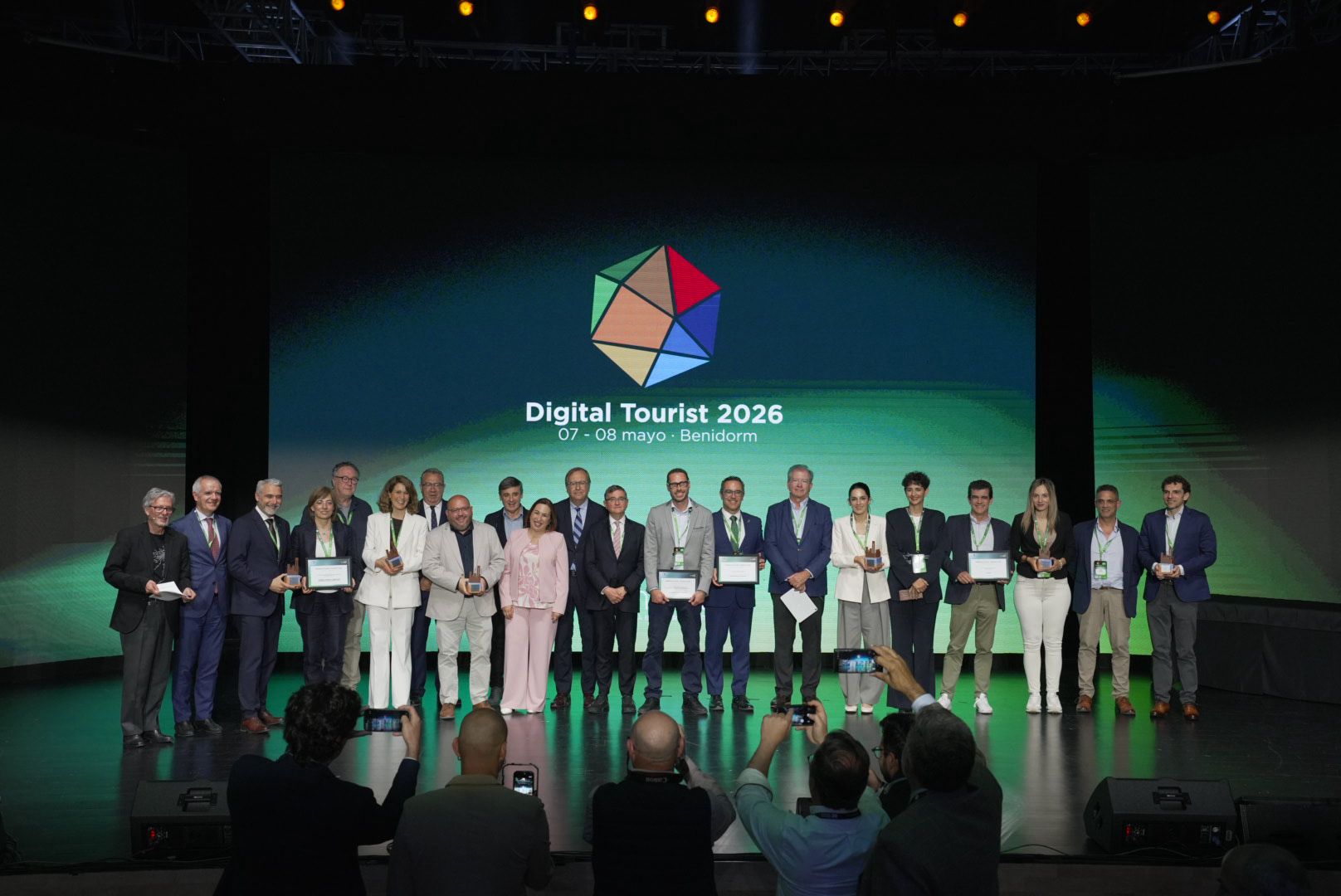
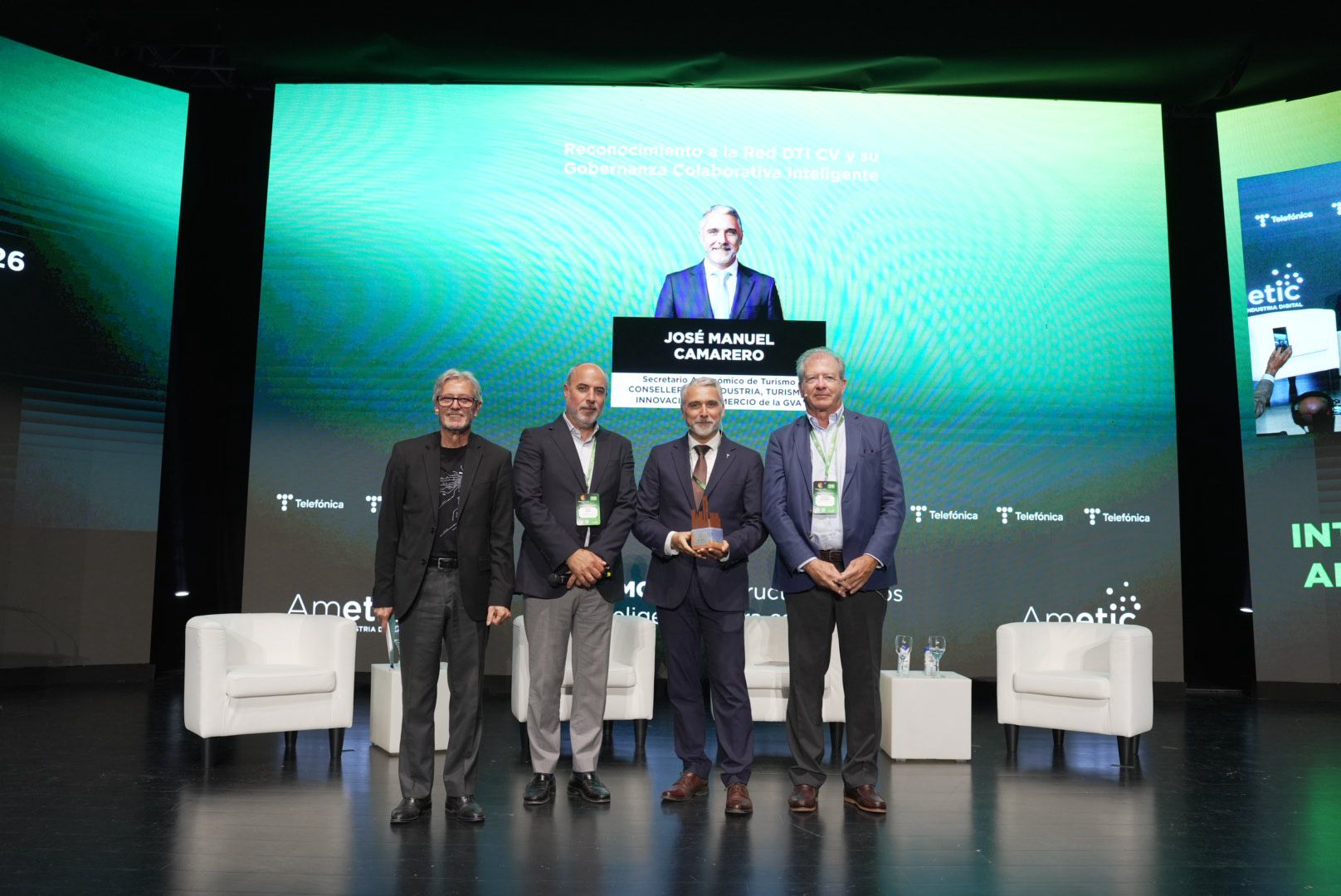
The congress concluded with the Digital Tourist 2026 Awards ceremony, recognizing innovative projects from Turismo de Aragón, Benidorm, Valencia, Castilla y León and several Spanish technology companies.
Digital Tourist 2026 demonstrated that Spain does not only aspire to remain a global tourism powerhouse because of its beaches, gastronomy or historical heritage.
The true objective now is to lead the tourism of the future: a tourism where data helps care for cities more effectively, where technology improves citizens’ quality of life and where destinations such as Benidorm become international benchmarks for a new generation of intelligent, sustainable and deeply human territories.
By Manuel Tarín Alonso.
Tags :