Technology

Explore cutting-edge technologies driving innovation and shaping tomorrow’s solutions today.

Leveraging artificial intelligence and haptic solutions, researchers aim to make digital devices and content more accessible to the visually impaired

Digital technology seems to have permeated nearly every aspect of our lives, radically transforming how we connect, work and interact.

But this isn’t the case for everyone.

Because digital devices rely almost exclusively on visual and auditory feedback, they raise inherent accessibility issues. In fact, access to digital content by the visually impaired – especially low vision and blind people – remains challenging, even for content as elementary as text.

“Considering our increasing reliance on technologies, dematerialisation and the use of buttonless touchscreens, a significant portion of the population is at risk of being denied access to content and becoming stigmatised even more because of their disabilities,” explains Sabrina Panëels, a researcher on interactive systems at CEA-List(opens in new window).

With the support of the EU-funded ABILITY(opens in new window) project, Panëels is leading a group of partners(opens in new window) working to help close this digital accessibility gap.

“By using and developing new technologies and software and by leveraging haptic solutions, we aim to make digital content and devices more tangible for everyone,” she says.

The first multisensory tablet

Having directly engaged with 285 sighted and visually impaired users to identify actual user needs, the project went on to achieve a lot of firsts.

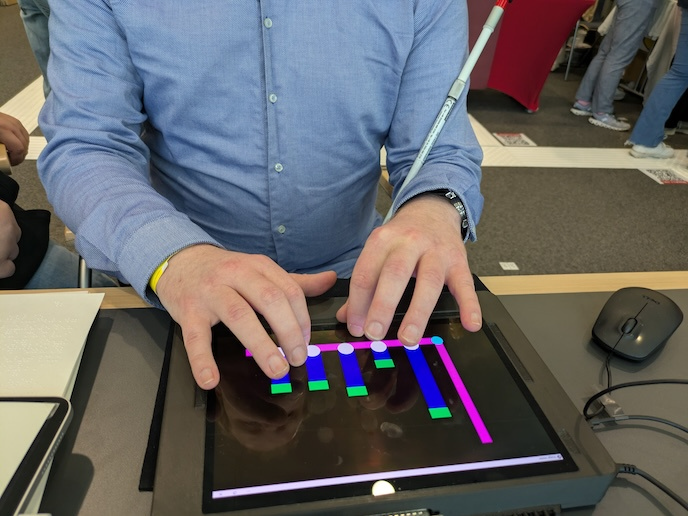
This includes the first multisensory tablet able to render textures on a standard OLED screen. The 10.5-inch tablet prototype runs on Windows and features a screen equipped with surface haptics.

“The prototype uses localised and multitouch vibrations that can render textures depending on the underlying content, for both static and moving fingers,” notes Panëels. “It can also be felt independently by different fingers, meaning that when a user for example explores a map, one finger can feel the waves of the sea while another can feel the texture of forests and other topological elements.”

The project further investigated design strategies to render content haptically, as well as the benefits of using a combined 2D pin display and the multisensory tablet with artificial intelligence (AI) for converting images, PDFs and graphs into touchable content in real time.

Using AI to make digital content more accessible

The project also made advances in developing machine learning algorithms tailored to the unique needs of the visually impaired. This work includes creating new software that uses AI for image analysis and predictive writing to turn digital content into accessible visual, audio and touch alternatives.

“We are particularly proud of our use of an image analysis pipeline and conversation AI solutions to deliver interactive descriptions of an image tailored to the individual user, as well as our predictive writing app that allows users to include emojis in their communications,” remarks Panëels.

Raising the bar for inclusive technology

Despite encountering many challenges, the project successfully demonstrated that an affordable, AI-powered, multisensory tablet is technically achievable, laying the groundwork for a commercial product and for a new standard for user-centred, inclusive technology development in Europe.

“Our work moves the needle on inclusive design and inclusion in general, benefiting not only the visually impaired, but also people with other disabilities, the elderly and even children,” concludes Panëels.

But before that can happen, more work needs to be done. That’s why researchers are currently working to secure the funding and partnerships needed to further develop and market its inclusive solutions.

Image: © PANEELS, Sabrina

Europe has the science. Now it needs the scale. An EU-backed start-up summit is trying to close that gap

In a conference space at the edge of Brussels, networking reaches a crescendo as a DJ plays music in the background. On the floor, everyone is showcasing their work – from semiconductor chips to advanced renewable energy technologies and eco-friendly materials.

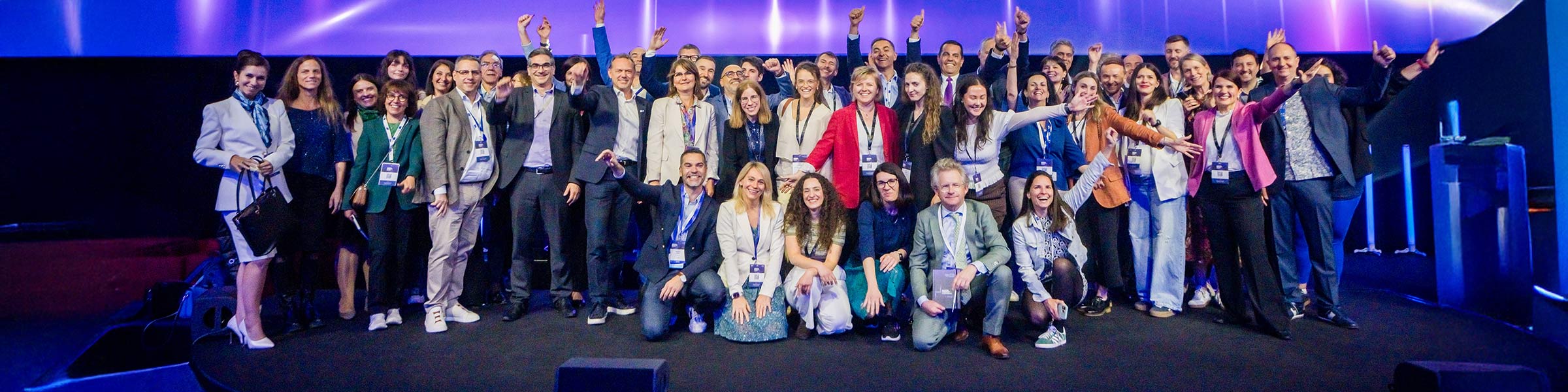
This is the European Innovation Council (EIC) Summit, a yearly event where venture capitalists and scientists meet EU officials and start-up founders building their first products.

For Pierre Cherelle, founder and CEO of the Belgian start-up Axiles Bionics, it was a chance to show what his team has built: new types of prosthetics for amputees that incorporate technologies from robotics.

“What we do combines financial return with social impact,” he said.

“Our prosthetics make a huge difference for patients. They often say that it is as if they were walking on their own legs again.”

Nearby, another company presented a new kind of renewable energy technology that uses the motion of waves.

“It was very hard to get to this point,” said Patrik Möller, co-founder and CEO of CorPower Ocean, the Swedish start-up building these buoy-like devices. “Now, however, the technology is ready. And Europe is leading in it.” Europe hosts several of the world’s main wave energy test sites and companies, particularly in the North Atlantic.

All of these people were brought together by the EIC, which supports researchers and entrepreneurs with high-risk ideas that might not get funded otherwise. It offers everything from accelerator programmes to venture funding, and has already supported the growth of many of the companies present, such as Axiles Bionics and CorPower Ocean.

Set up in 2021, the EIC has been expanding its activities. On the first day of the Summit, 3 June, the Scaleup Europe Fund was announced.

This €5 billion venture capital fund may grow to €20 billion in the coming years. It is meant to help European startups raise very large capital rounds, which today they often look for in the US.

Next tech giant

One of the start-up founders who travelled to Brussels was Anita Schjøll Abildgaard, the Norwegian co-founder and CSO of Iris.ai, an AI company. She credits the EIC with keeping the company alive.

“If it wasn’t for the EIC, our company would no longer exist,” she said. “We entered the EIC Accelerator at just the right time, in 2023. This provided much-needed financial backing and gave us the push to take our product to the market.”

Iris.ai builds software that sits between a company’s raw data and the AI systems that use it. It helps transform massive amounts of difficult-to-handle and often sensitive company data into a format that AI systems can use.

Usually, this would require intense and time-consuming human labour, but Iris.ai automates the process.

“Some companies are sitting on decades’ worth of company data, from patents and memos to safety manuals,” said Schjøll Abildgaard. “Processing that is one of the biggest barriers for AI at the moment.”

Iris.ai is gearing up to enter a field heavily dominated by companies from the US, but she is unfazed by that.

“Founding a company in Europe, compared to the US, used to be a disadvantage,” she said. “But that is now changing. Companies need absolute guarantees about security, sovereignty and privacy. In Europe, we can guarantee that.”

Today, Iris.ai is growing rapidly. “We want to become one of the next European tech champions,” said Schjøll Abildgaard. “What we have is unique, and if we play our cards right, we can be the next tech giant coming out of Europe.”

Scaling quantum

Another venture that has worked with the EIC is the Finnish company IQM Quantum Computers. With more than 400 people employed across Europe, IQM is one of a small number of companies in the world capable of delivering usable quantum computers.

These machines exploit quantum physics to tackle specific problems that are extremely hard, or impossible, for today’s conventional computers to solve.

“We are the world leader in selling and shipping quantum computers to data centres,” said Jan Goetz, CEO and co-founder of IQM. “We are shipping more quantum computers than anyone else.”

In this market, IQM is holding its own against large household names from the US such as Google and IBM, and that matters for a Europe seeking greater digital sovereignty. Quantum computers could be a game-changer.

“Quantum computers aren’t just faster regular computers,” said Goetz. “By using quantum physics, they can do calculations that aren’t possible for regular, transistor-based computers.”

Quantum computers, for example, allow us to compare millions of possible material combinations, which might lead to stronger, lighter and more sustainable materials, a task that pushes the limits of regular computers. In a similar way, they might help us develop new drugs.

“This is like the early internet,” said Goetz. “We just don’t know what they might allow us to do yet.”

Early support from the EIC was crucial in IQM’s growth, and Goetz said the EIC fills in an important gap in the European economy.

“Europe is good at cutting-edge science. What we are bad at is commercialising and scaling that,” he said. He sees the EIC as one way to change this, especially with the new Scaleup Europe Fund.

“It needs to be easier for European companies to raise rounds in the hundreds of millions or even billions of euros.”

One tool that should help inventors bring their ideas to market is the EU Innovation Platform, launched during the Summit. It is designed to help EU‑funded innovators find funding opportunities, receive tailored recommendations, join events and make their work more visible. The hope is that it will make it easier to turn European ideas into real‑world impact.

From waste to paper

Not everything at the EIC Summit, however, was hardware and software. At one of the booths, Valentyn Frechka was showing visitors different kinds of fibres, papers and packaging materials.

“I found a way to make paper out of fallen leaves,” said the Ukraine-born Frechka, who runs Releaf from its Paris-based factory. This idea landed him the 2024 European Patent Office’s Young Inventor Prize.

“Every year, cities spend time and money collecting hundreds of thousands of tonnes of fallen leaves.” According to Frechka, it’s a huge waste. “We see them as a raw material that can be turned into things like paper and packaging.”

Frechka got the idea as a 16‑year‑old in Ukraine, started it there and later grew Releaf into a France‑based leaf‑materials company. It has gained visibility in European and French innovation circles, including Bpifrance, Station F and the LVMH innovation ecosystem. Today it is growing rapidly, making packaging paper for brands such as Uber Eats, Rituals and LVMH.

This year, Releaf was invited by the EIC to showcase its core paper route and newer material developments, including hydrophobic coatings and moulded applications. He described it as a major milestone for the company.

“We are getting lots of interest here,” Frechka said. “It’s our first edition, and I’m already excited for next year.”

These stories show the range of projects gathered under the EIC umbrella. Taken together, they highlight how its support can help turn promising ideas into companies that grow in Europe.

Text: Tom Cassauwers

Image: The European Innovation Council Summit helps turn research into real‑world products by backing European start‑ups. © Lumentio/EIC, 2026

This article was originally published in Horizon the EU Research and Innovation Magazine.

Crime is rapidly moving online. An EU-funded project built accurate, human-centric, unbiased AI tools to help investigators turn massive digital evidence into vital clues

Criminal activity has drastically changed today – it is digital, borderless and leaves behind massive trails of information. Modern investigations no longer rely on physical evidence alone. Instead, police must routinely sift through mountains of heterogeneous data including dark-web content, cyber logs, CCTV frames and location tracking.

To remain effective against these threats, law enforcement agencies (LEAs) increasingly need AI to process data at a scale and speed humans cannot manage alone. The EU-funded STARLIGHT(opens in new window) project was established to enhance European strategic autonomy in AI for law enforcement, improving criminal investigations and cybersecurity across the continent.

Why is digital evidence difficult to analyse

“However, moving AI from laboratory conditions into real-world police work is challenging”, notes Cédric Gouy-Pailler, member of the technical management committee. “AI tools that excel in a laboratory often fail to fit real investigative workflows and strict rules for legal evidence. Furthermore, LEAs must navigate a maze of legal regulations regarding personal data privacy, criminal profiling and whether digital evidence will hold up in court.”

There is also the critical threat of algorithmic discrimination, as bias can easily seep into AI systems during data collection, model training or software design. Crucially, AI systems for law enforcement data must be protected from hacker manipulation and cyberattacks.

AI ethics and data management

To overcome these barriers, STARLIGHT organised iterative co-development cycles, workshops and technology ToolFests. These activities brought together LEAs, researchers, industry partners and legal/ethical experts to build practical tools.

Technical teams were not left to guess how to follow the law on their own. Instead, STARLIGHT simplified the legal landscape by mandating the Accountability principles for artificial intelligence(opens in new window) framework for all technology development. This ensured that the tools complied with the EU AI Act and demonstrated that they could be trusted in policing, security and justice.

Adopting an ‘ethics-by-design’ approach, the consortium tackled bias using technical measures and human checks. This included using representative datasets, rewriting code metrics and training officers to understand AI limits.

Operational AI tools for police investigations

STARLIGHT developed and enhanced more than 70 AI tools tailored to LEA needs.

“Rather than building a single software system, STARLIGHT delivered a broad family of solutions that secure digital evidence through a verifiable chain of custody,” notes Nizar Touleimat, project coordinator of STARLIGHT. “This ecosystem includes tools that discover online sources, gather threat intelligence and protect public spaces, allowing investigators to connect hidden clues across massive amounts of text, image and video streams.”

Among these, the Dark Web Monitor automatically collects and classifies illicit content, filtering data so analysts can focus on critical threats while keeping experts in control when AI is uncertain.

For digital forensic teams dealing with hard drives containing digital activity traces, the Cyber Pattern Investigator scans logs using pattern recognition and AI-driven clustering to spot hidden activities and create explainable visual reports.

Other tactical solutions include tools for scanning visual archives, cleaning up critical audio recordings and analysing complex geolocation data to map and forecast suspicious movements.

“STARLIGHT changed how European police design and use AI. Instead of just creating tools and datasets, it built a safe, legal and human-led model for AI use in law enforcement. Its true legacy is connecting police with agencies like Europol to ensure these tools are used successfully across Europe for years to come,” concludes Gouy-Pailler.

Artificial Intelligence and new digital experiences are transforming culture into something closer, emotional and shareable, bringing masterpieces and historical heritage nearer to an increasingly connected society

For centuries, art waited in silence.

It lived behind the thick walls of museums, protected by distance, solemnity and sometimes even intimidation. Great masterpieces belonged to history, but not always to people. Many admired them from afar, as if culture itself required permission to be understood.

Today, that invisible barrier is beginning to disappear.

Technology is no longer knocking on the door of art: it already lives within it. Quietly. Elegantly. Naturally. Artificial Intelligence, immersive experiences, digital galleries and interactive applications are opening the doors of culture to a generation that no longer wants merely to observe the world, but to participate in it emotionally.

The collaborations between Samsung and institutions such as the Prado Museum or the MUNCH Museum in Oslo symbolize much more than a technological partnership. They represent a profound transformation in the relationship between humanity and artistic heritage.

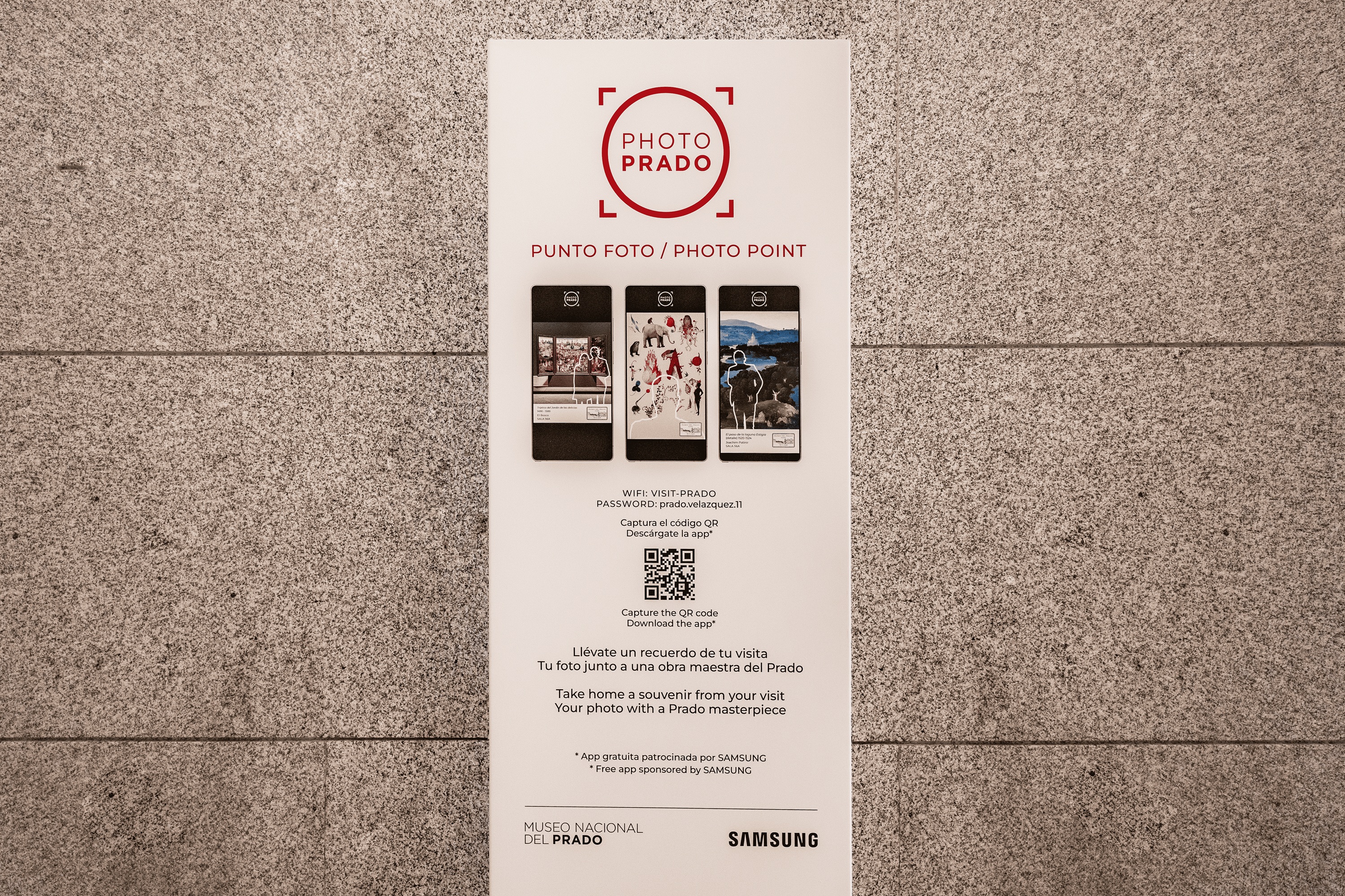
Through initiatives such as “Photo Prado”, visitors can emotionally enter the universe of Velázquez, Goya or Bosch, transforming their museum visit into a personal and unforgettable memory. At the same time, Samsung Art Store allows audiences around the world to discover little-known masterpieces from Edvard Munch, bringing hidden artistic treasures from museum archives into living rooms, homes and everyday life.

This is perhaps the greatest cultural revolution of the digital age: art is no longer confined to walls.

For generations, museums displayed only a fraction of their collections due to physical limitations. Thousands of paintings remained stored in archives, invisible to the public. Today, technology is rescuing those forgotten works from silence and giving them a second life through screens, connected devices and digital experiences accessible from anywhere in the world.

Some fear that technology could trivialize culture. Reality suggests precisely the opposite.

When innovation is used intelligently, technology does not replace artistic contemplation; it amplifies it. The emotion of standing before a Velázquez painting or Munch’s existential universe remains irreplaceable. But digital tools create a second dimension: emotional continuity. They allow art to travel beyond the museum visit and remain alive in memory, conversation and everyday experience.

Culture is becoming “prêt-à-porter” in the noblest sense of the expression. Not superficial culture, but accessible culture. Human culture. A culture capable of adapting to contemporary life without losing its intellectual depth or emotional power.

New generations have grown up in a connected world shaped by images, interaction and immediacy. They build memories through digital experiences and communicate emotions through screens. Expecting art to remain isolated from this transformation would condemn it to irrelevance.

The true challenge is balance.

And this new generation of cultural initiatives seems to have understood it perfectly. Technology does not invade museums or transform masterpieces into entertainment attractions. Instead, it acts as a bridge between heritage and society, between history and the emotions of modern audiences.

Artificial Intelligence can now personalize cultural experiences, recommend artistic journeys, recreate atmospheres, translate emotions and even reveal details invisible to the human eye. For the first time, technology is not distancing people from culture — it is bringing them closer to it.

Perhaps future historians will remember this era as the moment when art finally ceased to belong exclusively to experts, collectors or intellectual elites and became something universal, emotional and profoundly human.

Because when technology truly serves culture, art does not lose its soul.

It finds millions of new ones.

Manuel Tarín Alonso
Owner & Founder
www.thesmartcityjournal.com

A Cambridge-led team has developed a way to engineer better vaccines that could provide broad protection from thousands of variants of viruses - such as coronaviruses or Ebola - in a single vaccine. This represents a fundamental new vaccine technology that could prevent future pandemics before they begin

The first human clinical trial of a universal Sarbeco coronavirus vaccine, developed by the University of Cambridge and spin-out DIOSynVax (DVX) Ltd, has shown that the vaccine is safe and has no significant side-effects.

The trial, involving 39 healthy volunteers, tested a vaccine designed to provide protection against multiple Sarbeco coronaviruses - the large group of viruses that occur in nature including SARS-CoV-2, which caused the COVID pandemic. 

The vaccine triggered immune responses in the volunteers not only to SARS-CoV-2 and SARS, but to related bat viruses that could potentially jump from animals to humans and cause future pandemics. 

This trial proves the safety of an entirely new way of designing vaccines. The technology uses an AI-designed ‘super-antigen’ to provide lasting protection against a broad range of viruses - for example the Ebola group, or Sarbeco coronavirus group - even as they mutate.

Vaccines developed in this way could protect against future emerging virus threats. The technology also reduces the need for frequent reformulation, which is a fundamental limitation of current vaccines.

This is the first time that a vaccine whose active component was designed entirely by computer simulations has been tested in humans.

Participants took part in the trials at National Institute for Health and Care Research (NIHR) Clinical Research Facilities in Southampton and Cambridge. The study was sponsored by University Hospital Southampton NHS Foundation Trust (UHSFT).

The results are published in the Journal of Infection.

“We’ve converted vaccine development from being reactive to being future proof. Our vaccines will continue to provide protection against viruses even as they mutate into new strains,” said Professor Jonathan Heeney from the Lab of Viral Zoonotics, University of Cambridge’s Department of Veterinary Medicine, the scientific lead of the research.

He added: “We’ve overcome the problem of traditional vaccines, which have limited protection. It means we can escape the constant cycle of chasing the virus variants circulating in humans and updating the vaccines to try to catch up, like a dog chasing its tail.”

The antigen is the active ingredient in a vaccine – it triggers the body’s immune system to produce a protective immune response, training it to fight off future infection by a broad array of pathogens containing these specific DVX antigens. 

Current vaccines, such as the seasonal flu vaccine and existing Covid-19 vaccines, use antigens from specific virus strains or variants that have already been detected in humans. But since viruses are constantly mutating, by the time these traditional vaccines are manufactured and distributed, they have limited protection and must be updated annually in an effort to keep up.

To design the antigen for a universal coronavirus vaccine, the team used all the available genetic sequence data for Sarbeco coronaviruses logged by surveillance programmes around the world. Using machine learning, they then designed a super antigen containing the antigen features common to this whole group of viruses – including ones that haven’t emerged yet.

Human clinical trials

The vaccine was given to volunteers between 18 and 50 years old at the NIHR Southampton Clinical Research Facility at UHSFT, and at the NIHR Cambridge Clinical research Facility at Addenbrooke's Hospital, Cambridge.

The super antigen is compatible with most vaccine delivery systems. In this trial it was administered as DNA vaccine through a micro fluid jet. This needle-free delivery method offers an alternative to those with a fear of needle-based injections. This could make vaccination faster and easier to carry out in large numbers of people, especially in settings where conventional injections are more challenging to deliver. 

previous trial in animals - an important step before beginning human clinical trials - found that the vaccine provided a strong immune response against a range of coronaviruses. 

Further development of the vaccine is needed before it is ready for public use. A larger Phase 2 trial will next assess the vaccine’s ability to induce immune responses in a wider and more diverse population, and confirm that it generates strong, broadly protective immune responses.

The continuous pandemic threat

“Viruses like Influenza, Coronaviruses and the Ebola group are evolving continuously and by the time vaccines are rolled out, they may be poorly matched - the current ‘reactive’ vaccine system struggles to keep pace,” said Professor Saul Faust from the University of Southampton, the trial’s chief investigator.

He added: “This new class of universal vaccines are future-proofed. They not only protect against many variants simultaneously, but potentially against related viruses that haven’t yet emerged and spilt over to humans.

“If we can develop and clinically advance this new class of vaccines before a virus outbreak begins, millions of lives could be saved, lockdowns avoided and the economy preserved.”

Professor Marian Knight, Scientific Director for NIHR Infrastructure, said: "The remarkable success of this AI-designed ‘super-antigen’ trial marks a pivotal leap forward in our ability to deliver broad, lasting viral protection.” 

She added: “This milestone was only made possible through partnerships between the life sciences sector and our world-class NIHR infrastructure in Cambridge and Southampton, whose Clinical Research Facilities provided the vital expertise and environment needed to safely fast-track this innovation, and bring it one big step closer to patients.”

Coronaviruses such as SARS-CoV-2 and related Sarbeco coronaviruses continue to pose a threat to public health. A wide range of these and other viruses continue to circulate in animals that could potentially jump to humans at any time – but it’s not possible to predict which one, or when. 

The research was primarily funded by Innovate UK. The DIOSynVax pipeline includes vaccine candidates for human seasonal Flu and the pandemic influenza threats, haemorrhagic fever viruses, and coronaviruses including SARS-CoV-2. 

DIOSynVax - Digitally Immune Optimised Synthetic Vaccines - is a spin-out company from the University of Cambridge, established in 2017 with the support of Cambridge Enterprise, the University’s commercialisation arm. Jonathan Heeney is the Professor of Comparative Pathology at the University of Cambridge, and a Fellow at Darwin College.

Reference: Munro, APS: ‘A phase I, needle free, dose escalation clinical trial of pEVAC-PS, a candidate pan-a.’ Journal of Infection, June 2026. DOI: 10.1016/j.jinf.2026.106759

MIT.nano Immersion Lab collaborates with Emerson College students to advance the art of virtual production

“Avatar,” the highest-grossing film of all time, took viewers to a new world, Pandora, and it advanced filmmaking to its own new world: developing the field of virtual production. 

Leveraging a wide range of technologies such as performance capture, LED virtual environments, and advanced 3D imaging technologies, virtual production is changing the landscape of modern cinema. While millions of people have seen “Avatar,” only a fraction of that number understand the magic behind the scenes. Exposing filmmaking students to this magic is what MIT Media Lab alumnus Daniel Pillis SM ’24 is all about.

“Motion capture, like that in 'Avatar,' bridges real human movement with digital technology,” says Pillis. “In this digital age, and as artificial intelligence becomes more involved in film studios, technology that enables the authenticity of human expression and performance is becoming increasingly important.” 

That is what Pillis, now an assistant professor at Emerson College, teaches his students in his filmmaking courses. To bring the lesson to life, each semester the class travels across the river to MIT, where Emerson undergraduate and graduate students use the capabilities of the MIT.nano Immersion Lab to create their own virtual productions.

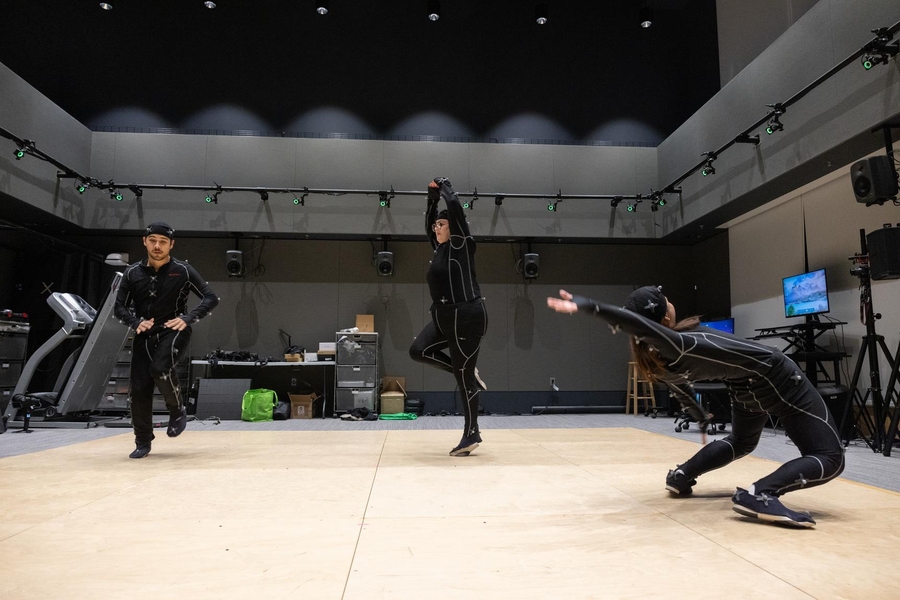
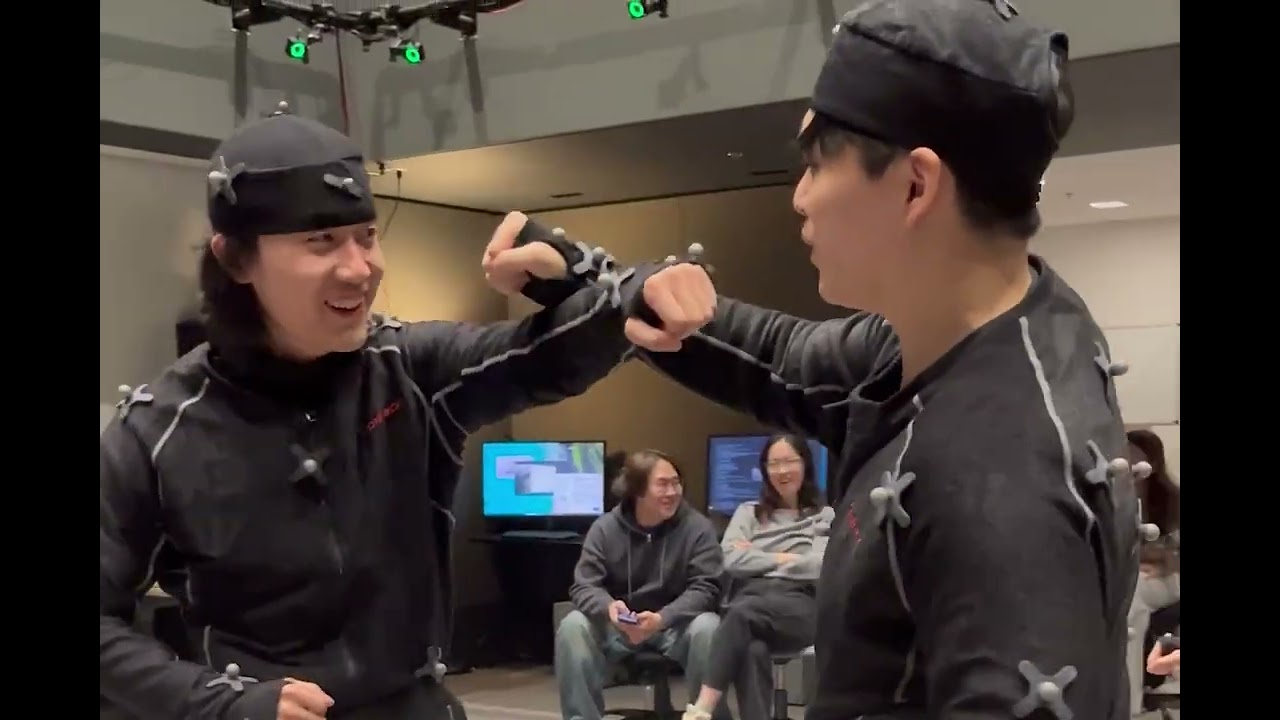
Donning full-body motion-capture suits that pair to the 28-camera OptiTrack system in the Immersion Lab, the students become their own avatars — generating virtual characters that dance, fight, or play the guitar like The Beatles. They see their animation data immediately on a computer screen and can change or add to their character’s movements in real time. Later, they take their data back to Emerson to build into short films for their final projects.

“It has been truly gratifying to support this course and to see the curiosity and ingenuity students have brought to the stage,” says Talis Reks, who manages the MIT.nano Immersion Lab. “This class highlights the range of what our lab can offer, extending well beyond research and into art and the performing arts."

The MIT.nano Immersion Lab — there’s really nothing else like it

Pillis first learned about the MIT.nano Immersion Lab during his time as a graduate student in Professor Hiroshi Ishii’s Tangible Media group at the MIT Media Lab. Working with colleague Georine Pierre SM ’24, the two collaborated on a Haitian folklore dance project, creating a motion capture-driven simulation of Haitian folkloric dance traditions, specifically the sacred Yanvalou dance. They built a living archive using the capabilities of the Immersion Lab that let participants dance with an interactive AI-driven ancestral avatar animation.

When he became faculty at Emerson, Pillis knew the Immersion Lab was a perfect fit to elevate his students’ experiences. “The level of high-end film production that the Immersion Lab supports is out of reach for so many students who would benefit from this technology in their practice,” explains Pillis. “The facility is unique, well-equipped, and even accessible to those outside of MIT — there really is nothing else like it in the Boston area.”

With the type of mechanical character animation the Immersion Lab technology allows, the final projects end up light-years beyond what these students thought they could achieve, continues Pillis. And they’re having fun. “They really get into it,” says Reks. “These students are not necessarily trained as actors, but the moment they see themselves as virtual characters, the realistic, granular movement enabled by motion capture, they get fully into performing.”

Rewarding professionalism

In the past two years, over 60 Emerson College students have used the Immersion Lab for Pillis’ class. Emerson undergraduate student Nick Forsch received an EVVY Award nomination for his project. The Emerson version of an Emmy, EVVYs are awarded to students whose projects are judged and selected by a panel of industry experts looking for creativity, quality, and professionalism.

“Being able to use the MIT.nano Immersion Lab really elevated my project,” says Forsch who created “Enter,” a short film about a human transported into a digital world to meet an artificial intelligence. “I was excited to submit it for an EVVY, knowing the technology behind my work was on a professional level.”

Another undergraduate student, Evan Costa, recently created a virtual recreation of The Beatles on “The Ed Sullivan Show,” capturing a version of each musician’s performance and reconstructing a simulation of 1950s television. Costa will be joining the MIT Learning Engineering and Practice Group, led by principal research scientist John Liu in the Department of Mechanical Engineering, this summer to continue exploring virtual production as an intern.

“Having the opportunity to gather motion-capture data within the Immersion Lab gave me more than advanced technology for my project; it provided insight into an often-unseen world of creativity,” says Costa. “Modern storytelling exists across a wide range of mediums, from film to video games, and witnessing the inner workings of this process has deepened my passion for virtual production.”

In the coming academic year, Pillis and Reks plan to leverage advanced Immersion Lab technologies to teach facial animation, hand and finger tracking, multi-modal data capture, and further advances in interactive generative motion capture as they gear up for the next set of productions.

Text:
Amanda Stoll DiCristofaro | MIT.nano

https://i1.ytimg.com/vi/Zbottm9ISpo/maxresdefault.jpg

(Emerson College at the MIT.nano Immersion Lab)

MIT.nano Immersion Lab collaborates with Emerson College students to advance the art of virtual production

“Avatar,” the highest-grossing film of all time, took viewers to a new world, Pandora, and it advanced filmmaking to its own new world: developing the field of virtual production. 

Leveraging a wide range of technologies such as performance capture, LED virtual environments, and advanced 3D imaging technologies, virtual production is changing the landscape of modern cinema. While millions of people have seen “Avatar,” only a fraction of that number understand the magic behind the scenes. Exposing filmmaking students to this magic is what MIT Media Lab alumnus Daniel Pillis SM ’24 is all about.

“Motion capture, like that in 'Avatar,' bridges real human movement with digital technology,” says Pillis. “In this digital age, and as artificial intelligence becomes more involved in film studios, technology that enables the authenticity of human expression and performance is becoming increasingly important.” 

That is what Pillis, now an assistant professor at Emerson College, teaches his students in his filmmaking courses. To bring the lesson to life, each semester the class travels across the river to MIT, where Emerson undergraduate and graduate students use the capabilities of the MIT.nano Immersion Lab to create their own virtual productions.

Donning full-body motion-capture suits that pair to the 28-camera OptiTrack system in the Immersion Lab, the students become their own avatars — generating virtual characters that dance, fight, or play the guitar like The Beatles. They see their animation data immediately on a computer screen and can change or add to their character’s movements in real time. Later, they take their data back to Emerson to build into short films for their final projects.

“It has been truly gratifying to support this course and to see the curiosity and ingenuity students have brought to the stage,” says Talis Reks, who manages the MIT.nano Immersion Lab. “This class highlights the range of what our lab can offer, extending well beyond research and into art and the performing arts."

The MIT.nano Immersion Lab — there’s really nothing else like it

Pillis first learned about the MIT.nano Immersion Lab during his time as a graduate student in Professor Hiroshi Ishii’s Tangible Media group at the MIT Media Lab. Working with colleague Georine Pierre SM ’24, the two collaborated on a Haitian folklore dance project, creating a motion capture-driven simulation of Haitian folkloric dance traditions, specifically the sacred Yanvalou dance. They built a living archive using the capabilities of the Immersion Lab that let participants dance with an interactive AI-driven ancestral avatar animation.

When he became faculty at Emerson, Pillis knew the Immersion Lab was a perfect fit to elevate his students’ experiences. “The level of high-end film production that the Immersion Lab supports is out of reach for so many students who would benefit from this technology in their practice,” explains Pillis. “The facility is unique, well-equipped, and even accessible to those outside of MIT — there really is nothing else like it in the Boston area.”

With the type of mechanical character animation the Immersion Lab technology allows, the final projects end up light-years beyond what these students thought they could achieve, continues Pillis. And they’re having fun. “They really get into it,” says Reks. “These students are not necessarily trained as actors, but the moment they see themselves as virtual characters, the realistic, granular movement enabled by motion capture, they get fully into performing.”

Rewarding professionalism

In the past two years, over 60 Emerson College students have used the Immersion Lab for Pillis’ class. Emerson undergraduate student Nick Forsch received an EVVY Award nomination for his project. The Emerson version of an Emmy, EVVYs are awarded to students whose projects are judged and selected by a panel of industry experts looking for creativity, quality, and professionalism.

“Being able to use the MIT.nano Immersion Lab really elevated my project,” says Forsch who created “Enter,” a short film about a human transported into a digital world to meet an artificial intelligence. “I was excited to submit it for an EVVY, knowing the technology behind my work was on a professional level.”

Another undergraduate student, Evan Costa, recently created a virtual recreation of The Beatles on “The Ed Sullivan Show,” capturing a version of each musician’s performance and reconstructing a simulation of 1950s television. Costa will be joining the MIT Learning Engineering and Practice Group, led by principal research scientist John Liu in the Department of Mechanical Engineering, this summer to continue exploring virtual production as an intern.

“Having the opportunity to gather motion-capture data within the Immersion Lab gave me more than advanced technology for my project; it provided insight into an often-unseen world of creativity,” says Costa. “Modern storytelling exists across a wide range of mediums, from film to video games, and witnessing the inner workings of this process has deepened my passion for virtual production.”

In the coming academic year, Pillis and Reks plan to leverage advanced Immersion Lab technologies to teach facial animation, hand and finger tracking, multi-modal data capture, and further advances in interactive generative motion capture as they gear up for the next set of productions.

Text:
Amanda Stoll DiCristofaro | MIT.nano

https://i1.ytimg.com/vi/Zbottm9ISpo/maxresdefault.jpg

(Emerson College at the MIT.nano Immersion Lab)

From predicting climate change to developing new medicines, supercomputers underpin modern science. Europe and Japan are now working together to make them even more powerful and reliable

Stepping inside a supercomputer facility is usually an overwhelming experience. These vast machines contain hundreds of thousands of processors working together to perform calculations far beyond the reach of ordinary computers. They consume huge amounts of energy, generate intense heat and are often extremely noisy. So, when France Boillod-Cerneux from the French Alternative Energies and Atomic Energy Commission visited the Fugaku supercomputer in Kobe, Japan, she was surprised. “You could hear yourself talking inside the computer room,” she said. “It was incredible. It was so unusual compared to what I’m used to.”

EU-Japan synergies

Since 2024, Boillod-Cerneux has been working with researchers across Europe and Japan through the EU-funded HANAMI collaboration, a three-year research effort tackling some of the biggest challenges in high-performance computing, also known as supercomputing.

The researchers hope their work will help advance fields ranging from climate forecasting and medical technology to materials research.

“Europe and Japan have great synergies when it comes to high-performance computing,” said Boillod-Cerneux. “Today, the Americans are dominating certain fields, such as AI. Europe and Japan want to build their own ecosystem together, to offer an alternative.”

This connects to a broader European push to strengthen technological sovereignty in supercomputing and AI. Through the European High-Performance Computing Joint Undertaking, the EU and participating countries are investing billions of euros in a new generation of supercomputers and AI infrastructure across Europe.

A recent milestone in that effort was the launch of the JUPITER supercomputer at Forschungszentrum Jülich in Germany – also a HANAMI partner. JUPITER is the first European supercomputer to achieve exascale performance – performing more than one quintillion calculations per second.

Systems operating at this scale are expected to accelerate research in diverse fields, from climate science to AI and advanced manufacturing.

Ongoing cooperation

Supercomputers are used for scientific simulations too complex for conventional computers. During the COVID-19 pandemic, for example, they helped researchers model the virus and test huge numbers of potential drug compounds. They are also used to simulate the Earth’s climate, predict extreme weather events and study new materials.

“Japan and Europe are very similar when it comes to high-performance computing research,” said Kengo Nakajima, deputy director of the RIKEN Center for Computational Science in Kobe, and a professor at the University of Tokyo.

“Both have long traditions in climate research and supercomputing. We can learn a lot from each other thanks to our long-standing cooperation.”

The HANAMI collaboration also comes as Europe and Japan deepen scientific ties more broadly. In late 2025, the European Commission and Japan concluded negotiations on Japan’s association to Horizon Europe, opening the way for even closer cooperation in research and innovation.

Building trust in simulations

Climate modelling is one of the main areas of cooperation. Researchers hope increasingly sophisticated simulations will help scientists and policymakers better understand the future impacts of climate change.

But for supercomputers to be useful, scientists need to trust the results they produce.

“We’re looking at the reproducibility of the results,” Boillod-Cerneux explained. “We need to make sure that the results stay consistent, even when they are generated on different supercomputers.”

Unlike ordinary computers, supercomputers are highly specialised systems that often use different hardware and software architectures. Ensuring that scientific results remain accurate and comparable across different machines is therefore a significant challenge.

“The hardware might be impressive, but a lot of our work is about software,” said Boillod-Cerneux. “It’s about optimising scientific applications so they can run efficiently on these highly complex systems.”

Researchers involved in HANAMI are sharing expertise and testing methods across European and Japanese platforms to improve the reliability and transparency of scientific simulations.

As systems become larger and more complex, ensuring that results remain reproducible and trustworthy across different computing platforms becomes ever more critical.

The collaboration is also exploring medical applications. One research team, for example, has been modelling airflow and fluid movement inside the human nose. These simulations could help surgeons better prepare for nose and sinus procedures and potentially reduce complications for patients.

Supercomputing in the age of AI

The growing importance of AI is reshaping the world of supercomputing. AI systems rely heavily on supercomputers for training and processing the enormous amounts of data needed to operate.

“AI has made what we do much more tangible for the public,” said Boillod-Cerneux. “People increasingly use AI in everyday life, and supercomputers provide much of the computing power behind it.”

AI is also beginning to transform scientific research itself. Researchers increasingly use AI to analyse huge datasets, identify hidden patterns and accelerate simulations that would previously have taken far longer to complete.

This emerging field – often called AI for Science – is becoming a growing strategic priority in Europe. In October 2025, the European Commission presented its European Strategy for Artificial Intelligence in Science, aimed at helping researchers responsibly integrate AI into scientific work.

At the same time, the rapid growth of AI has intensified global competition over access to advanced computing chips and infrastructure. This is essential not only for AI systems, but also for next-generation scientific simulations.

For researchers in HANAMI, cooperation between Europe and Japan is partly about strengthening long-term scientific and technological resilience.

“The rapid growth of AI is reshaping the market for high-performance computing chips,” said Boillod-Cerneux. “I’m confident that Europe and Japan can develop their own chip and software ecosystem. Europe has the talent and expertise to remain independent, but it will take time. Partnerships with countries like Japan are key.”

Nakajima believes the next stage of cooperation could focus increasingly on AI-driven scientific discovery.

“I think the next step of our cooperation with Europe should focus more on AI-for-science,” he said. “We need to merge our expertise so we can push each other forward.”

Text: By Tom Cassauwers

This article was originally published in Horizon the EU Research and Innovation Magazine.

Top AI systems show bias towards rewarding overly complex prose styles and only match human examiners for grade bands around half the time, research finds

Researchers have used top Generative AI models to grade hundreds of undergraduate essays and found that AI only matched human-awarded degree classification around half the time, with AI often failing to assess the best and worst submissions accurately.

A University of Cambridge-led team of psychologists and AI experts tested three “frontier” systems, including the latest versions (as of April 2026) of Claude and ChatGPT, on over 750 student essays from three UK universities submitted as part of a psychology degree.

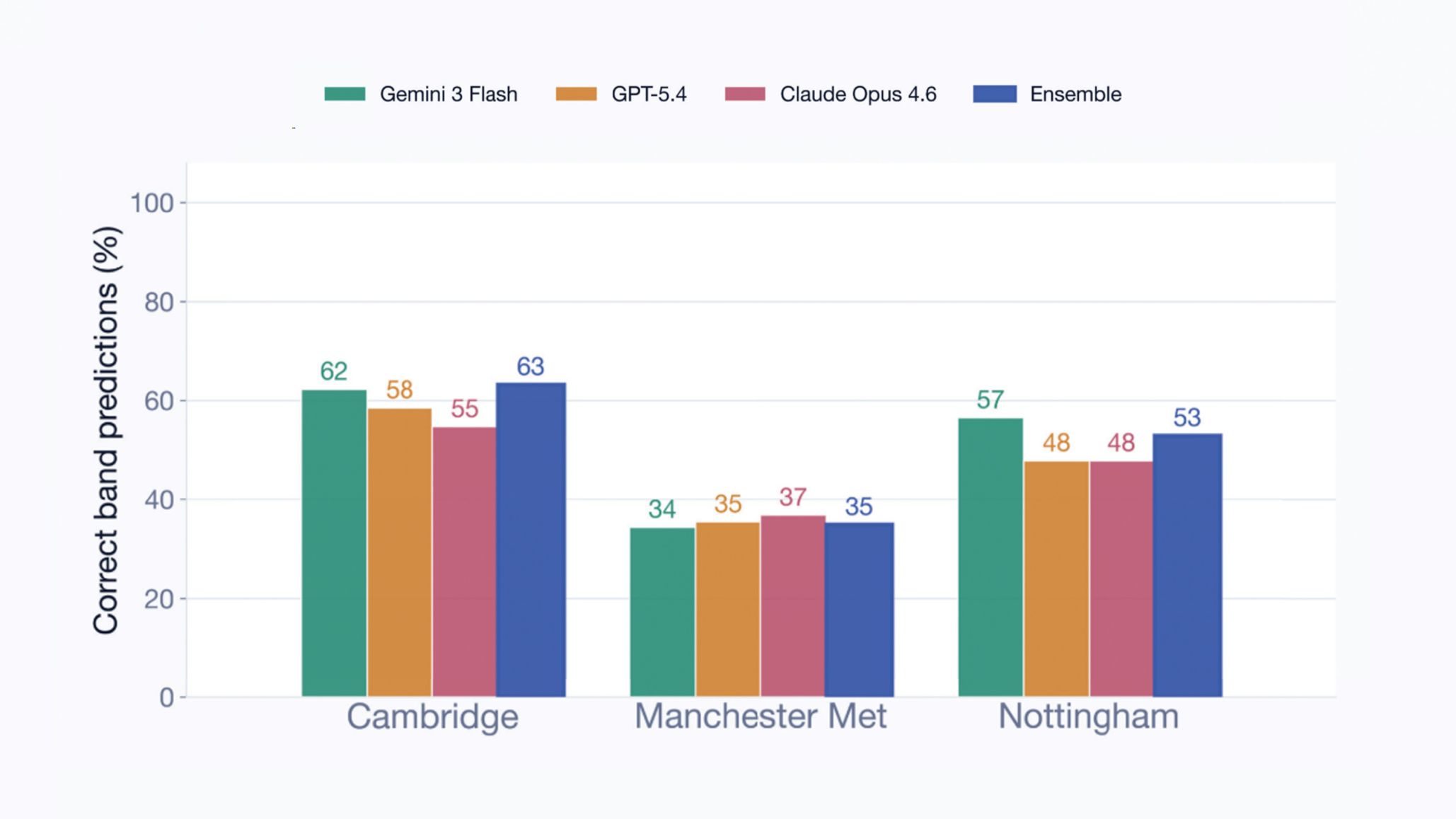
While accuracy of AI in grading the essays, from coursework to exam answers, was “not uniformly high”, say researchers, it did manage to match the broad grading bands – a first, 2:1, 2:2 and so on – given out by human examiners between 35-65% of the time.

However, major stumbling blocks for AI include routinely undervaluing work awarded top marks by humans, or overvaluing essays ranked among the lowest.

Unlike human examiners, all the AI systems were “oversensitive to linguistic features”: giving out higher marks based on essay length, vocabulary range and sentence complexity, which are often unrelated to academic standards.

In the latest report, researchers suggest that AI could be valuable for aspects of student assessment such as error detection and consistency checks – a “second pair of eyes” – as well as triaging feedback for students.

For example, large discrepancies between AI and human marks could help flag assignments requiring further review by a human assessor.

However, the team cautions that AI alone is far too shallow and inconsistent to grade undergraduate work, and a human should always determine the final mark.

“Universities are under huge pressure to reduce staff workload and improve efficiency, all while meeting rising student expectations, and some may start to lean on AI for assessment,” said Dr Deborah Talmi, the Cambridge psychologist who leads the OpRaise project behind the new report. 

“AI could perhaps automate some of the labour-intensive aspects of marking, freeing academics up for direct student engagement.”

“We find that leaning heavily on the best current AI models would see student grading that is homogenised, underestimates brilliance, and favours linguistic style over the substance of sound academic judgement,” said Talmi.  

“Assessment is not just a system for distributing marks. It is part of how educational meaning is made, so students feel seen, standards are upheld, and trust is maintained. Use of AI in assessment poses a risk to these values.” 

The report, ‘AI in University Assessment: Evaluating the Opportunities and Risks of Automated Marking’, is supported by ai@cam, Cambridge University's flagship mission to develop AI for the benefit of society, and the Accelerate Programme for Scientific Discovery, made possible by a donation from Schmidt Sciences. It is launched at an event with the British Psychological Society.

For the study, AI was also asked to provide student feedback, and it churned out reflections between three and eight times longer than those provided by the original assessors.

However, when AI responses were kept to a word count comparable to those from humans, focus groups of staff and students found it difficult to distinguish between human and AI feedback. Once the identity of the writer was revealed, not everyone appreciated AI-generated insights.

University staff and students who took part in the study told researchers that, while current assessment practices are not perfect, being graded and receiving feedback from humans is fundamental to the “social contract” between academics and students.

“Many students said they would feel cheated if AI marked their work, and staff warned that relying on AI risks weakening trust, motivation, professional judgement, and the human engagement at the heart of higher education,” said Dr Yael Benn, a collaborator on the project from Manchester Metropolitan University.

The study used 761 undergraduate essays in psychology submitted and marked between 2022 and 2025 from a total of 125 students from the universities of Cambridge, Manchester Metropolitan and Nottingham.

The researchers chose to focus on psychology as essays are central to degree results in the subject. “Academic psychology is an ideal testing ground for AI assessment as it values evidence synthesis and critical judgement over single correct answers,” said Talmi.

Researchers tested AI systems with the same essays at different times, and found AI gave the same or similar marks each time. The different AI models were much closer to each other than to humans in their marking.

The AI managed to match the right UK degree classification band of the five available (First, 2:1, 2:2, Third, Fail) some 63% of the time for Cambridge essays, while for Nottingham it was 53% and for Manchester Metropolitan it was 35%.

Researchers suspect that the difference in AI accuracy across institutions is due to the range of grades, which was narrowest among Cambridge students, whose essays were all written in invigilated exam halls, and widest at Manchester Metropolitan, where all analysed essays were coursework. Nottingham essays were a mixture of both.

This illustrates the heart of the problem when relying on AI to assess students: inconsistent performances across institutions, types of prompting, and work that sits near grading boundaries, say the report’s authors, who describe AI as having a “central tendency bias”.

All papers are scored out of 100, standard practice in higher education. An essay marked 75 – a solid first – by a human is, on average, scored several points lower by every AI system. While an essay marked 50 – a low 2:2 – is scored several points higher.

The range on the marking scale where AI and humans most frequently align across institutions lies in the upper-50s to low-60s, so around a low 2:1, near the centre of the grade distribution.

"Human assessors judge each essay on its own argumentative and conceptual merits while AI marks are based on statistical predictions,” said co-author Dr Alexandru Marcoci, from Cambridge’s Institute for Technology and Humanity.

“Across models, the same pattern emerges. The AI assigns middling marks to all submissions, resulting in particularly inaccurate marking of the best and worst essays, whereas humans are more willing to distinguish genuinely exceptional or weak work.”

“The practical consequence of this bias is that the AI is least accurate precisely where assessment decisions matter most, at the boundaries that distinguish Firsts from Upper Seconds, or passes from fails,” he added.

Researchers tested the performance of three frontier LLMs: Claude Opus 4.6 (Anthropic), GPT-5.4 (OpenAI), and Gemini 3 Flash (Google).

The dataset: 125 students in 3 UK universities volunteered 761 authentic long-form undergraduate psychology essays (University of Cambridge: 133, University of Nottingham: 172, Manchester Metropolitan University: 456). All essays were submissions to formal assessments between 2022-2025.

They spanned 50 modules and 87 distinct assignments across all years of study. Assessments spanned coursework, open book at-home examinations and invigilated examinations. Essay marks, on a 0-100 scale, were moderated formal marks provided by expert human assessors who followed routine institutional processes.

Prompt design: Rather than committing to a single prompt, the team systematically varied the prompt under three dimensions - criteria specificity, calibration intervention, and scoring strategy - to isolate each component's influence on scoring accuracy and identify the best prompt for each model.

At the most basic level, models were prompted by the following statement: “You are an experienced <University name> examiner marking <degree name> undergraduate assignment.”

At the other end, models were given the full marking rubric, information about the expected mark distribution, and asked to justify aspects of the evaluation prior to providing a mark.

Best-performing prompts per model were selected on a 20% calibration subset (n = 153); the same prompt configurations were then applied to the full corpus for the analyses reported here

We use cookies

We use cookies on our website. Some of them are essential for the operation of the site, while others help us to improve this site and the user experience (tracking cookies). You can decide for yourself whether you want to allow cookies or not. Please note that if you reject them, you may not be able to use all the functionalities of the site.