Smart Mobility

A new EU-funded initiative aims to help them do both, with digital tools and better tracking of energy use and materials to improve their environmental footprint and reduce waste

By Anthony King

In September 2026, naval architect Thomas Koch is bringing his firm’s virtual shipyard to a maritime trade fair in Hamburg, Germany. The virtual shipyard is a digital replica that tracks shipbuilding progress in real time and can suggest improvements that save money and energy. Such tools are badly needed as European shipbuilding struggles to keep up with rivals.

Many large docks in Europe have shut down over the last three decades. China, Japan and South Korea dominate shipbuilding in volume, benefiting from huge scales and automation to make container ships, tankers and other commercial vessels.

European shipyards now focus mostly on specialised high-value vessels such as cruise ships, coastal ferries, yachts, icebreakers and offshore engineering vessels. Many have carved out niches in particular ship types and are testing new technologies to cut emissions and fuel use.

“Europe can gain an edge in global shipping by adopting new clean technologies,” said Koch, the founder of Atlantec Enterprise Solutions, which provides IT for the maritime industry.

Koch and a team of researchers are tackling some of the challenges by combining renewable energy, digital advances and material tracking systems to boost sustainability in a new EU-funded project called ESY.

The researchers look at emissions from ships at sea, but also at shipyards’ environmental footprints: how much energy they use, how much steel and other materials they need, and how much waste they produce.

Koch estimates that assisted wind power can cut fuel use by 20 to 30 %, for example, which means lower costs for operators and fewer emissions overall.

“Shipbuilding in Europe has a future and Europe has specific strengths,” he said. Retrofitting ships with new technology has seen a surge in demand.

A sector in slow decline

Labour accounts for as much as 70 % of shipbuilding costs, which makes Europe expensive. Unlike car manufacturing, where identical models are made over and over, shipbuilding usually involves a single bespoke vessel, made without much automation.

Also, small and medium-sized shipyards in Europe operate independently – not benefiting from scale – and often rely on large expensive equipment that must work for decades.

“Shipbuilding is rather old fashioned and still very labour intensive,” said Dimitrios Lyridis, a naval engineer and professor at the National Technical University of Athens (NTUA), who is also part of the ESY team.

For decades, he said, it was seen as a sunset industry in Europe, receiving little government or EU support or funding, especially from the 1970s to the early 2000s.

This may be changing. In March 2026, the European Commission adopted a new Industrial Maritime Strategy to boost Europe’s manufacturing and shipping industries. ESY researchers are working towards the same goal.

“Our main focus is to try to improve competitiveness of the European shipbuilding industry by providing tools to monitor their processes and improve their environmental footprint,” said Panos Evangelou, a naval economist at NTUA.

This means giving shipyards digital tools that show where they waste energy and materials, and which simple changes would cut this waste the most.

The ambition is to construct advanced vessels boosted by green technology in leaner, more sustainable shipyards. The ESY team is launching an EU material passport that tracks materials from production to ship decommissioning.

The passport is a digital logbook for each ship, listing which materials go into it, where they come from and how they are used, so that parts can be repaired, reused or recycled more easily later.

“There’s often lots of waste throughout shipbuilding,” said Lyridis. “By tracking how much waste you have, you can redesign, for example, the way you cut steel in a more efficient manner.” The idea is to use materials more efficiently, save energy, cut costs and introduce better standards.

Greener shipyards in practice

In one demonstration, a steel cutting process was retrofitted at Astilleros de Santander, a Spanish shipyard in the Bay of Biscay that has been operating for over a century. A piece of equipment was modified so that it would use less energy, thereby reducing costs and emissions.

The same setup will also be used to test the material passport and other ESY tools – in a real yard with ships.

The researchers are also developing an environmental performance index for shipyards that helps to measure and reduce their environmental footprint.

The index combines simple figures – electricity, fuel and water use, waste and emissions – into a single score. In this way, shipyards can see if they are getting better over time, or compare different projects or sites.

“By benchmarking what you are doing, you can find alternative ways that are more economical and more energy-efficient,” Lyridis said.

This fits into the general trend of greener industrial processes, with potential competitive advantages.

“Financing for shipping is easier if you have a greener profile and now cargo owners have been requesting that ships be green,” said Lyridis. There are more stringent regulations on emissions and noise, and in how ships and shipyards operate.

The ESY material passport is a first step in delivering a certification for sustainability compliance, noted Professor Marc Bonazountas at Epsilon Group, a maritime technology and consulting firm. This could become crucial in future.

“Ports are now thinking about giving priority to those vessels that are greener and emit less pollution. Dirty, noisy vessels may have less access to harbours in Europe,” said Bonazountas.

Why shipyards still matter

There are strategic reasons for Europe not to neglect shipbuilding.

“The dominant countries that govern the world are those that dominate the seas. For that, you must have shipyards,” Bonazountas said, adding that the USA is now offering subsidies and support to get its shipbuilding back.

Europe, Bonazountas said, must create a unified maritime industrial strategy where shipyards become part of the wider transport value chain. This means not only constructing new vessels, but also providing lifecycle services, retrofitting, digital support, and, in the future, leasing advanced vessels to operators, particularly as nuclear propulsion technologies emerge.

“Europe’s competitiveness will depend on the shipyards it preserves, modernises and empowers,” said Bonazountas.

Lyridis said shipbuilding in Europe had survived despite years of neglect. “Now it has been realised how important it is for Europe to retain a shipping industry.”

For Koch, Lyridis and their colleagues, the next steps are to prove that tools such as the material passport and performance index work in busy shipyards – and to show that making ships greener can also help keep Europe’s shipyards in business.

By Anthony King

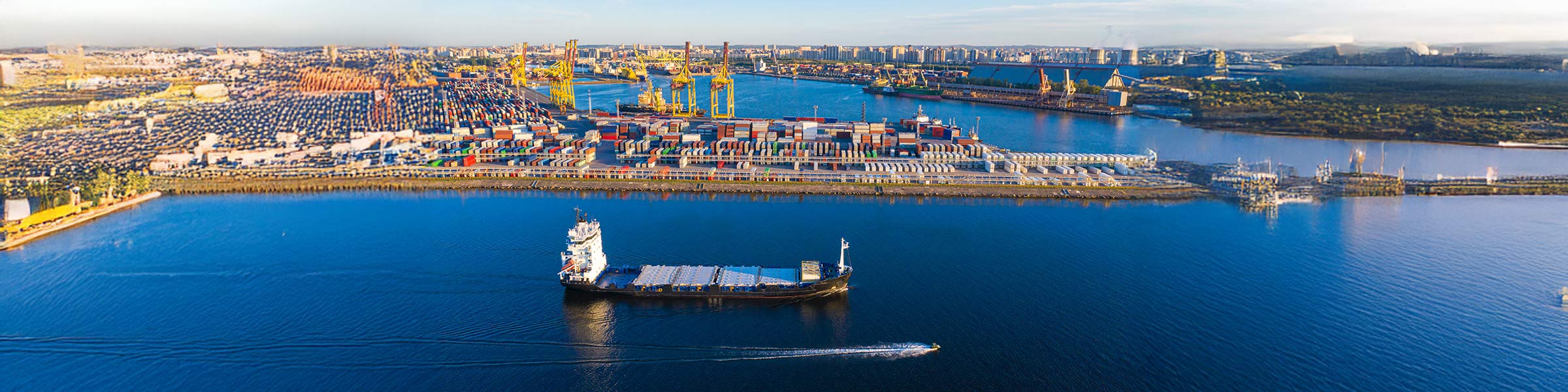
Image: European shipyards seek to cut costs and pollution with new digital tools. © FOTOGRIN, Shutterstock.com

This article was originally published in Horizon the EU Research and Innovation Magazine.
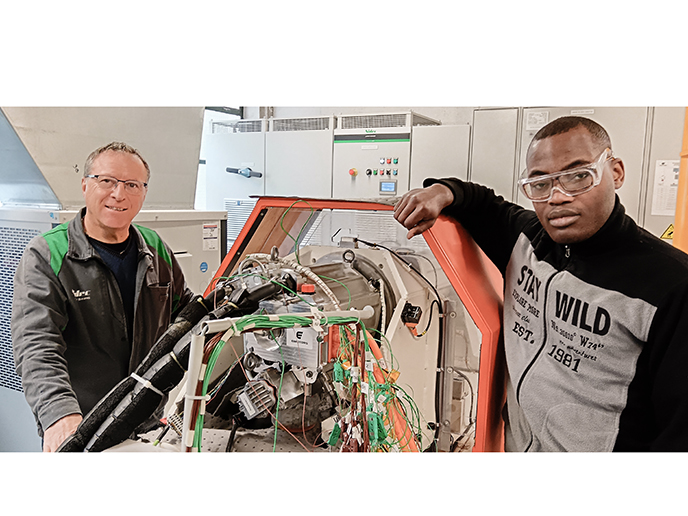
The EU-funded MAXIMA project is creating a low-cost and adaptable electric motor that promises enhanced performance, a smaller carbon footprint and reduced use of critical rare earth metals

If Europe’s automotive industry is to successfully transition to electric vehicles, it needs affordable components. These components also need to be energy efficient and recyclable, with minimal environmental impact. In addition, there is also the key challenge of minimising critical raw material use in these components to reduce current supply risks.

The MAXIMA(opens in new window) project was launched in 2023 to tackle these issues. MAXIMA (Modular AXIal flux Motor for Automotive) is addressing the need for scalable, sustainable electrification in the automotive industry by developing an affordable and adaptable axial flux motor. This motor is being designed to perform better, be kinder to the environment, and also reduce dependency on rare and critical raw materials, especially for permanent magnets.

On the digital front

“MAXIMA has established a pioneering multiphysics design and analysis platform that enables manufacturers and engineers to account for electromagnetic, structural and thermal performance, as well as recyclability, from day one,” reports Stéphane Clénet of project coordinator Arts et Métiers ParisTech. Making circularity a core constraint in the design process makes it possible to optimise efficiency, manufacturability, modularity and ease of disassembly.

Additionally, MAXIMA’s multiphysics digital twin allows for real-time system monitoring, predictive maintenance and adaptive control. Thanks to these capabilities, substantial advances in performance, reliability and system longevity can be achieved under real automotive operating conditions.

On the materials and manufacturing front

MAXIMA plans to deliver tested prototypes that combine soft magnetic composites and advanced electrical steels optimised to reduce losses and to facilitate manufacturability. “These process innovations are already lowering the CO₂ footprint and cost for new e-motor production,” comments Clénet.

Notable progress has further been made in end-of-life strategies for permanent magnets. MAXIMA researchers have successfully developed a recycling process in which neodymium-iron-boron magnets are recovered, purified and remanufactured for reuse. The process preserves most of their original properties despite contamination and wear. “This closes a crucial loop for high-value critical raw materials and points the way for sector-wide change,” observes Clénet.

Next on the agenda is to use the technology developed within the project until now in order to build and test multiple motor prototypes in realistic automotive environments. Recycling trials will be expanded, prototype production scaled up and life-cycle assessment models refined with real-world data.

By 2027, MAXIMA (Modular AXIal flux Motor for Automotive) intends to leave a tangible legacy that will play a role in accelerating the European automotive industry’s transition to circularity, strategic autonomy and climate neutrality. “In doing so, it will strengthen Europe’s global leadership in sustainable electrification technologies, creating long-term industrial, environmental and societal benefits,” Clénet concludes.

Digitally reconstructing and costing the Empire’s transport system across sea and land helps uncover how it influenced ancient urban development

The Roman Empire was one of the largest empires of the ancient world. At its peak during the 2nd century CE, it spanned roughly 6 million square kilometres over Europe, Asia and Africa. Two of the most profound impacts on the physical world were the introduction of a widespread transport network and the large-scale development of cities it enabled. Yet, due to incomplete analysis and scant archaeological evidence of many routes, an understanding of this network’s influence through time has remained elusive. “We have a fairly good knowledge of the broad routes the roads took from some actual physical remains, as well as milestones or the occasional written itinerary,” explains Andrew Mclean, an archaeologist and researcher at the Barcelona Supercomputing Center (BSC) in Spain. “The main problem is that our knowledge is partial and lacks integration across the whole Empire,” he notes. In the EU-funded R3NUrb(opens in new window) project, Mclean and his colleagues at the BSC(opens in new window) turned to supercomputers to fill in this major knowledge gap and reconstruct and cost the entire Roman transport network. Using a combination of computation, remote sensing, network science and geostatistics, the team aimed to uncover the impact of large-scale transport connectivity on urban development in the Empire. “This project sought to automate the process of reconstructing a transport network, using only a few known sites – in this case some 40 urban centres on the edge of the Empire – to construct a fully costed network,” adds Mclean.

Constructing a cost network for transport connectivity

R3NUrb, supported by the Marie Skłodowska-Curie Actions(opens in new window) programme, followed computational approaches that used geospatial data to compute cost surfaces and probabilistic cost corridors and then construct a costed network. For land, the researchers fed in a range of factors including temperature, snow cover, altitude and details on the terrain type. 

Costing the sea followed a similar process but with factors such as seasonal wind patterns, current and wave height. This let the team create cost corridors and a network into which they could add new sites. For a case study on Roman urbanism, they used 1 500 urban centres.

Scaling up reconstructions

So far, the researchers have developed small-scale reconstructions of the entire network and are in the final stages of scaling it up to 100 m resolution. Already, the team has learned that using costs that reflect temporal changes can drastically change not only absolute costs but also relative costs in a model, something previously overlooked in archaeological mobility studies. The results also reinforce that Roman urban centres typically lie along natural movement corridors. “More importantly, for the first time, our results show that the corridors along which Roman urban centres lie are far less affected by seasonal conditions as compared to the wider landscape, and remain seasonally viable even when different routes may not be.”

A Google Maps for the Roman Empire

The team will soon publish the results of the terrestrial network and is simultaneously working on integrating the maritime network. One researcher is working on inland waterways, while a future collaboration with archaeobotanists at ICAC(opens in new window) will model archaeobotanical remains across the Empire. “Our ultimate aim is to develop an interactive, user-friendly, multimodal tool for modelling movement costs across the whole Empire – a ‘Google Maps’ for the Roman Empire,” says Mclean. “We hope, going forward, to demonstrate its utility for different periods and regions.”

It is a system, which combines IoT and AI, that can detect vehicles without the intention of stopping at junctions

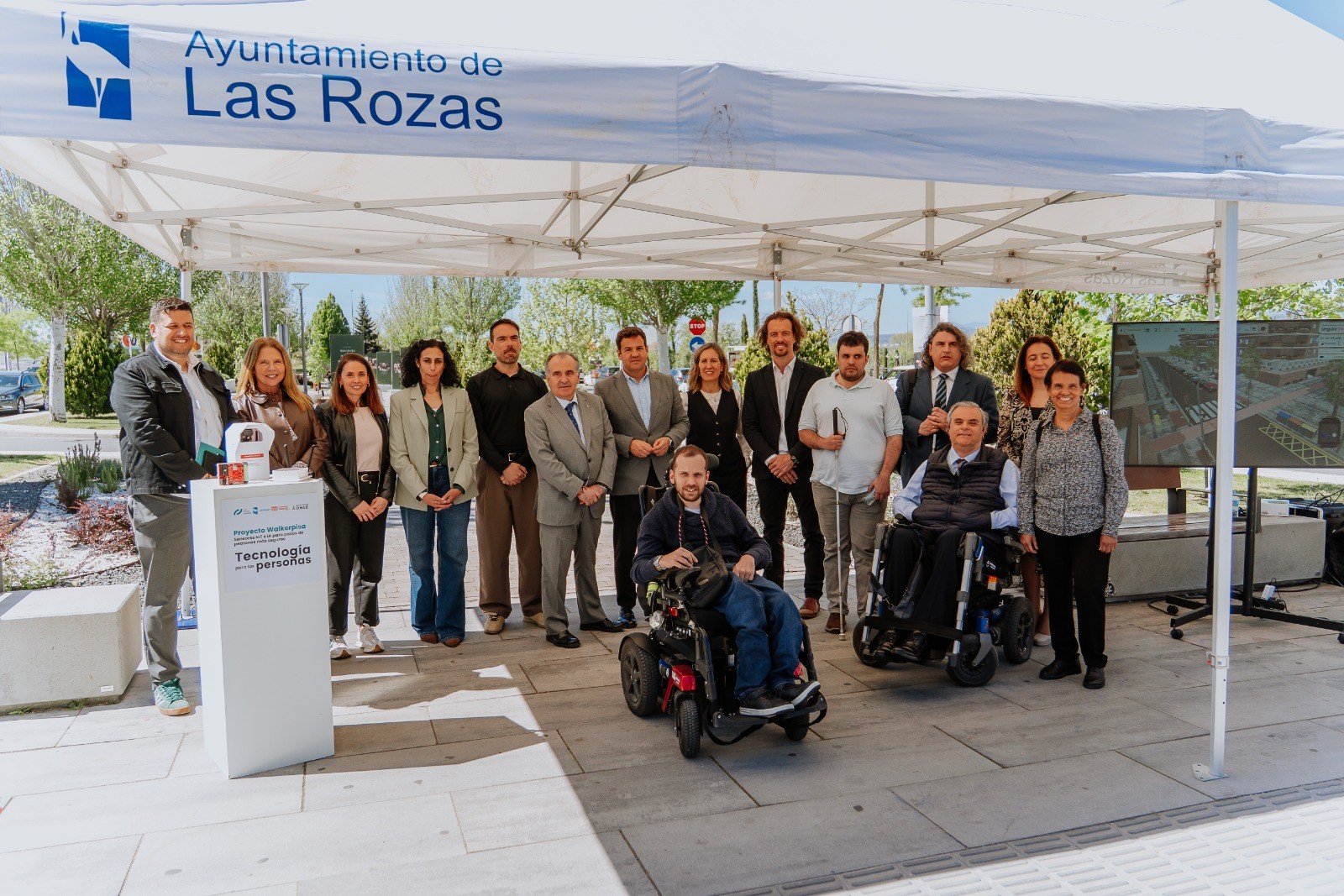
A unique innovation in Europe arrives in Las Rozas to protect pedestrians with disabilities. From today, the city of Las Rozas becomes the first municipality to test a pioneering technology on the street: a system that detects cars that do not brake at pedestrian crossings. It is a pilot project, WALKERPISA Project, which comes from the ONCE Foundation, together with Las Rozas Innova -Municipal Innovation Company of the City of Las Rozas-, and which aims to improve safety at pedestrian crossings for people with visual, hearing or intellectual disabilities. 

The technology of the "WALKERPISA Project" will be tested for two and a half months in a real urban environment and with real users after being validated in controlled environments. It is an innovative combination of cutting-edge technologies, such as the Internet of Things (IoT) and Artificial Intelligence (AI)– which are commonly used in aerospace, industrial or defence sectors – and is now being applied to urban accessibility.

"With this pilot, Las Rozas continues to position itself among the European cities that are committed to advanced technological solutions to build a more efficient, inclusive and safe urban model," says José de la Uz, mayor of Las Rozas and president of Las Rozas Innova.

Technology: IoT and AI for urban accessibility

The technology has been developed by SINGULAR THINGS and consists of a series of beacons equipped with sensors (LiDAR technology) that, placed next to pedestrian crossings, can detect vehicles without the intention of stopping, which, therefore, can constitute a danger for pedestrians with some type of disability. The beacons are capable of anticipating the risk and warning any pedestrian's mobile devices or smartwatch in advance through a mobile application (PISA app) that can be synchronised with a smartwatch and emit haptic (vibration), sound and visual signals.

This morning, Jesús Hernández, the Director of Accessibility and Innovation of the ONCE Foundation,  visited together De la Uz the test environment in which the pilot project starts today: one of the pedestrian crossings with the most influx in the city, which is located on the boulevard of Camilo José Cela street, between Heron City and Las Rozas Village, where it will be evaluated how technology can reduce risks at crossings without traffic lights. The presentation was also attended by Almudena Alcaide, Director of R+D+i Fundación ONCE, and Javier Pascual, CEO of Singular Things.

Jesús Hernández, emphasised that "the implementation of projects such as Walkerpisa highlights the importance of collaboration between public and private entities to promote innovation with social impact. Initiatives developed by actors such as Las Rozas Innova show that, when administrations, technology companies and social organisations work in a coordinated way, it is possible to advance in solutions that improve safety, accessibility and, ultimately, the quality of life of people with disabilities, contributing to building more inclusive and intelligent urban environments".

"For Las Rozas it is a priority to continue advancing in technological solutions that improve the quality of life of all people. This pilot is especially relevant to us because Las Rozas is a city without traffic lights and where we are convinced that technology can increase safety and offer more autonomy to people with special needs or with some mobility, vision or hearing difficulty. Collaborating with the ONCE Foundation in a pioneering project such as WALKERPISA is a further step in our commitment to an innovative city and to technology as a tool for urban development, social inclusion and improvement of the lives of all residents", said José de la Uz.

A pilot to test the effectiveness and usability

These two and a half months of tests in Las Rozas will allow the technology to be evaluated in a real environment and its effectiveness in reducing risks at crossings without traffic lights, facilitating the safe transit of people with disabilities. The WALKERPISA Project will also enable technical, functional and user experience data to be collected in a dashboard with a digital twin that is capable of visualizing real time data: detected vehicles, environmental conditions and system operation.

During the trial period, people with blindness or low vision, deaf people and people with intellectual disabilities will participate as real users of the system.

Las Rozas, a testing space for innovative technology

Las Rozas Innova is the Municipal Innovation and Technological Development Company of the Las Rozas City Council, created in 2020, to promote the development of the city as a benchmark in the use of technology and innovation to improve citizen services and quality of life.

Thanks to Las Rozas Innova, Las Rozas has become an urban living lab for testing and validating innovative technology. Las Rozas, together with Las Rozas Innova, is already collaborating in 16 international R+D+i projects with a hundred cities, universities, companies and research institutes and organisations throughout Europe. The city has also become a platform for the promotion and acceleration of startups. The Las Rozas Innova Hub is the Innovation and Entrepreneurship Center of the Las Rozas City Council where more than 50 startups and companies are developing their technology with the possibility of testing their solutions innovative in real environments of the municipality and with real customers (neighbors, companies, schools, centers for the elderly).

A new study pieces together existing data sources in order to develop a detailed, dynamic picture of auto emissions

In a study focused on New York City, MIT researchers have shown that existing sensors and mobile data can be used to generate a near real-time, high-resolution picture of auto emissions, which could be used to develop local transportation and decarbonization policies.

The new method produces much more detailed data than some other common approaches, which use intermittent samples of vehicle emissions. The researchers say it is also more practical and scales up better than some studies that have aimed for very granular emissions data from a small number of automobiles at once. The work helps bridge the gap between less-detailed citywide emissions inventories and highly detailed analyses based on individual vehicles.

“Our model, by combining real-time traffic cameras with multiple data sources, allows extrapolating very detailed emission maps, down to a single road and hour of the day,” says Paolo Santi, a principal research scientist in the MIT Senseable City Lab and co-author of a new paper detailing the project’s results. “Such detailed information can prove very helpful to support decision-making and understand effects of traffic and mobility interventions.”

Carlo Ratti, director of the MIT Senseable City Lab, notes that the research “is part of our lab’s ongoing quest into hyperlocal measurements of air quality and other environmental factors. By integrating multiple streams of data, we can reach a level of precision that was unthinkable just a few years ago — giving policymakers powerful new tools to understand and protect human health.”

The new method also protects privacy, since it uses computer vision techniques to recognize types of vehicles, but without compiling license plate numbers. The study leverages technologies, including those already installed at intersections, to yield richer data about vehicle movement and pollution.

“The very basic idea is just to estimate traffic emissions using existing data sources in a cost-effective way,” says Songhua Hu, a former postdoc in the Senseable City Lab, and now an assistant professor at City University of Hong Kong.

The paper, “Ubiquitous Data-driven Framework for Traffic Emission Estimation and Policy Evaluation,” is published in Nature Sustainability.

The authors are Hu; Santi; Tom Benson, a researcher in the Senseable City Lab; Xuesong Zhou, a professor of transportation engineering at Arizona State University; An Wang, an assistant professor at Hong Kong Polytechnic University; Ashutosh Kumar, a visiting doctoral student at the Senseable City Lab; and Ratti. The MIT Senseable City Lab is part of MIT’s Department of Urban Studies and Planning.

Manhattan measurements

To conduct the study, the researchers used images from 331 cameras already in use in Manhattan intersections, along with anonymized location records from over 1.75 million mobile phones. Applying vehicle-recognition programs and defining 12 broad categories of automobiles, the scholars found they could correctly place 93 percent of vehicles in the right category. The imaging also yielded important information about the specific ways traffic signals affect traffic flow. That matters because traffic signals are a major reason for stop-and-go driving patterns, which strongly affect urban emissions but are often omitted in conventional inventories.

The mobile phone data then provided rich information about the overall patterns of traffic and movement of individual vehicles throughout the city. The scholars combined the camera and phone data with known information about emissions rates to arrive at their own emissions estimates for New York City.

“We just need to input all emission-related information based on existing urban data sources, and we can estimate the traffic emissions,” Hu says.

Moreover, the researchers evaluated the changes in emissions that might occur in different scenarios when traffic patterns, or vehicle types, also change.

For one, they modeled what would happen to emissions if a certain percentage of travel demand shifted from private vehicles to buses. In another scenario, they looked at what would happen if morning and evening rush hour times were spread out a bit longer, leaving fewer vehicles on the road at once. They also modeled the effects of replacing fine-grained emissions inputs with citywide averages — finding that the rougher emissions estimates could vary widely, from −49 percent to 25 percent of the more fine-tuned results. That underscores how seemingly small simplifications can introduce large errors into emission estimates.

Major emissions drop

On one level, this work involved altering inputs into the model and seeing what emerged. But one scenario the researchers studied is based on a real-world change: In January 2025, New York City implemented congestion pricing south of 60th Street in Manhattan.

To study that, the researchers looked at what happened to vehicle traffic at intervals of two, four, six, and eight weeks after the program began. Overall, congestion pricing lowered traffic volume by about 10 percent — but there was a corresponding drop in emissions of 16-22 percent.

This finding aligns with a previous study by researchers at Cornell University, which reported a 22 percent reduction in particulate matter (PM2.5) levels within the pricing zone. The MIT team also found that these reductions were not evenly distributed across the network, with larger declines on some major streets and more mixed effects outside the pricing zone.

“We see these kinds of huge changes after the congestion pricing began, Hu says. “I think that’s a demonstration that our model can be very helpful if a government really wants to know if a new policy converts into real-world impact.”

There are additional forms of data that could be fed into the researchers’ new method. For instance, in related work in Amsterdam, the team leveraged dashboard cams from vehicles to yield rich information about vehicle movement.

“With our model we can make any camera used in cities, from the hundreds of traffic cameras to the thousands of dash cams, a powerful device to estimate traffic emissions in real-time,” says Fábio Duarte, the associate director of research and design at the MIT Senseable City Lab, who has worked on multiple related studies.

The research was supported by the city of Amsterdam, the AMS Institute, and the Abu Dhabi’s Department of Municipalities and Transport.

It was also supported by the MIT Senseable City Consortium, which consists of Atlas University, the city of Laval, the city of Rio de Janeiro, Consiglio per la Ricerca in Agricoltura e l’Analisi dell’Economia Agraria, the Dubai Future Foundation, FAE Technology, KAIST Center for Advanced Urban Systems, Sondotecnica, Toyota, and Volkswagen Group America.Text: Peter Dizikes | MIT News

Innovations and solutions to transform Europe’s ports into green infrastructure and boost resilience against climate and criminal threats have been trialled by a broad European network organised under the EU-funded PIONEERS project

Ports have evolved alongside Europe’s economy for centuries. To meet the continent’s climate ambitions, these freight and passenger hubs must now find a way to reduce their environmental impact while staying globally competitive. This is not all bad news for operators: ports hold the potential to become sources of renewable energy, further reducing environmental harm and contributing to the green economy. This transformation will not be simple, however.

“Transitioning ports to green infrastructure is not simply a matter of adopting new technology – it is a systemic challenge,” explains Inge De Wolf(opens in new window), PIONEERS(opens in new window) project coordinator at the Port of Antwerp-Bruges. “Decarbonisation must be pursued alongside resilience, operational efficiency, safety and long-term competitiveness,” she adds.

In the PIONEERS project, a consortium of 46 partners demonstrated a range of innovative solutions designed to transform ports into green infrastructures while addressing other vulnerabilities, including climate impacts and cyberattacks. A showcase of the various demonstrators(opens in new window) is available online.

“PIONEERS demonstrated several ways in which ports can reduce their carbon footprint,” says De Wolf. “These are not isolated actions, but part of a broader transition strategy that balances environmental goals with operational and commercial realities.”

Demonstrations of green innovation

PIONEERS was designed not to invent solutions from scratch, but to test, validate and scale promising innovations in real port-operating conditions, many for the first time at a large scale.

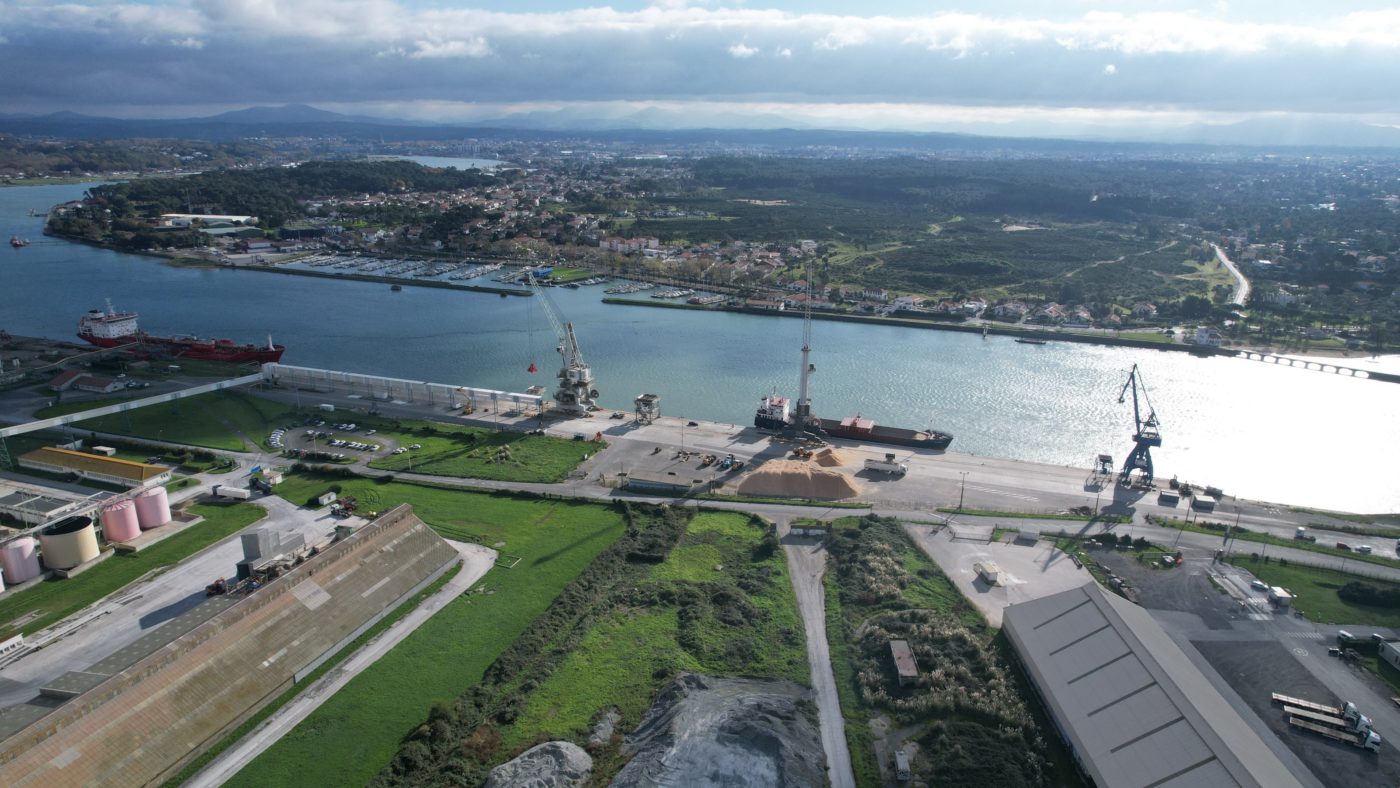
The project tested 19 solutions through live trials in different port environments, primarily at the Port of Antwerp-Bruges, but also at Barcelona in Spain, and Venlo in the Netherlands. They were developed under a framework that allows transfer and scale between ports beyond the pilots. Further projects are under way.

Innovations were organised around four pillars: clean energy, sustainable port design, modal shift and flow optimisation, and digital transformation. Examples include a hydro turbine system to capture residual water and generate clean electricity, autonomous vessel technology for inland waterway transport, and the world’s first dual-fuel straddle carrier(opens in new window), which used hydrogen to cut its diesel consumption by 35 %.

“The goal was not only to showcase what works, but also to understand why certain solutions succeed and others do not,” explains De Wolf. Other innovations included a digital twin of port operations and a maritime 5G network with AI-powered vessel tracking.

Scalable, transferable green solutions

The most important result was not any single innovation, but the transition framework itself, remarks De Wolf. A Handbook of Best Practices, a flagship deliverable, is in production. This brings together tools, guidance and system mapping – all grounded in lessons learned from real port environments.

“Crucially, the handbook is designed to be adaptable: it does not prescribe a single solution, but equips ports to navigate their own transition based on their specific context, size and ecosystem,” notes De Wolf.

Inspiring Europe’s ports to go green

The legacy of PIONEERS goes beyond the individual solutions, especially as ports all vary significantly in size, needs and challenges. PIONEERS therefore offers a menu of potential innovations to be adopted. “The message is simple and clear: you do not have to start from scratch,” says De Wolf. “The methodology and the evidence are there, and you can tailor it to your port ecosystem.”

The only 5G testing space for military operations in Europe, 5G Cyber Defense Center, developed by the operator and the Ministry of Defense, will be integrated this month into NATO Digital Foundry, a pioneering initiative of the NATO Communications & Information Agency (NCIA), to develop disruptive technologies contributed by member countries of the organization from the conceptual phase to implementation

Telefónica's extensive knowledge of 5G use and its experience in military applications in more than 15 field trials have led the operator to become the leading reference for this technology within NATO. 

Telefónica's track record in the creation and deployment of multi-domain 5G tactical bubbles—by land, sea, air, and cyberspace—has resulted in the launch of the first “Center for Development, Training, and Testing for Military Operations in Cyber Defense with 5G Technology” (5G Cyber Defense Center) in Europe, in collaboration with the Spanish Ministry of Defense, whose technological solutions will be included in one of NATO's projects at the end of this month.

Javier López Gutiérrez, Director of Defense and Security at Telefónica Spain, states: "In 2026, we are consolidating all the efforts we have been making since 2022 to position ourselves as a benchmark in 5G in the field of Security and Defense, both in Spain and in the European Union and NATO. With this 5G development and testing center, geared towards an international organization of the size of the Atlantic Alliance, our armies and navy are becoming an authority in promoting not only hyperconnectivity, but also other cutting-edge enabling technologies such as AI, edge computing, and quantum computing for their benefit. All of this has allowed Telefónica to consolidate its position as a leader in the deployment of next-generation communications, combining innovation, operational capacity, and extensive experience in mission-critical environments. 

Spain's contribution to European technological sovereignty

The 5G Cyber Defense Center, developed by the operator together with the Armed Forces Joint Cyberspace Command (MCCE) located in the Community of Madrid, will be integrated into NATO Digital Foundry, an innovative Alliance initiative that tests cutting-edge solutions from the defense industry of member countries using NATO's own data to test them and expand their use in the military environment.

This center protects communications between different assets of the Ministry of Defense, such as radars, drones, weapons systems, barracks, and even combatants themselves. It also develops use cases in operational areas, allowing for the assessment of the strengths and areas for improvement of 5G when applied to an environment as demanding as defense. Research and development work is also carried out here, as well as training for Armed Forces personnel. In addition, the Center incorporates the study of AI tools to detect and prevent cyberattacks in advanced environments such as 5G tactical bubbles with multiple nodes.

The 5G Cyber Defense Center has been chosen by NCIA—NATO's Communication and Information Agency—to join its NATO Digital Foundry initiative, a pioneering program that establishes an open and secure innovation platform for NATO member countries and entities to develop, test, and scale emerging and disruptive technologies at all stages.

To this end, NATO Digital Foundry provides the basic data infrastructure, tools, expertise, and testing environments necessary to channel technological advances in the coming years and create new standards that will keep Alliance countries at the forefront of the various digital threats that arise.

Pioneers in 5G tactical bubbles

Telefónica has completed its deployment of 5G tactical bubbles in all environments where the armed forces operate—air, sea, land, space, and cyberspace—demonstrating the benefits of next-generation connectivity in complex and highly demanding environments. 

In this regard, Spain's first aerial 5G bubble was recently incorporated into a military aircraft at the Albacete Air Base, giving rise to the first airborne 5G system, a deployment for the Air and Space Force, which has been added to those previously carried out by sea, land, and space. This pioneering use case was developed with partners within the framework of the BACSI project (Connected, Sustainable, and Intelligent Air Base), an initiative of the Air and Space Force to evolve aerodromes through disruptive technologies and infrastructures that improve their efficiency while making them more sustainable and secure.

The 5G tactical bubble was deployed by integrating it with the aircraft's other communications systems, which included three land-based 5G systems, and was loaded onto an Airbus transport aircraft. To test the technology's effectiveness, VoNR (Voice Over New Radio) radio calls and video calls were made, ensuring secure communications between users and the interoperability of different systems, including real-time video transmission between two different aircraft participating in the exercise. 

This milestone, which confirms that Telefónica has established itself as a key player in the deployment of advanced communications, follows on from the pilot project carried out by the operator at the end of 2025 on a real mission involving a ship from the Alliance's Standing Naval Forces under NATO Maritime Command. For four months, the operator, in collaboration with a network of partners, deployed a 5G node on board an Alliance ship to connect it with the rest of the group, including unmanned units, to establish secure, ultra-fast, low-latency communications with the various naval units without the need for public networks or satellite connections throughout the fleet.

Other notable examples of Telefónica's use of 5G include the incorporation of this technology in combat vehicles, the integration of 5G bubbles with public networks and government satellite communications, and participation in events involving several countries, such as the NATO DiBaX exercise, which enabled NATO to establish itself as a provider of 5G services between different countries, facilitating multi-domain operations.

At the Mobile World Congress (MWC) being held this week in Barcelona, these advances were showcased during the session ‘5G Operational Experimentation: Defense and Innovation in the era of Dual-Use Technologies’, which took place at Telefónica's Agora and was led by Jesús Abraham, Director of Defense Innovation at Telefónica Spain, and Carlos de la Cuesta, Director of Defense Programs at Telefónica Spain.

Photo: From left to right. Jesús Abraham, Defense Strategy & Innovation Head at Telefónica; Teniente Coronel Jesús Aparicio, Testing & Validation Center Head at Spanish Army CIS Branch; Capitán de Navío Manuel García Ruiz, Head of CIS branch at Spanish Navy Staff; Comandante Miguel Izaguirre, Fighters branch at Spanish Air Force; Comandante Jaime Calvo, CIS branch at Spanish Cyberspace Joint Command; y Carlos de la Cuesta, Defence Programs Director at Telefónica.

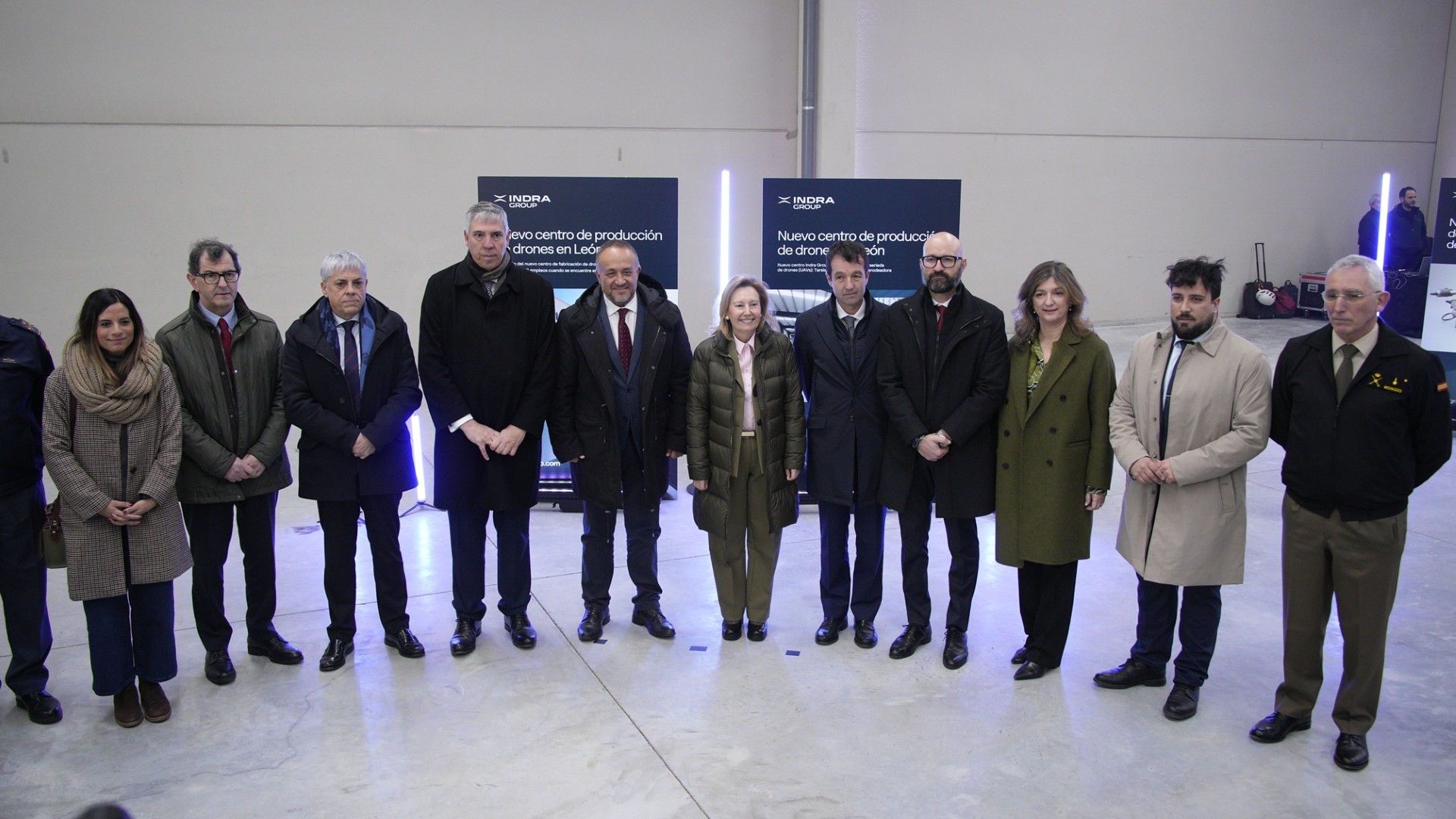
The Secretary of State for Defence, Amparo Valcarce, learned about the multinational’s plans in the province during a meeting with Indra Group’s Executive Chairman, Ángel Escribano, and the Group’s CEO, José Vicente de los Mozos

Indra Group will build in León the main and most advanced factory of multipurpose unmanned aerial vehicles (UAVs) and loitering munition, as part of its industrial growth strategy and expansion of its national footprint to respond to the Special Modernization Programs.

During a meeting held at the future facilities of this factory in León, Indra Group’s Executive Chairman, Ángel Escribano, and the Group’s CEO, José Vicente de los Mozos, explained the multinational’s growth plans to the Secretary of State for Defence, Amparo Valcarce.

In addition to the new drone factory—planned to be built in the Villadangos del Páramo industrial area (León) and intended to create 200 new jobs—Indra plans to strengthen engineering capabilities in the region by hiring another 150 engineers.

In her speech, the Secretary of State for Defence, Amparo Valcarce, stated: "I would like to thank Indra for its commitment and strategic vision in this project to provide the innovative solutions that Spain’s security and defence require. But above all, I want to thank them for their confidence in León and to reiterate our commitment to modern, technologically advanced Armed Forces and to a defence industry with a vocation for international leadership."

Indra Group’s Executive Chairman, Ángel Escribano, stated that this “new drone production center in León, where advanced unmanned aerial vehicle systems will be manufactured, contributes to ensuring national technological sovereignty in this field and meeting the current needs of the Armed Forces.”

With an investment of nearly 12 million euros, Indra will concentrate in the new facilities its production capabilities for unmanned aerial vehicles, including the tactical TARSIS system and its VALERO multipurpose aerial vehicle weapon system, as well as the loitering munition from the new company created with EDGE for the manufacturing of defense systems within the framework of the European Defense Programs. The factory will include specific assembly lines by drone type.

The goal is to begin manufacturing and integrating Class 1 UAS weighing under 150 kg, both for defense and civilian applications, as well as serial production of munition-equipped drones starting in 2027.

Indra will collaborate with León Airport and with the Army’s Air Systems Acquisition Group (GROSA) to establish a center for testing and validation of new systems, including both drones and counter-drone solutions.

With this initiative, Indra continues advancing its industrial response to the Special Modernization Programs (PEM) and strengthens its Indra Weapons & Ammunition division, focused on the development of unmanned vehicles, counter-drone systems, precision-guided systems, and directed-energy systems. It also contributes to securing national technological sovereignty in the drone domain and positioning León and the local industry for international opportunities, with Europe—where UAS are identified as a strategic solution—being one of the main markets.

To reinforce its capabilities in this field, Indra Group acquired in 2025 the company Aertec Defence & Aerial Systems, incorporating its TARSIS family of tactical systems into Indra’s offering, and recently acquired the unmanned system (UAS) technologies of Wake Engineering.

New engineers to strengthen capabilities

In addition to creating the new drone factory, Indra plans to expand the engineering capabilities of its current center in León. The company’s objective is to strengthen its capabilities in key areas such as cyberdefense, simulation, command and control and intelligence (C2I), software development, communications, unmanned aerial systems (UAS), counter-UAS systems, weapons and ammunition, and air traffic systems.

About Indra Group Indra Group (https://www.indragroup.com/) is the foremost Spanish multinational and one of the leading European companies that focus on defence and advanced digitalization. It stands at the forefront of the defence, space, air traffic management, mobility, and transformative technologies through Minsait, and it integrates its sovereign AI, cybersecurity and cyberdefence capabilities into IndraMind. Indra Group is paving the way to a more secure and better-connected future through innovative solutions, trusted relationships and the very best talent. Sustainability is an integral part of its strategy and culture in order to overcome current and future social and environmental challenges. At the close of the 2024 financial year, Indra Group posted revenues of €4.843 billion and had a local presence in 46 countries and business operations in over 140 countries.

This will build on the success of PULSE NOVA, the UAE based joint-venture establish to develop and manufacture next-generation

 Indra Group, a world leader in information technology, aerospace, defence and mobility systems, and EDGE Group, one of the world’s leading advanced technologies and defence groups, today signed a Memorandum of Understanding (MoU) to explore the possibility of expanding its successful joint venture PULSE NOVA to include advance electronic warfare (EW) capabilities and to enable PULSE NOVA to draw on the combined capabilities of Indra and EDGE, through SIGN4L, EDGE’s radar and electronic warfare entity, in support of a broader and more competitive portfolio. .

The MoU, signed in Dubai Airshow by EDGE Managing Director & CEO, Hamad Al Marar, and Angel Escribano, Executive Chairman of Indra, and Jose Vicente de los Mozos, CEO of Indra, will provide the parties with a framework within which they will explore the possibility of extending their successful current collaboration , through the Abu Dhabi-based company, to develop and manufacture next-generation radar systems in the UAE to potentially include advance electronic warfare (EW) capabilities within the portfolio of PULSE NOVA.

Ángel Escribano, Executive Chairman of Indra Group, said: “The extension would represent the determination of both companies to create a global market leader both in the field of advanced radar and electronic warfare technologies across multiple domains”.

José Vicente de los Mozos, CEO of Indra Group, stated: “The interest in extending the joint venture’s scope is the result of the excellent track of the current strategic partnership that woud bring together complementary capabilities, experience, and commercial reach to deliver worldclass solutions to our clients, reinforcing our positioning in the Middle East”.

Hamad Al Marar, Managing Director and CEO of EDGE Group, said: “We are building on a joint venture that has already delivered strong results in radar development. Electronic warfare demands deep expertise and an ecosystem that can move with purpose, and this collaboration

would bring both. By bridging the capabilities of Indra and EDGE, we could build a portfolio that serves regional and international customers and strengthens PULSA NOVA as a centre for advanced mission systems.”

The current collaboration is placing a strategic focus on the continued development of sophisticated technologies, innovation, and global market expansion by targeting untapped and fragmented non-NATO markets outside of the European Union where EDGE is bringing its commercial strength and technology building blocks, while Indra enhances PULSE NOVA by transferring technology, and contributing engineering, commercial, and manufacturing capabilities.


Most Read

We use cookies

We use cookies on our website. Some of them are essential for the operation of the site, while others help us to improve this site and the user experience (tracking cookies). You can decide for yourself whether you want to allow cookies or not. Please note that if you reject them, you may not be able to use all the functionalities of the site.